The rule that makes its own proof impossible
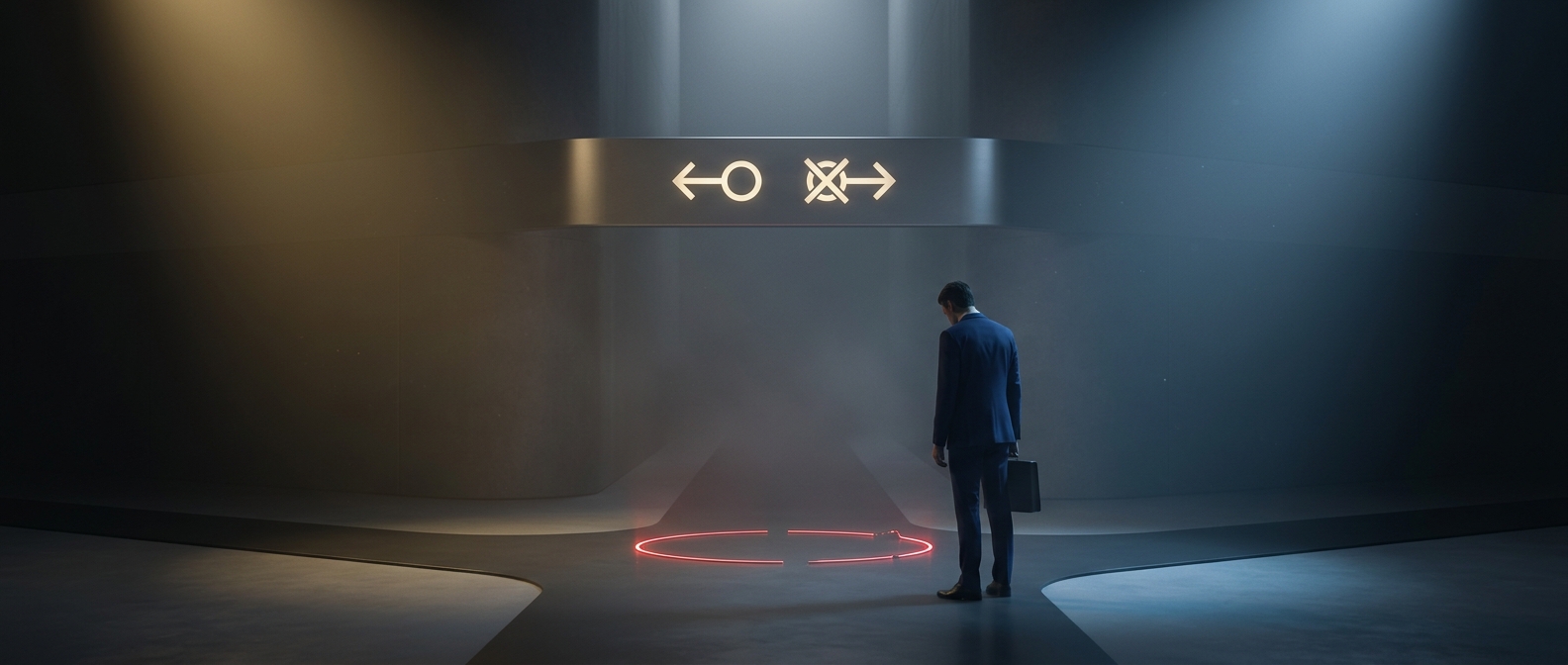
A Catch-22 is more than a hard choice between two bad outcomes. It is a circular rule: access to a solution depends on meeting a condition that the very act of seeking that solution appears to disprove.
The phrase comes from Joseph Heller’s novel Catch-22. In its central example, an airman can be excused from dangerous missions if he is judged mentally unfit. But asking to be excused is treated as evidence that he is sane: someone who recognizes the danger and wants to avoid it must be rational. The rule turns a reasonable request into the reason it will be denied.
Why effort can deepen the trap
In an ordinary problem, more information or effort may help you satisfy a requirement. In a Catch-22, the requirement is structured so that trying to satisfy it counts against you. The person is not simply choosing between two unpleasant options; the system has made each option confirm the same barrier.
That can make the situation feel personally confusing. People often assume that if they explain themselves better, prove their need more clearly, or try harder, the decision will change. But if the decision-maker treats the explanation itself as evidence against the request, better persuasion only feeds the loop.
The way out has to change the rule
Because the problem is built into the conditions, the exit usually cannot come from choosing more cleverly within them. It requires changing who applies the rule, what counts as proof, or whether an independent route to relief exists. The useful question is not just “Which option should I pick?” but “Can any choice satisfy this system without being used to deny me?”