Why a flame lets most light through
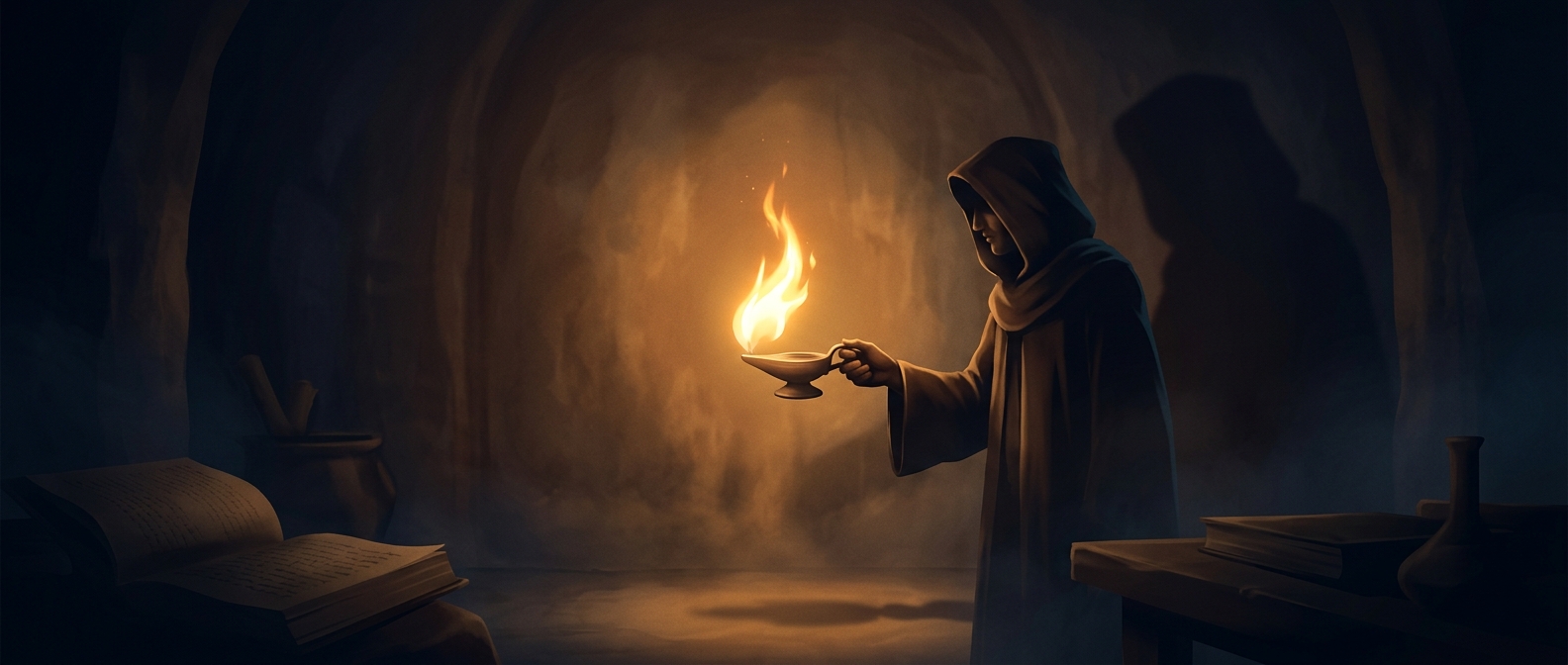
A shadow forms when something blocks light traveling toward a surface. A candle flame looks like a solid shape, but it is mostly hot gases produced by burning fuel. Those gases are thinly spread and usually absorb or scatter too little visible light to make a sharp dark patch.
The flame does emit light of its own, which can make the area behind it brighter rather than darker. But that glow does not necessarily erase every shadow: the result depends on the flame, the light source, and what lies behind it.
How soot can make a shadow
In a yellow candle flame, tiny soot particles glow as they heat up. Soot is made largely of carbon, and unlike the surrounding gases, it can absorb or scatter incoming light. If enough soot lies between a light source and a screen or wall, less light reaches the surface along that path, leaving a dimmer region.
The shadow may still look faint or blurred. The particles are tiny and constantly moving, and light can travel around the flame from many directions. A point-like light source tends to reveal a more distinct shadow than a broad light source, which fills in the dim area from other angles.
A flame is not always shadowless
A blue, clean-burning flame often contains far less visible soot than a yellow, luminous one, so it may cast little or no noticeable shadow. A sootier flame can make the effect easier to see—but the dark patch is produced by particles in the flame interfering with light, not by the flame behaving like an opaque object.
That is why a candle can look bright to your eyes and still leave a darker spot on a nearby surface: emitting light and blocking light are separate parts of the same scene.