How a Galaxy Becomes a Cosmic Lens
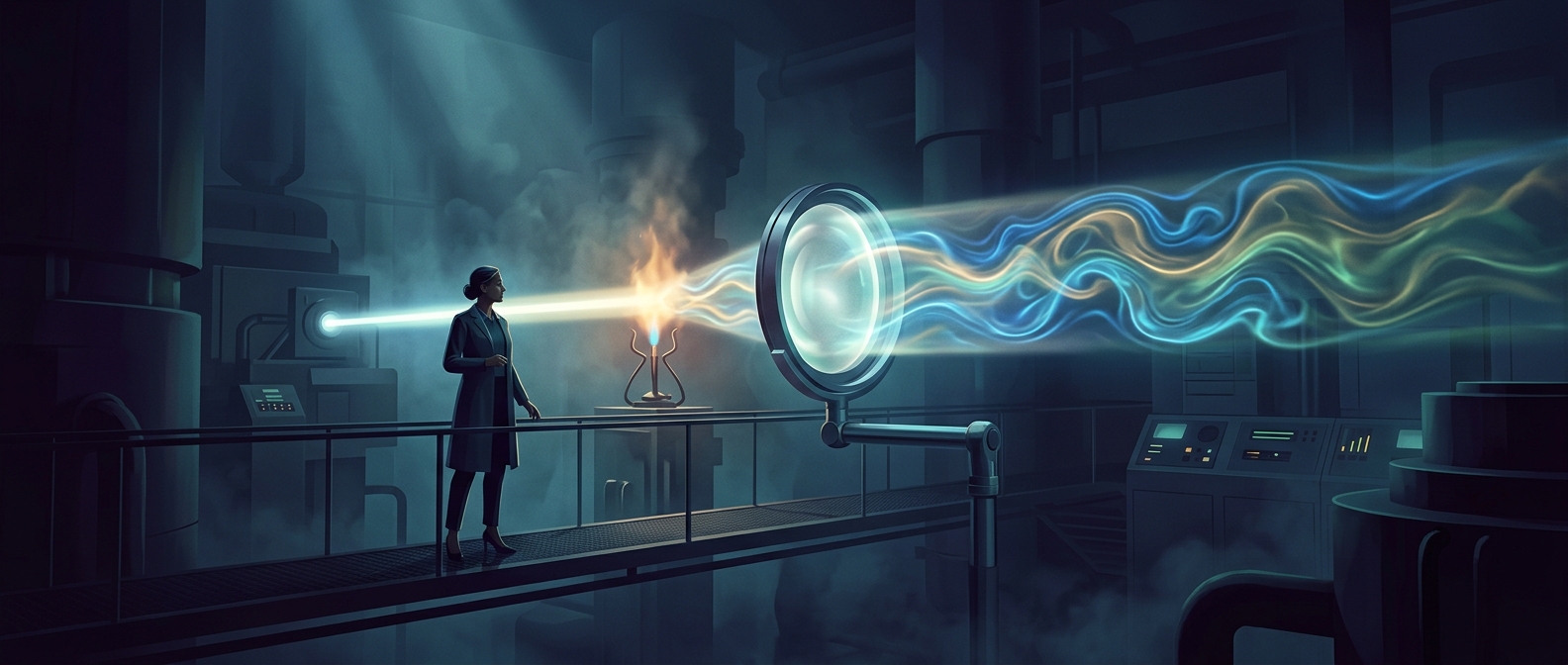
A galaxy does not have to touch a beam of light to redirect it. In Einstein’s theory of gravity, mass changes the geometry of space and time around it, and light follows that curved geometry. As a distant galaxy’s light passes near a foreground galaxy, its route can be deflected toward us.
The effect depends on more than the foreground galaxy’s visible stars. Its total mass—including matter that cannot be seen directly—shapes the gravitational field, so the lens can reveal how mass is distributed across the galaxy and its surroundings.
Alignment Changes What We See
The foreground and background galaxies must appear close together in our line of sight for the effect to be strong. Their actual distances can be enormous; it is their apparent alignment from Earth that matters. With a partial alignment, the background galaxy may appear stretched into an arc or split into several images. With especially close alignment, its light can form a ring around the foreground galaxy.
These are not separate copies of the distant object. They are different routes its light has taken around the lens, arriving from different directions. The paths can also magnify the background galaxy, making faint features easier to observe than they otherwise would be.
That magnification comes with distortion: astronomers must interpret the warped images to work out what the source looks like and how much mass lies in the foreground lens. A galaxy can therefore act as both a natural telescope and a map of gravity—its distorted light tracing matter that may be difficult to detect by any other means.