Why a Hall of Mirrors Can Turn Green
Ordinary mirror glass is not perfectly colorless. Tiny amounts of iron in the glass absorb some colors of visible light more strongly than others, so a little more green light makes it through than red or violet light. In a single mirror, that imbalance is usually too slight to notice.
The Color Shift Builds With Each Reflection
Many household mirrors have their reflective coating on the back of the glass. Light entering the mirror travels through the glass to reach that coating, then passes through the glass again on its way back out. Each reflection therefore gives the glass another chance to filter the light.
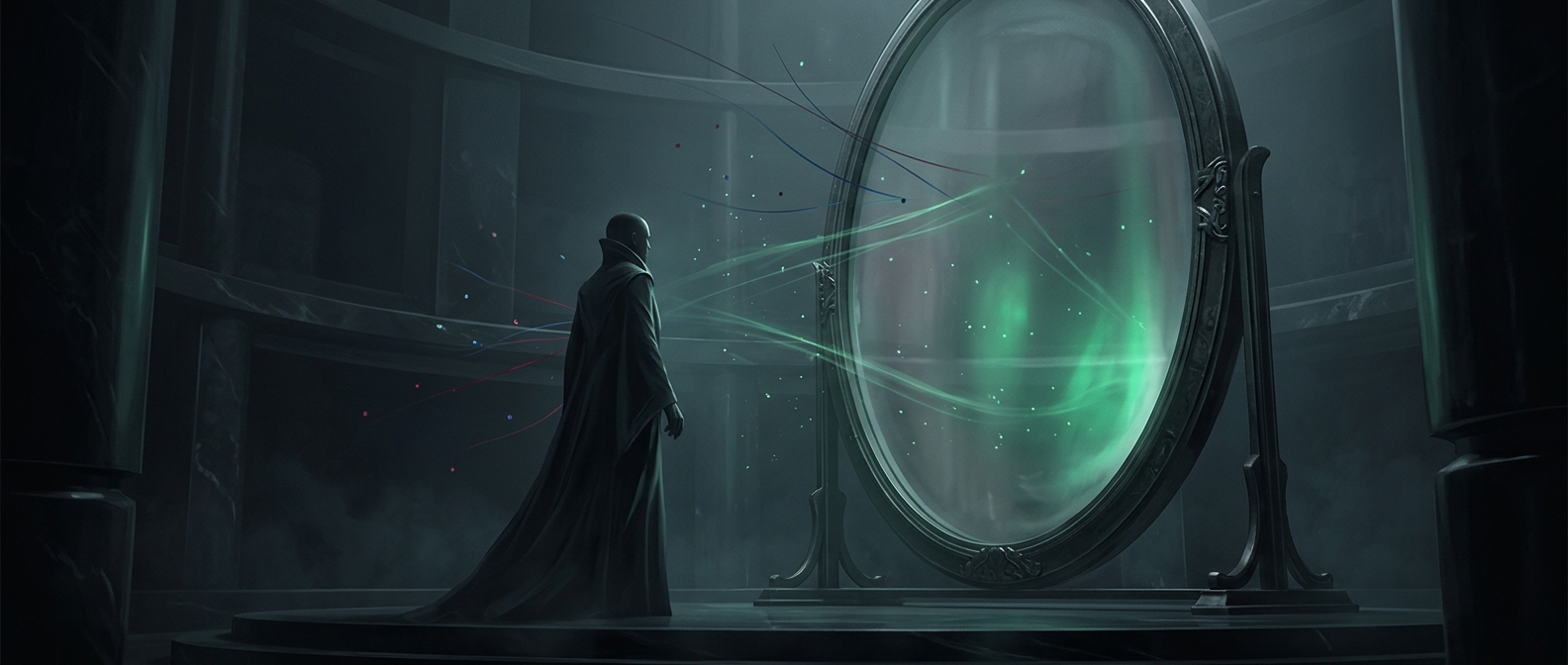
In a mirror tunnel, the same image is reflected again and again. The small losses are cumulative: after many passes, relatively less of the more strongly absorbed colors remains, and the surviving light looks greener. It is a gradual shift, not a sudden change at any one mirror.
The effect depends on the glass and mirror construction, and it is easier to see after many reflections than in an ordinary glance. That is why the end of a long mirror tunnel can look noticeably greener than the room around it—even though no individual pane seems especially green.