How water changes the light that reaches you
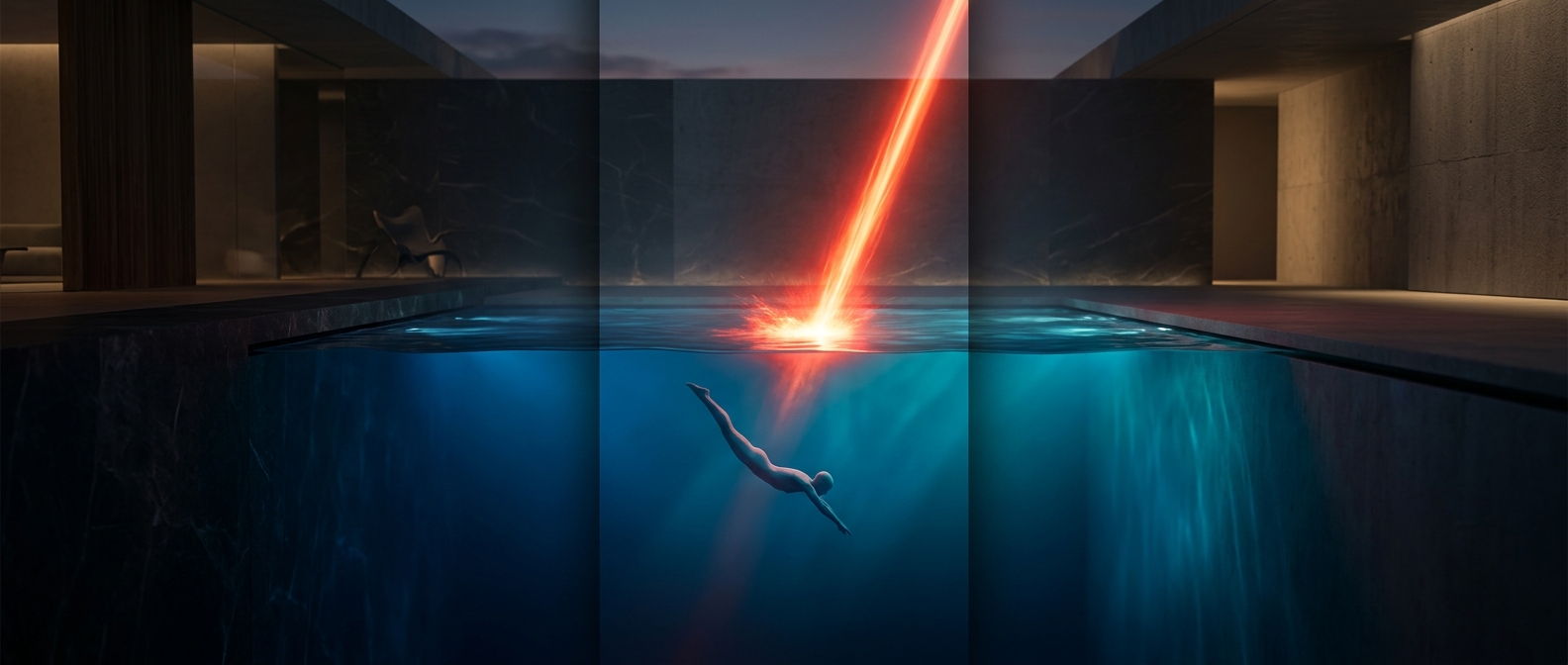
Sunlight looks white, but it contains a range of colors. As it enters water, some of that light is absorbed: water molecules take in the energy rather than letting it continue. Red light is absorbed more readily than blue, so the deeper the light travels, the more its mix shifts toward blue.
That shift is gradual, not a sharp cutoff. In deep water, much of the red light has been absorbed before it can return to the surface. Some of the remaining blue light is scattered—redirected by water molecules and tiny particles—and reaches an observer’s eyes. The water therefore appears blue, though the exact shade depends on the light and what is suspended in it.
Why shallow water can look different
In shallow water, sunlight can reach the bottom and bounce back. Sand, rock, vegetation, and other features add their own reflected colors to the light coming upward. That contribution can make coastal water look green, turquoise, brown, or nearly clear rather than deep blue.
The key difference is how much of the color comes from the water itself versus the seafloor. Over a deep seabed, little bottom-reflected light reaches the surface, so water’s filtering effect dominates. In a clear, shallow bay, the bottom may be visible—and its color becomes part of the scene.