Why the Elbow Sends a Shock Down the Hand
The ulnar nerve takes a particularly exposed route at the elbow. It runs behind the bony bump on the inner side of the joint, through a narrow passage called the cubital tunnel. There is little soft tissue between the nerve and the surface, so a direct knock can squeeze it against the bone.
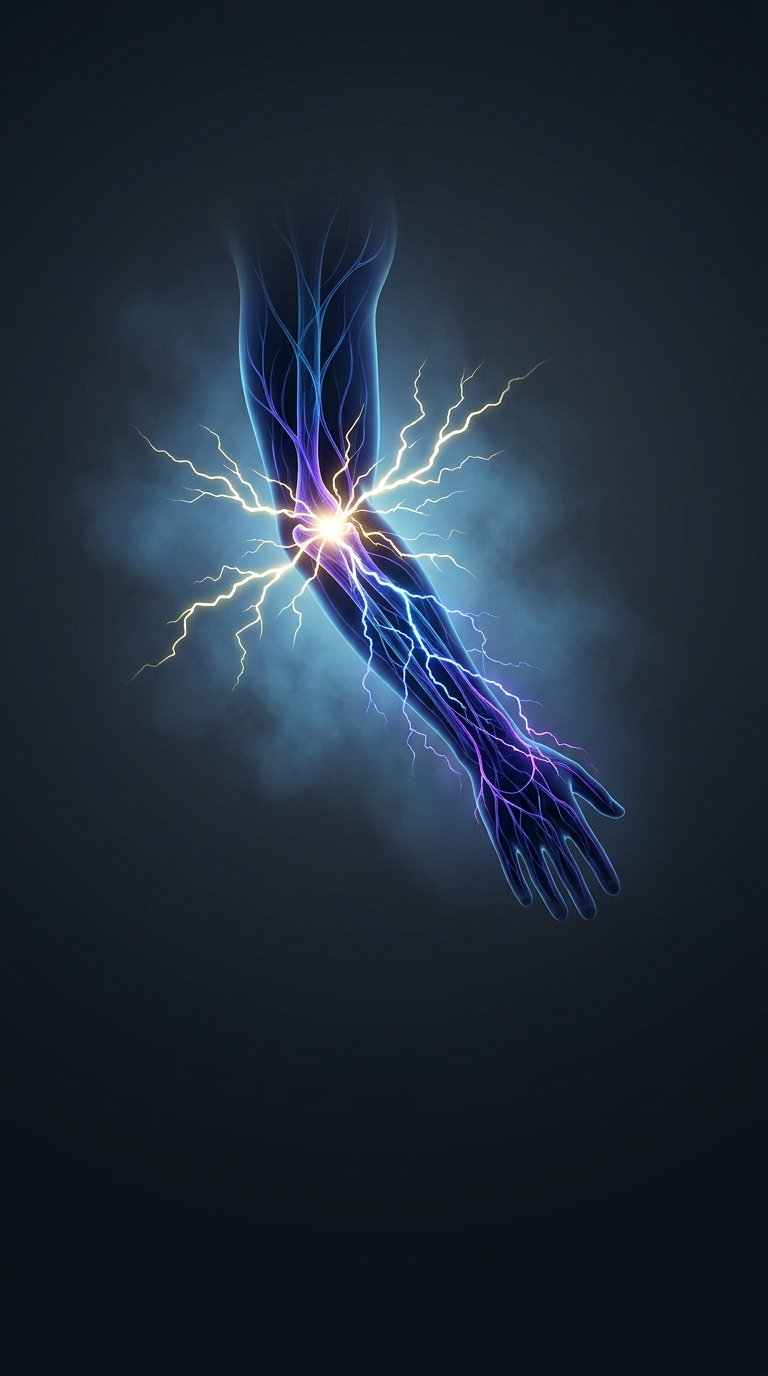
Nerves are communication lines: they carry electrical signals between the body and the brain. When the ulnar nerve is suddenly compressed, its signals can become briefly scrambled or intensified. The brain interprets that burst as tingling, pain, or a jolt traveling toward the fingers the nerve serves. The sensation may seem to spread far from the point of impact because the nerve continues down the arm into the hand.
Why It Usually Fades Quickly
A brief bump generally irritates the nerve without causing lasting damage. Once the pressure stops, its signaling settles, and the strange sensation fades. The same nerve can also be compressed more gradually when the elbow stays bent for a long time, which is why leaning on an elbow or sleeping with an arm tightly folded may bring on hand tingling.
A sharp, fleeting zap is different from numbness or weakness that persists. Those lasting symptoms can indicate more than a momentary knock and merit medical attention. The memorable part of the “funny bone” experience is really a glimpse of how precisely the nervous system maps a physical disturbance onto a distant part of the body.