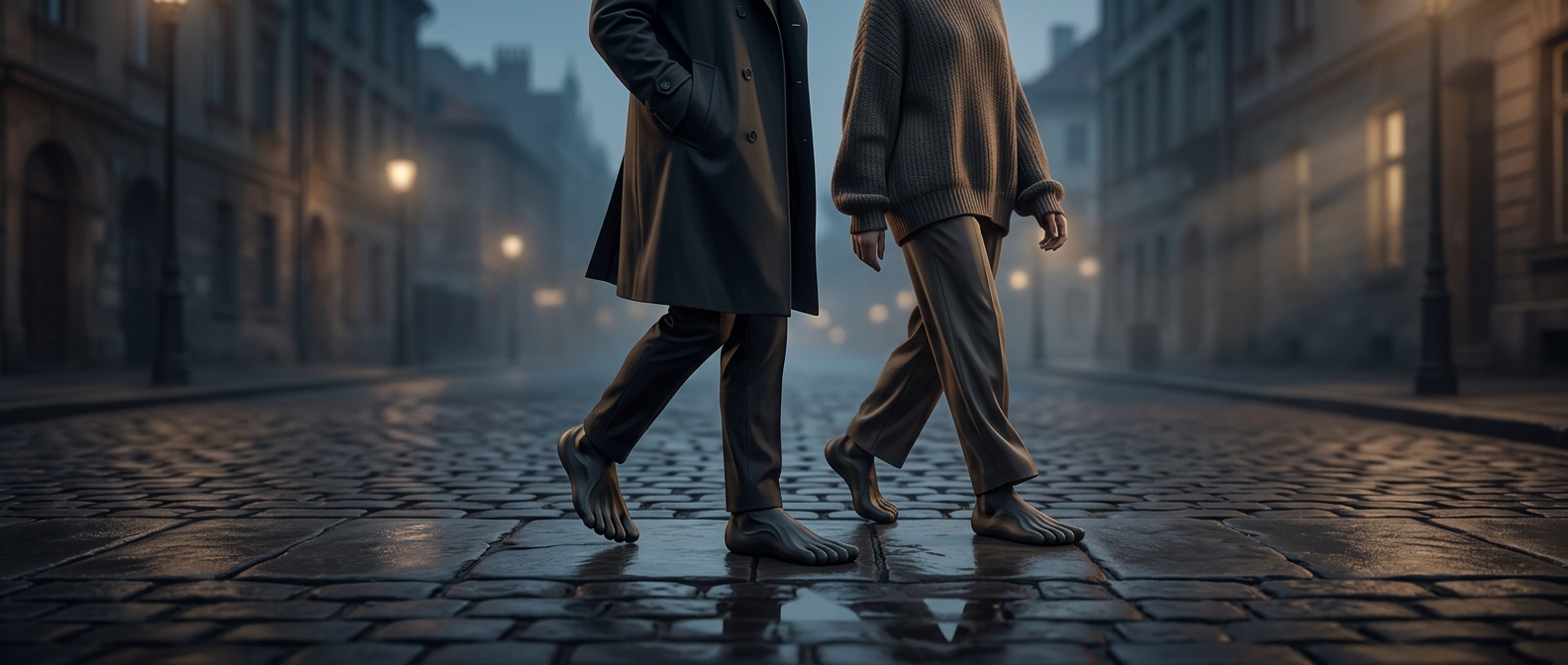
Why a shoe might imitate a bare foot
A conventional sneaker cushions and supports the foot, but that padding also softens the signals coming from the ground. Minimalist shoes take the opposite approach: a thin, flexible sole lets the foot bend more freely and makes changes in surface and pressure easier to feel, while still putting a layer between skin and pavement.
That extra sensation is the appeal for people who want walking to feel less like stepping on a cushion. The shoe’s unusual shape follows from the same design choice: rather than building a roomy, stiff shell around the foot, it aims to interfere as little as possible with how the foot moves.
The sensation is the point—not a promise
Feeling more of the ground can make each step seem more direct and noticeable. But minimalist shoes do not literally make someone barefoot, and their thin soles offer less cushioning than many standard sneakers. The experience depends on both the shoe and the wearer; a surface that feels mild through a thick sole may feel sharp or uneven through a thin one.
So the recognizable “barefoot” look is more than a style statement. It signals a tradeoff: less material between the foot and the ground in exchange for protection from direct contact. The shoe preserves that layer while trying to let the foot—and the wearer’s awareness of each step—take a larger role.