The rope is only one link in the chain
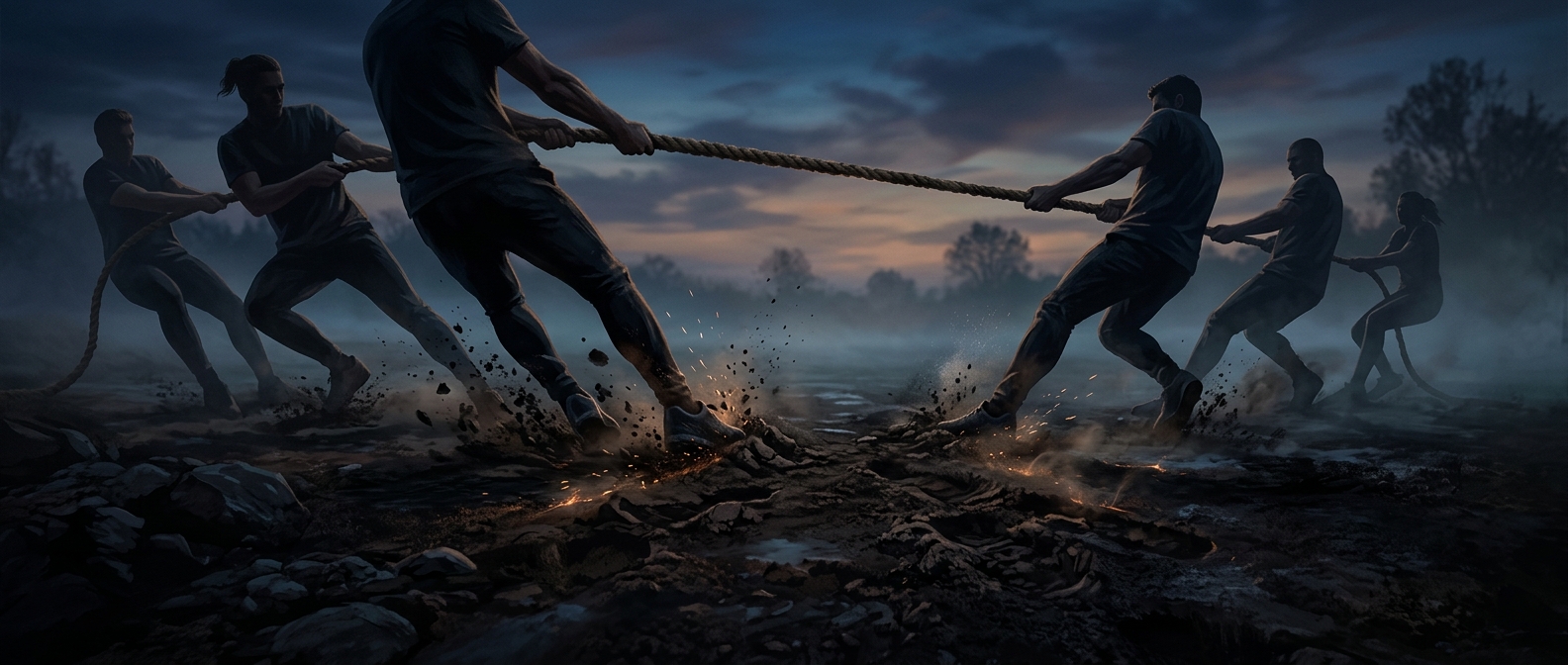
In tug of war, pulling harder works only if your body can stay anchored. Your arms transfer force to the rope, but the rope pulls back on you. Your feet press against the ground, and friction—the resistance that keeps surfaces from sliding past each other—helps the ground push back. That push lets you lean and pull without simply being dragged forward.
If your shoes start slipping, the chain breaks at the ground. Your muscles may still be working hard, but less of their effort becomes a steady pull on the rope.
How shoes help turn effort into traction
The tread on a shoe—the raised pattern on its sole—can grip the ground and resist sliding. The sole’s material and the surface beneath it matter too. On wet grass, water can make the contact less secure, while the soft ground may shift underfoot. A shoe that holds well on a firm, dry surface may not perform the same way there.
Good footing also gives a player room to brace: knees bent, body leaning back, feet set so the pull can pass through the legs into the ground. If one person slips, that can disrupt the team’s rhythm and make it harder for teammates to keep their own footing.
Why the strongest team can still lose
Tug of war is not simply a test of arm strength. A team has to coordinate its pull while keeping enough grip with every player’s feet. The winning pull is the one the team can transmit to the ground without sliding. That is why, on slick grass, secure shoes and steady bracing can matter more than an extra burst of strength: the team that stays planted can keep pulling when the other team is already losing ground.