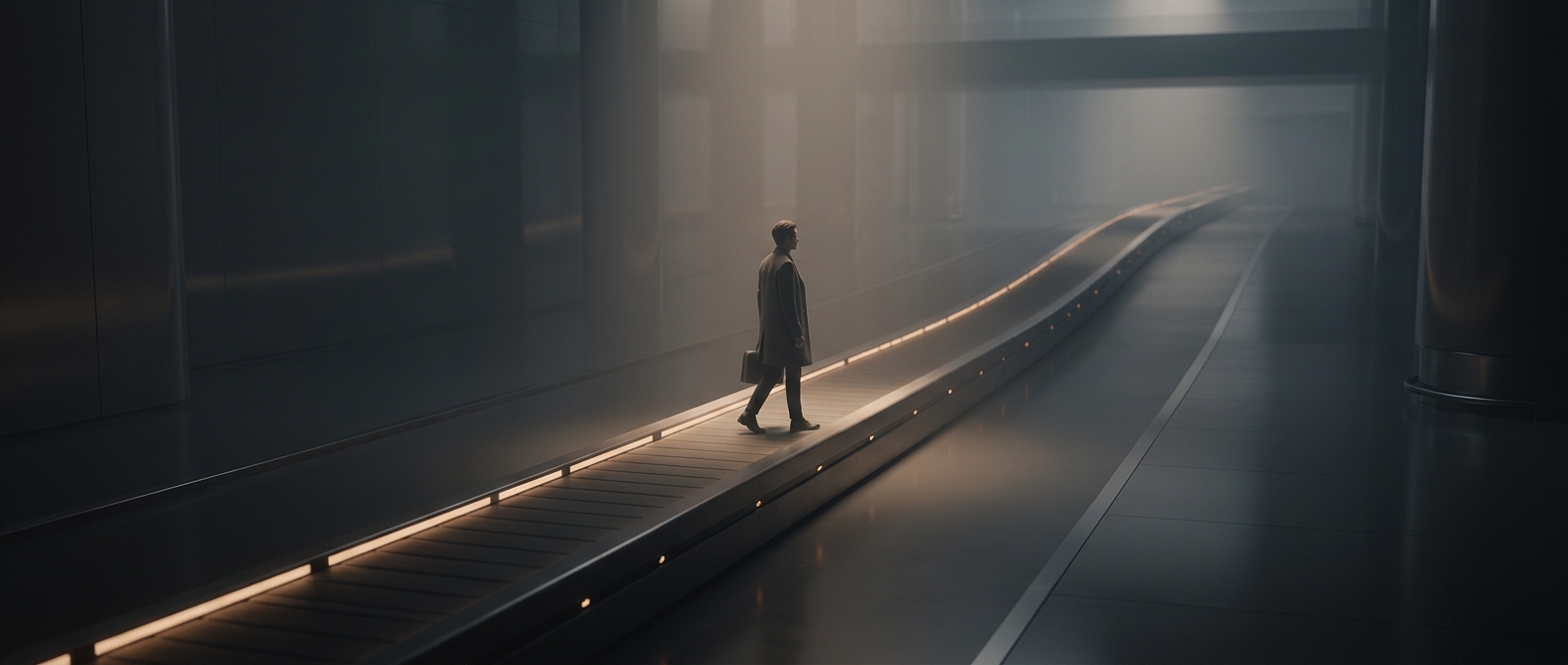
Why a Faster Walkway Was Hard to Ride
A conventional moving walkway carries people at one steady speed. Paris’s experimental design tried to go further: passengers stepped onto a slow section, then crossed several sections moving progressively faster before the belt slowed them down again near the exit. The idea was to let riders accelerate and decelerate in stages rather than be jolted from a standstill to full speed.
The difficulty was that the belt moved a passenger’s feet before the rest of the body could fully adjust. At each change in speed, a rider had to keep balance while adapting their stance and stride. The transition might be gradual in the design, but it still happened beneath people who were walking, standing, carrying bags, or following other commuters.
The Human Factor in the Engineering
A moving walkway is not just a belt with a motor. It must also provide a predictable surface for people to step onto and leave, often in a crowded space. On a multi-speed system, those entry, exit, and speed-change zones become more demanding: riders have to judge where to step while the ground beneath them is changing pace.
That made the design’s central tradeoff hard to escape. Higher belt speeds could carry more people through the corridor, but only if passengers could board, balance, and exit reliably. Falls and difficulty riding showed that increasing the machinery’s speed did not automatically make the trip faster in practice. The walkway was eventually operated more slowly, a reminder that transport systems have to match the pace of the people using them, not just the capability of the equipment.