Why the Belt Can’t Simply Run Faster
A moving walkway has to serve people moving at different speeds: someone striding through the airport, a traveler steering a suitcase, and a passenger who needs time to get balanced. Raising the belt speed helps only the first group. For everyone else, it makes the transition at each end more demanding: the floor is stationary, the belt is moving, and the passenger has to cross that boundary while keeping their footing and control of their bags.
The ends are engineered for that handoff. The belt passes over a comb-like plate whose teeth fit into grooves in its surface, allowing passengers to step on and off without encountering a blunt edge. But the hardware cannot make every entry effortless. A faster belt would leave less time for people to adjust, especially when the walkway is crowded or someone hesitates at the entrance.
Speed Is Only Part of the Trip
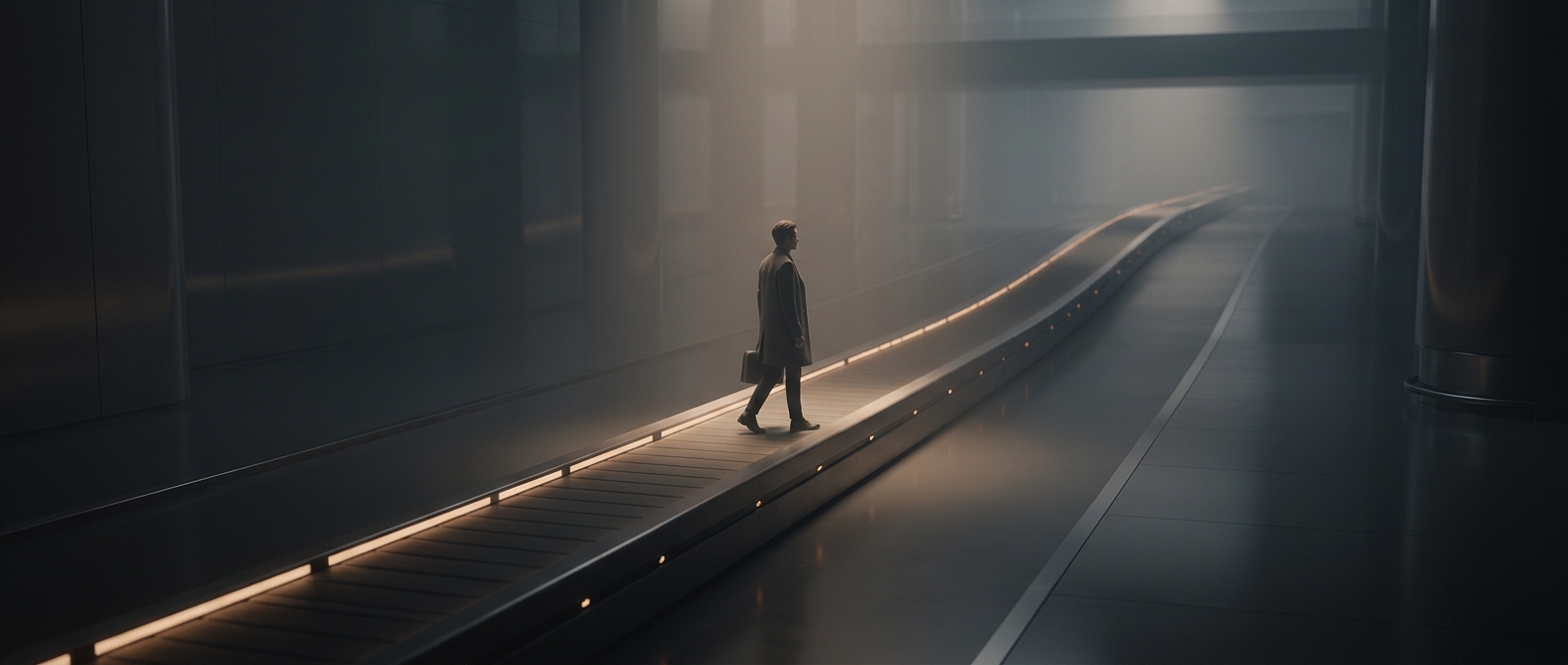
A walkway adds its motion to the passenger’s own walking speed. Someone who keeps walking gains more ground than someone who stands still, while a passenger with luggage can ride without having to match a brisk pace. That makes a moderate setting useful for a mixed crowd—and avoids turning a shared route into a moving obstacle course.
The tradeoff is most noticeable when the walkway is long: a small speed increase could save time, but it would also make boarding and exiting less forgiving. Airports choose a pace that people can manage repeatedly, not just one that moves an unencumbered walker quickly. The belt’s job is to smooth out a tiring stretch of terminal, one steady step at a time.