Why a bright beam can erase detail
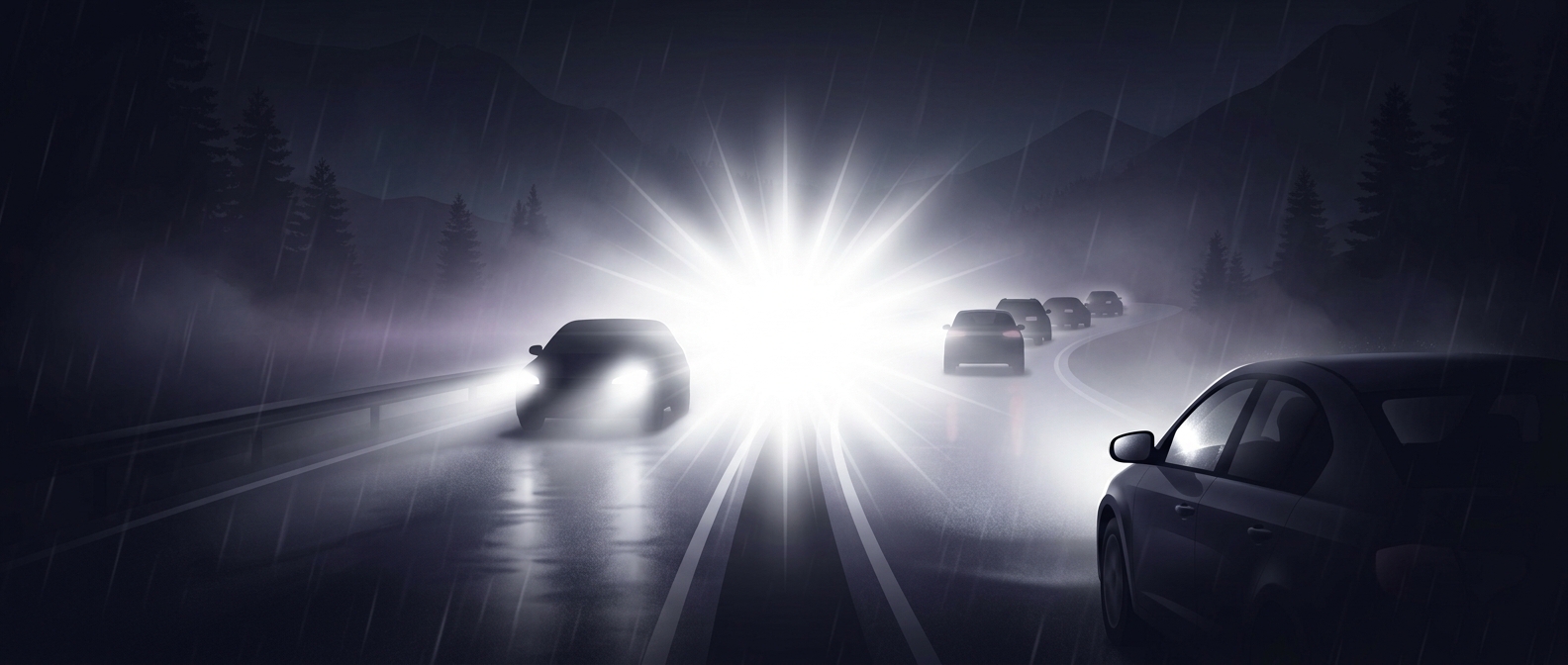
At night, the eye adjusts to low light: the pupil widens, and light-sensitive cells become better at detecting faint shapes. A sudden bright headlight disrupts that adjustment. Light scatters inside the eye and across the windshield, creating a veil of brightness that reduces the contrast of the road, lane markings, and hazards behind it. The oncoming driver may still see the headlight clearly while seeing the road less clearly.
The recovery takes longer than the flash
When the glare passes, vision does not instantly return to its previous sensitivity. The eye needs time to readjust, so a pedestrian or obstacle that was difficult to make out can remain hard to see for a short while. The risk is especially acute because the glare arrives while both cars are moving and each driver has little time to respond.
High beams are useful when the road ahead is dark and no one is approaching, because they illuminate farther than low beams. But their reach is also the problem: light aimed down the road can enter another driver’s eyes. Switching to low beams when traffic approaches reduces that direct glare while still lighting the nearer roadway. The beam that helps you spot something far away can briefly make the other driver miss something close.