Why a Hot Room Makes a Stretch Feel Harder
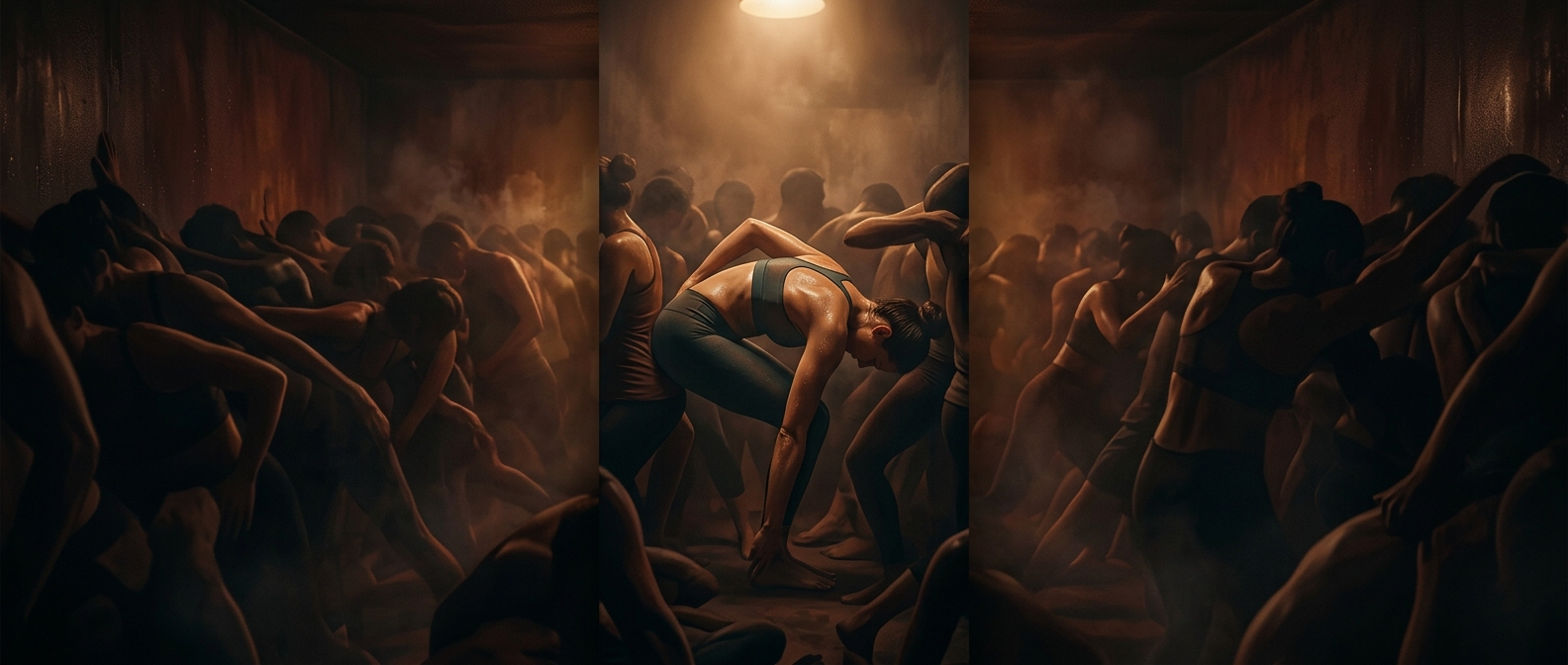
Sweat cools you only when it evaporates—turns from liquid into vapor and carries heat away from the skin. In a warm, crowded studio, the surrounding air may already be warm and damp, and people’s bodies add more heat and moisture. With less temperature difference and less room for moist air to disperse, sweat can linger on the skin instead of providing as much cooling.
That leaves the body working harder to shed heat. It sends more blood toward the skin, where heat can escape, while also keeping blood available to working muscles. The result may be a faster pulse and a greater sense of effort, even when the movement itself is gentle.
A Toe-Touch Adds a Balance Problem
A one-legged toe-touch is not just a stretch: it asks the ankle, hip, and trunk to make continual small corrections so you do not tip over. Heat and fatigue can make those corrections feel less steady. Meanwhile, bending and reaching change where your weight sits over your supporting foot, so the body has to coordinate balance while holding the stretch.
That is why the pose can feel unexpectedly demanding in a heated class. The strain is not necessarily a sign that the stretched muscle is being lengthened more effectively; it may reflect the extra work of staying upright while your body is already trying to cool itself.
The Room’s Smell Has a Separate Cause
Fresh sweat is mostly water and salts and is not, by itself, strongly smelly. Odor develops when skin microbes break down substances in sweat and on the skin. Warmth and dampness can make that process more noticeable, so the room’s smell is another consequence of the same close, humid conditions—not a measure of how hard anyone is working.