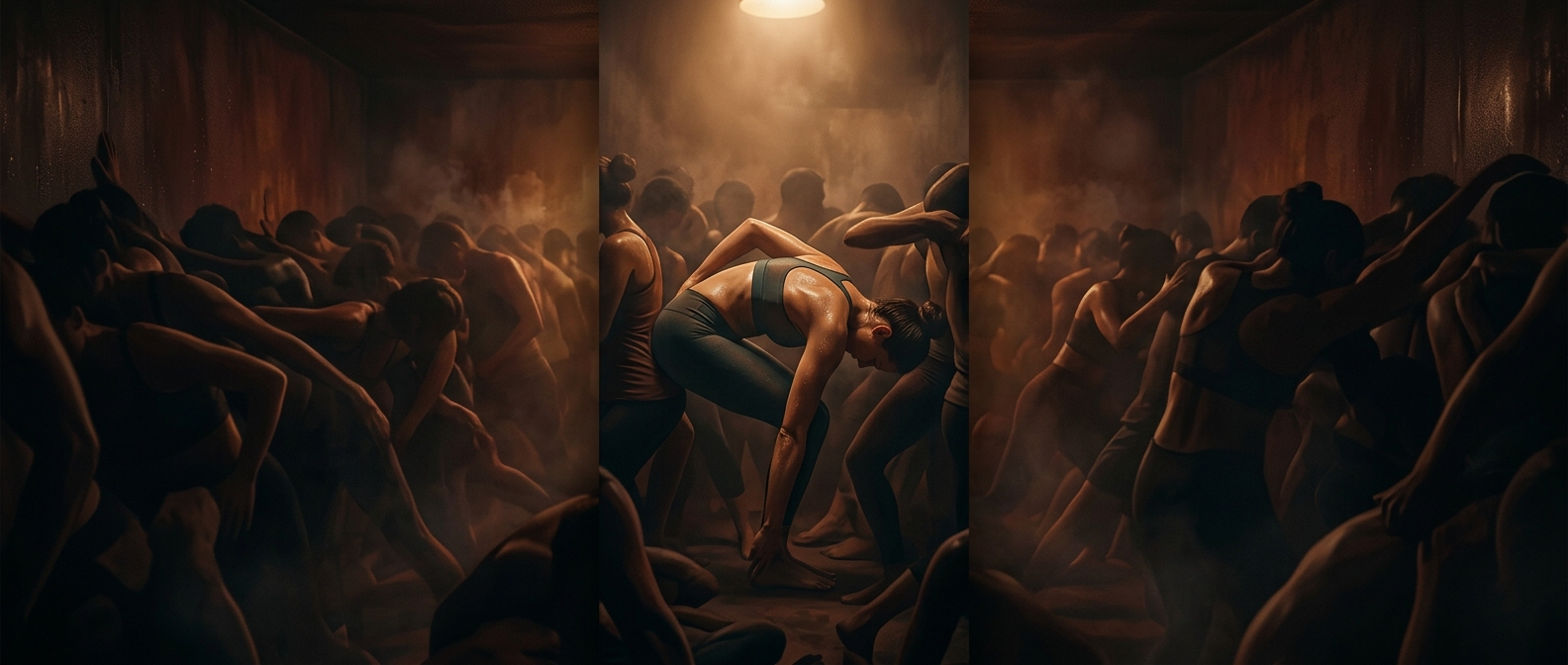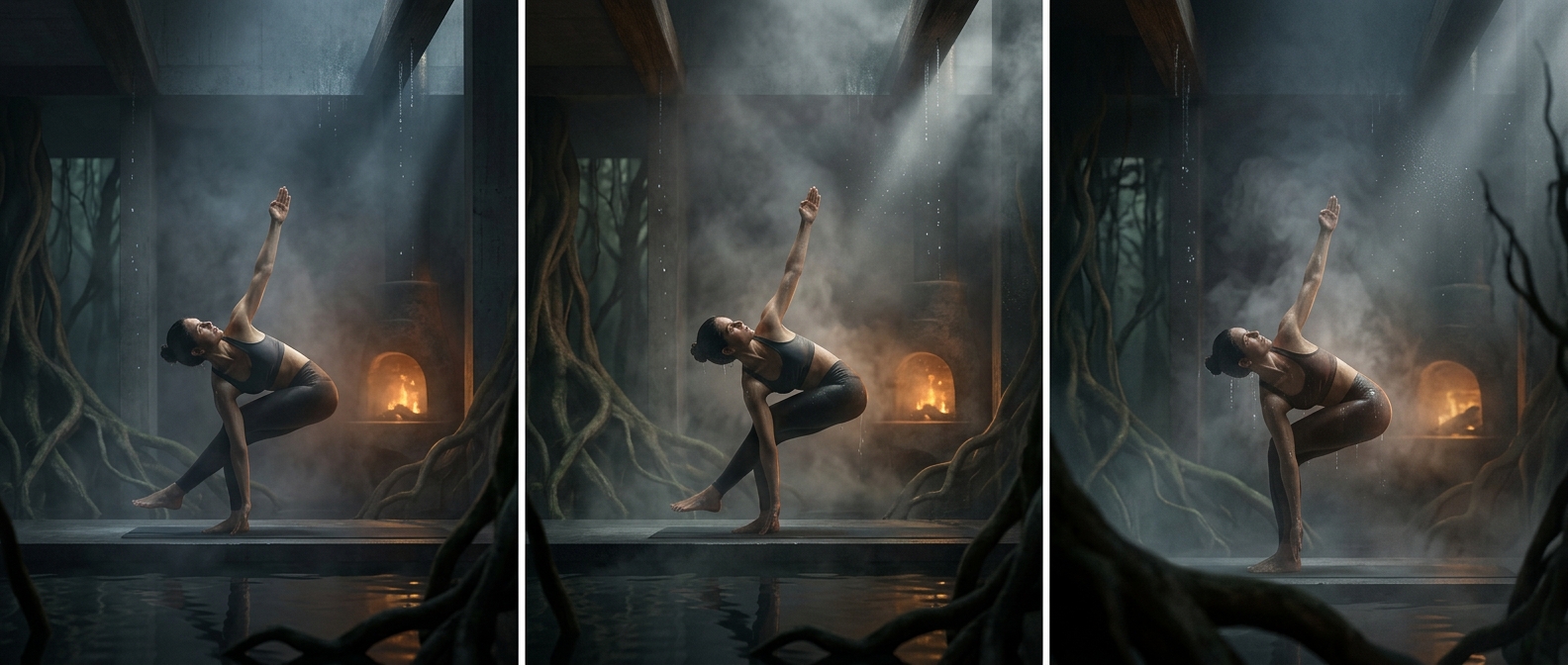
Why a still pose can feel strenuous in a hot room
Your muscles may be holding one position, but your body is also working to keep its internal temperature within a safe range. In a 105°F studio, the air is already hot enough to slow the transfer of heat away from your skin. Sweating helps, but it cools you only when the sweat evaporates; in humid or crowded conditions, evaporation can be less effective.
The circulation tradeoff
To move heat outward, blood vessels near the skin widen, sending more warm blood to the body’s surface. That helps release heat, but it also means the heart must keep pumping briskly while supporting both the exercise and the cooling effort. A pose that would feel manageable in a cooler room can therefore feel more taxing, even if you are barely moving.
Sweat also carries water and salts out of the body. As fluid loss builds, there is less circulating volume available, making it harder to maintain blood flow and regulate temperature. That is one reason a class can leave someone feeling unusually tired, not merely sweaty.
Heat changes what effort feels like
The warmth can make muscles feel looser, but it does not mean the body is protected from overheating. Dizziness, nausea, headache, or unusual weakness are reasons to stop, move to a cooler place, and recover rather than push through. In a hot studio, the pose is only part of the workload: the body is exercising while trying to get rid of excess heat.