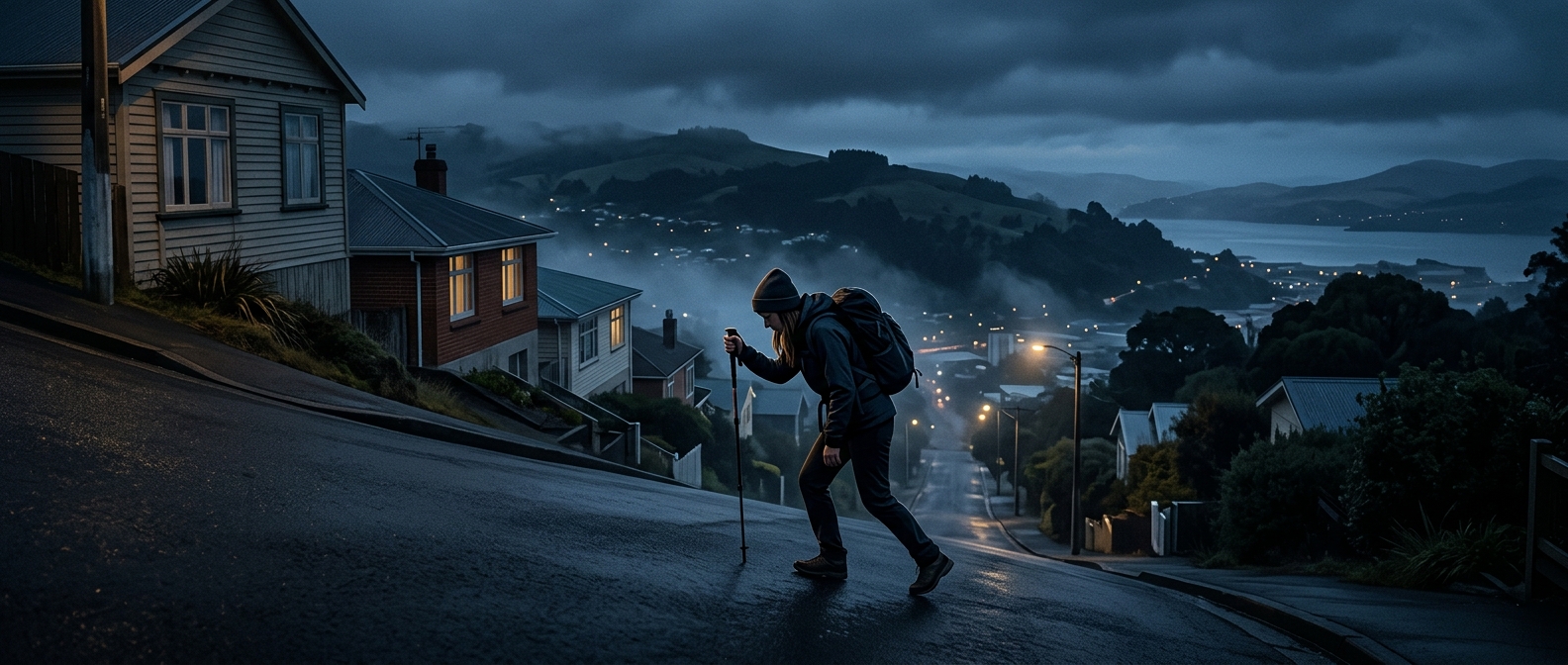
How a steep street turns a walk into a viewpoint
A 34.8% incline means the road rises about 34.8 feet for every 100 feet traveled horizontally. That is a grade, not an angle: the slope changes the height of the street quickly as people move along it.
On an ordinary level road, pedestrians usually pass a home at roughly the same elevation as its front windows. On a sharply rising street, that relationship shifts. A person farther uphill can be level with parts of a house that would sit above or below eye height on flat ground. The street’s close-set homes make that change in perspective especially noticeable.
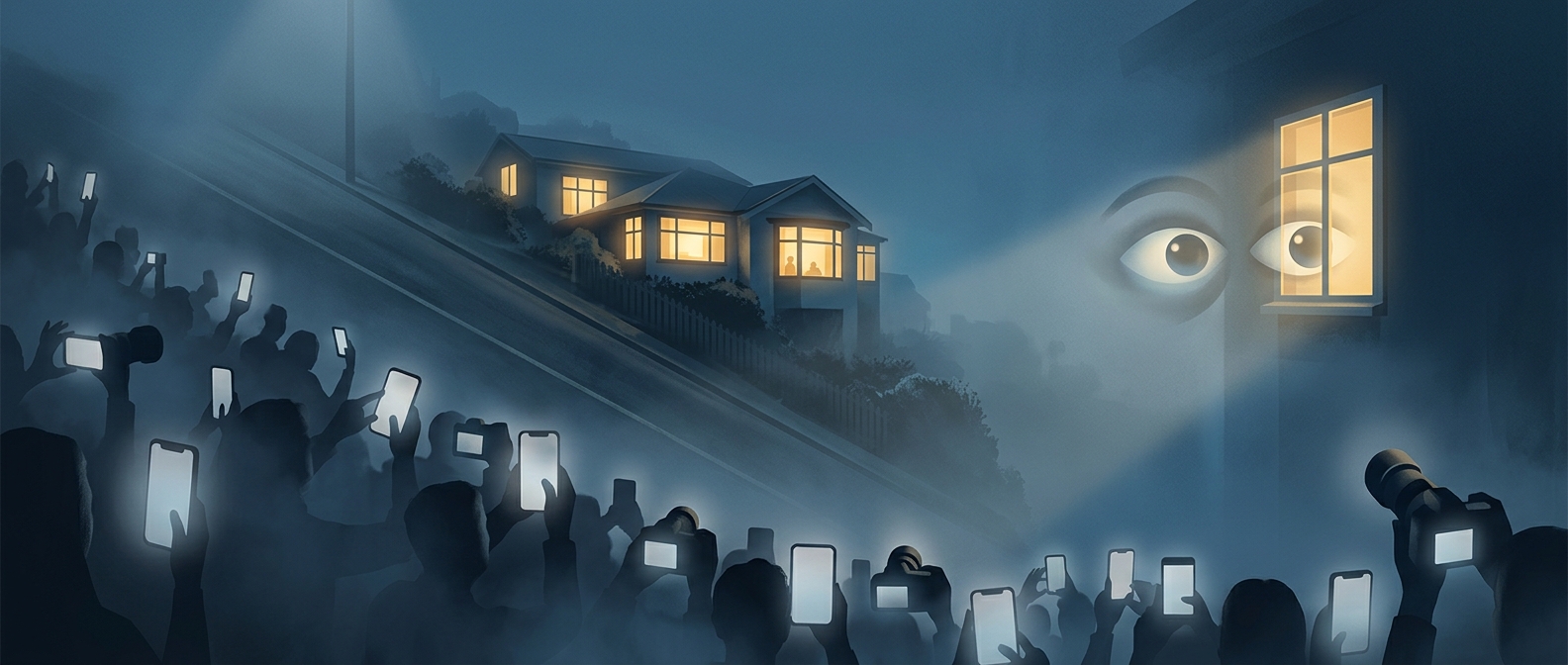
The view comes with a privacy cost
For visitors, the unusual alignment can make the houses seem like part of the climb’s spectacle. People slow down, look around, and take in the steepness from different points; from some of those points, a living-room window may be directly in view. The same slope that creates a memorable street scene can therefore turn a resident’s ordinary room into something passersby can see.
That is the awkward consequence of a famous residential landmark: the best vantage points are not separate viewing platforms but the public road itself. A few steps uphill can change not only the view of the street, but also what a tourist can see inside a home.