“Off” Means Dark, Not Disconnected
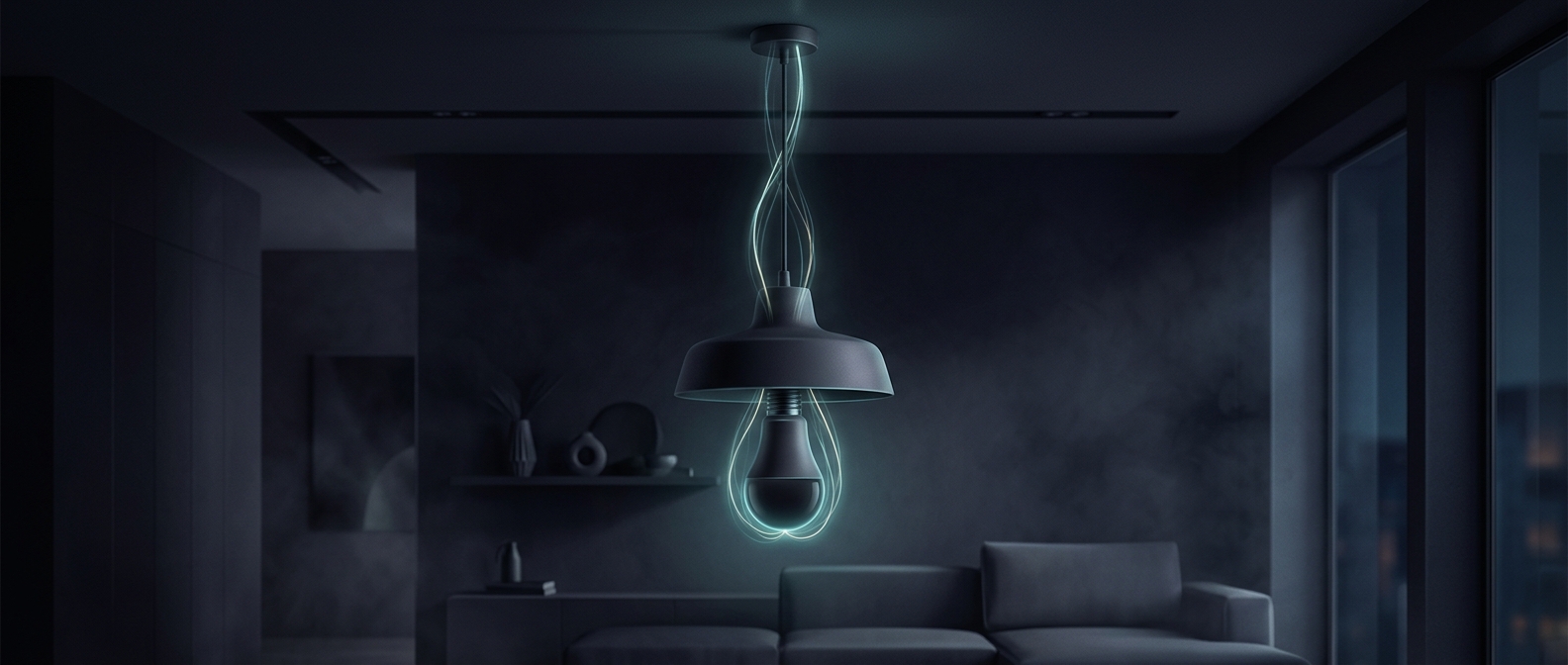
A smart bulb has to be ready before it can respond to an app, voice assistant, or automation. So when its light is off, a small part of the bulb remains on: the electronics that listen for a wireless signal and decide what to do with it. The lamp is dark, but the bulb is still drawing a little power.
The Bulb Keeps a Listening Circuit Awake
Inside the bulb, a wireless receiver monitors for a message from the home network or a compatible control device. A low-power controller handles that message and tells the lighting circuitry to switch on. The receiver and controller use far less energy than producing light, but they cannot be completely shut down and still respond instantly to a command.
That standby power is the tradeoff behind remote control: the bulb is always reachable, rather than waiting for someone to restore power at a wall switch.
Why the Wall Switch Matters
If you turn off a conventional wall switch, electricity to the bulb stops. The smart bulb’s receiver goes dark too, so it cannot hear an app command or follow a scheduled routine until power returns. For smart controls to work reliably, the switch usually needs to stay on; the bulb is then turned off electronically, leaving its listening circuit powered.
In other words, the bulb’s “off” state is a dimmed-down operating mode, not a complete shutdown. That small distinction is what lets a dark room become lit with a tap on a phone.