A Work Song That Listens Back
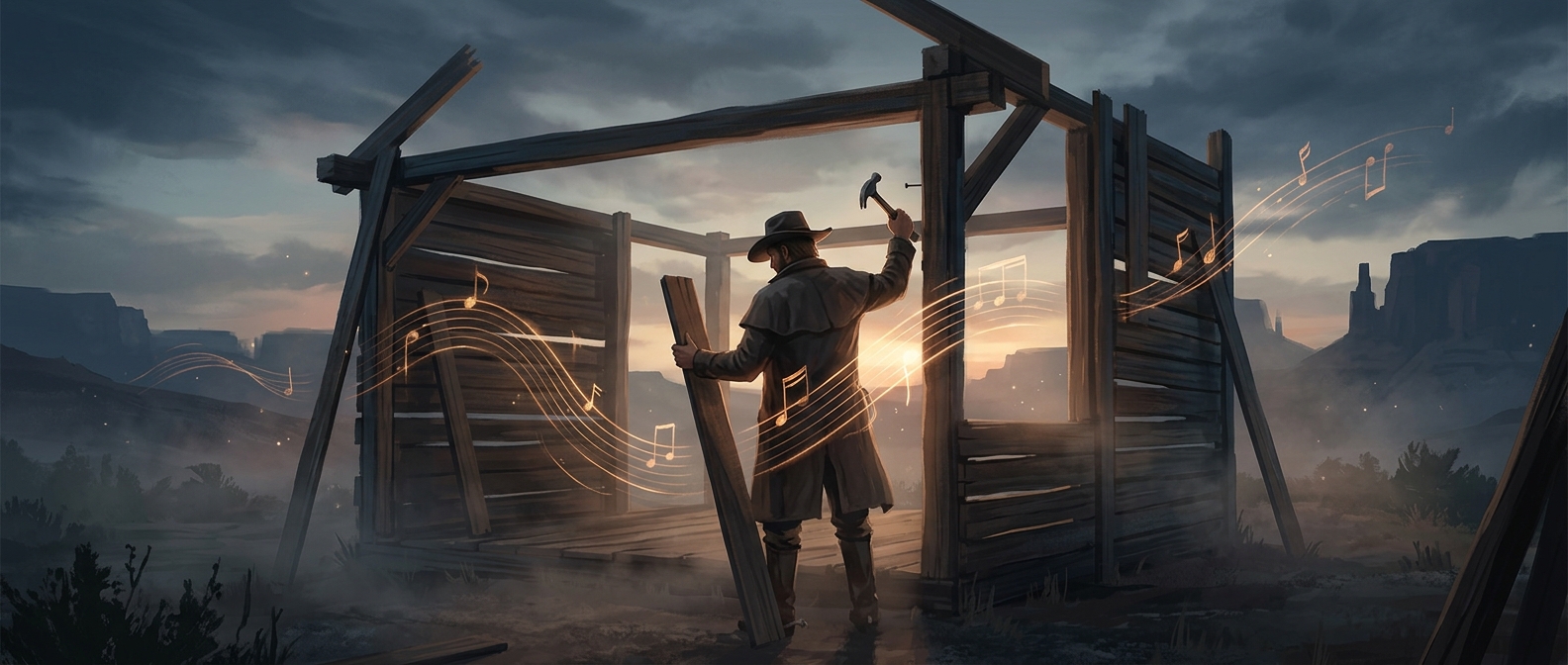
In the epilogue’s housebuilding sequence, construction is not just shown in a cutscene. The player presses buttons as the work unfolds, and the timing of those presses shapes when hammering and measuring sounds land within the folk song. The music therefore feels less like a track playing over the scene and more like a work song the player is helping perform.
Turning Inputs Into Rhythm
The trick is a shift in how familiar sounds function. A hammer strike could be ordinary background noise; here, it also acts like a beat. Because it follows the player’s input, the sound links a physical action on screen to the song’s pulse. Measuring contributes to the same musical texture, making several kinds of building work feel coordinated rather than mechanically separate.
That gives a simple button press two jobs: it advances the construction and helps shape the scene’s rhythm. The player is not composing freely or choosing the song, but has enough influence over its timing to feel involved in the performance.
Why the Small Interaction Matters
Housebuilding is usually represented as a result: a finished structure appears after a stretch of time. This sequence gives the process a playable texture instead. The steady labor becomes the focus, and the soundtrack makes each action feel part of a shared cadence between worker and music.
The memorable detail is that the song’s beat is not wholly outside the player’s control. For a moment, building a home means keeping time with the work itself.