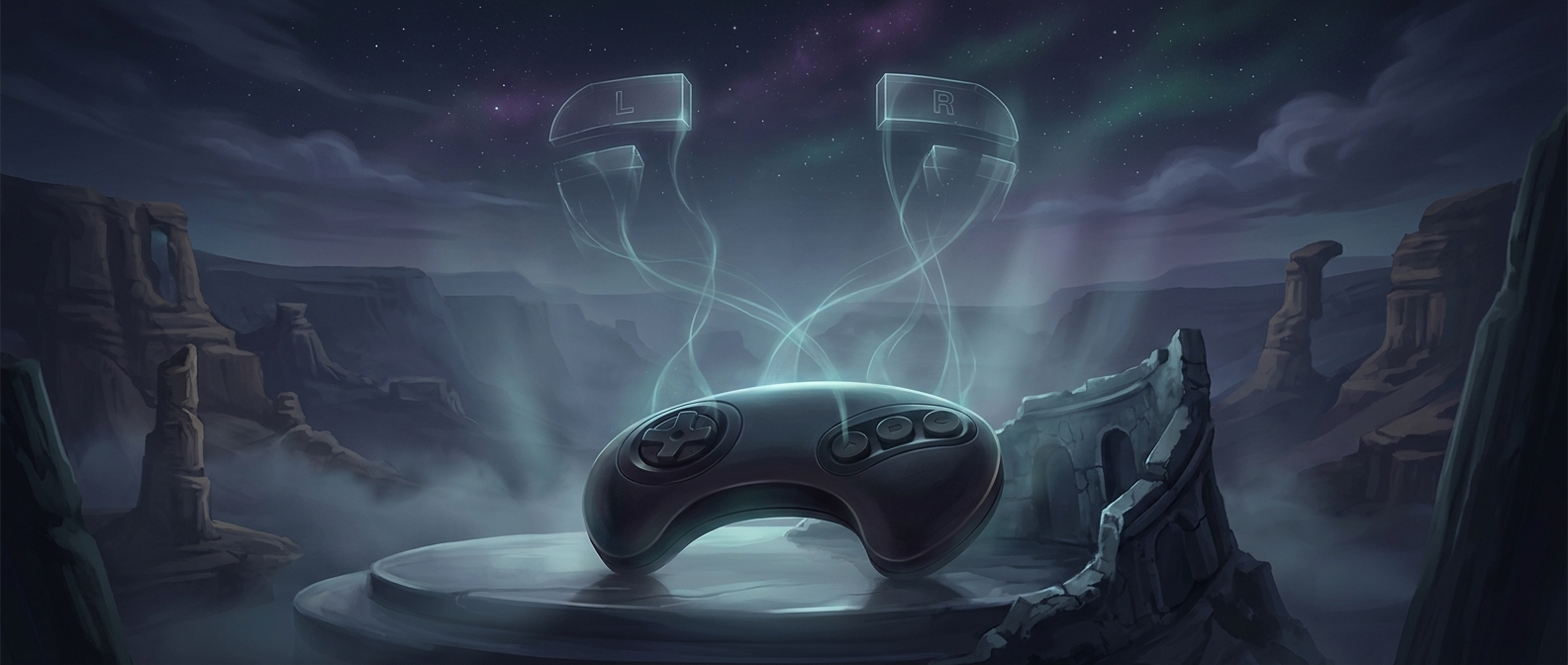
The three-button layout met an awkward new demand
The original Genesis pad put three labeled buttons—A, B, and C—on the right side, alongside a directional pad and Start. That was enough for many games: a button could jump, attack, or trigger a special action, and designers could assign different jobs to A, B, and C.
The squeeze became obvious in games built around several distinct attacks. In a one-on-one fighting game, for example, players may need separate inputs for punches and kicks at different strengths. With only three face buttons, a game has to combine actions, use awkward button combinations, or put commands somewhere less natural. The rival Super Nintendo pad offered two more buttons on its shoulders, giving designers extra inputs without crowding the face.
Sega added buttons where players could reach them
Sega’s later six-button controller expanded the familiar face-button cluster to six, labeled X, Y, and Z in addition to A, B, and C. This gave games a straightforward way to map more attacks to individual buttons, rather than asking players to memorize combinations. The redesign was especially useful as arcade-style fighting games brought larger move sets to home consoles.
The change was not just a matter of adding hardware: games had to recognize and use the extra inputs, while remaining playable on the original three-button pad. That compatibility mattered because the older controller was already in players’ homes. The redesign therefore created more room for complex controls without making the earlier Genesis library or its standard controller obsolete.