A game console becomes a small research computer
A protein is a chain of molecules that bends into a particular three-dimensional shape. That shape helps determine what the protein can do. To study the process, researchers use computer models that calculate how atoms might move and interact over time. Repeating those calculations across many possible paths can demand far more computing than one ordinary computer can provide.
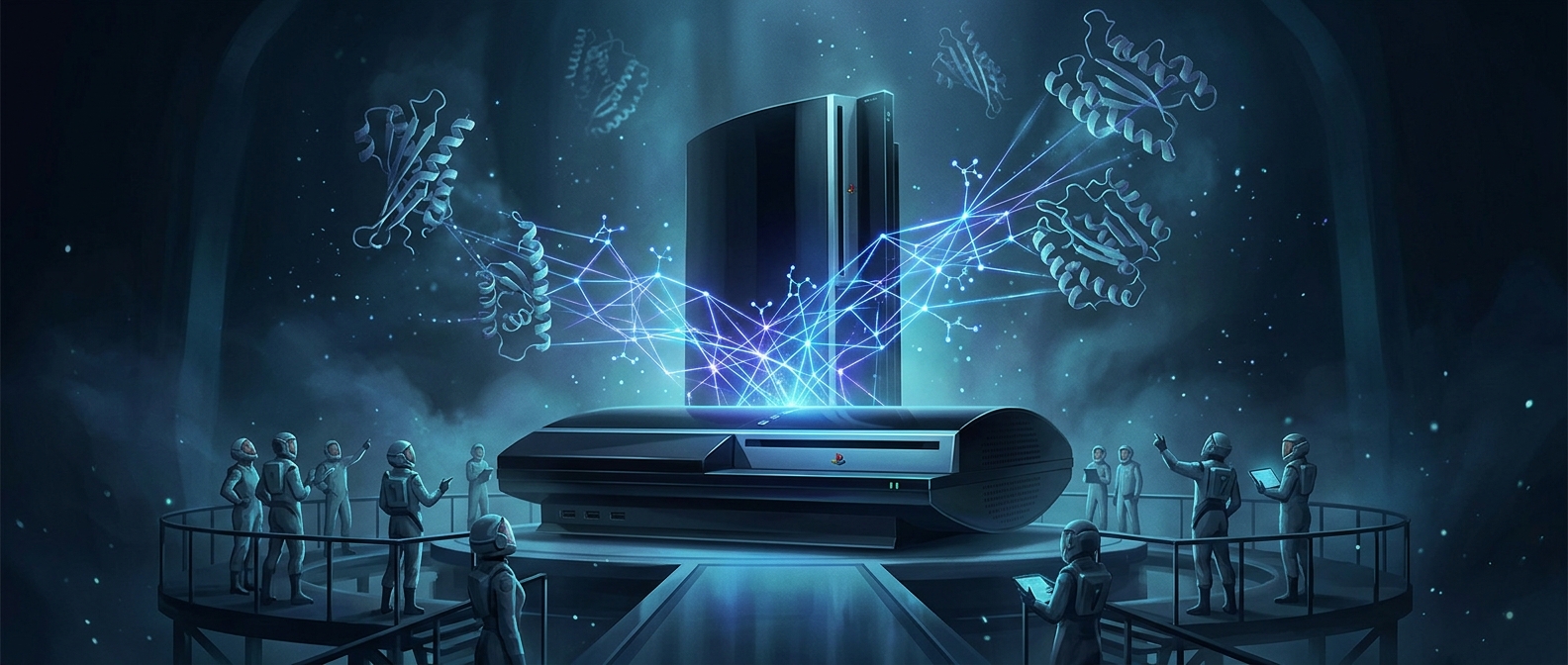
The PlayStation 3 offered an unusual resource: its Cell processor, built to handle demanding calculations in parallel. Folding@home adapted its software to use that hardware, turning a console that was switched on but not being used for a game into a worker on a much larger research project.
Many consoles, separate pieces of work
The program divided computational work into smaller jobs and sent them to participating consoles. Each machine ran calculations locally, then returned its results so researchers could analyze them alongside results from other machines. This approach is called distributed computing: instead of relying on a single supercomputer, a project combines the spare processing capacity of many devices connected over the internet.
The console did not decide what a protein does or diagnose disease. It helped generate simulated data about protein behavior—evidence researchers could use to investigate how proteins fold and how disruptions in that process may relate to disease. Each PS3 contributed only a portion of the work, but the combined effort could explore more possibilities than a single machine could handle.
Idle time becomes research time
The arrangement depended on a practical tradeoff: owners supplied electricity and allowed their consoles to run calculations, while scientists gained access to computing power that would otherwise sit unused. It also made participation visible in an everyday setting. A device bought for games could spend its quiet hours helping researchers test possible molecular motions, one calculation at a time.