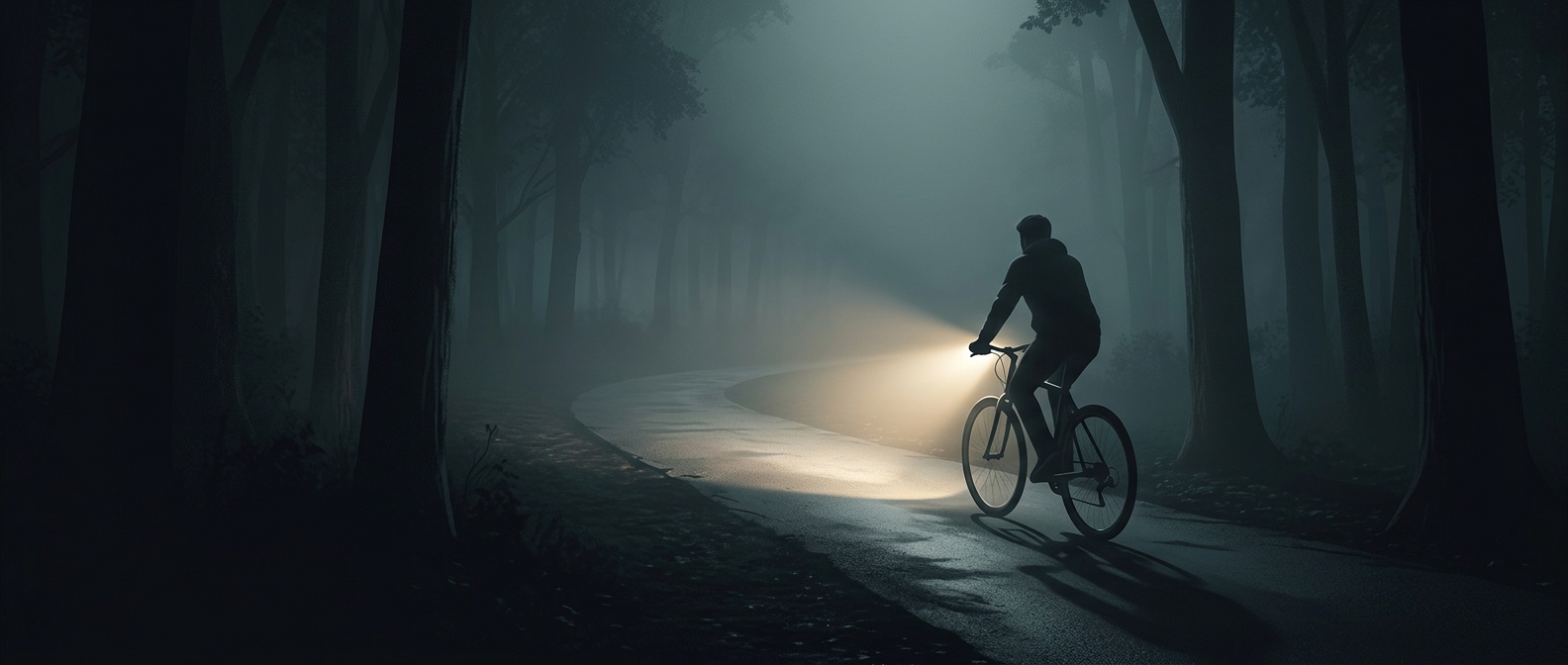
Why a Bike’s Front Light Is White
A bicycle’s lights do two different jobs: they help the rider see the road, and they help other people judge where the bike is and which way it is facing. A white light at the front and a red light at the rear create a simple visual map for drivers approaching from different directions.
Color Gives Traffic a Sense of Direction
On a dark road, a single point of light can be hard to interpret. The paired colors make the bike’s orientation easier to read: white indicates the front, while red indicates the back. That distinction matters when a driver sees a cyclist from the side or at an angle. Without it, the bike’s lights could suggest it is traveling in the opposite direction, delaying a driver’s understanding of its path.
The colors also fit a familiar convention used on other vehicles, so road users can recognize the arrangement quickly. A front light therefore does more than reveal potholes or the edge of the pavement; it communicates which end of the bicycle is approaching.
Seeing and Being Seen Are Different Tasks
A bright front lamp can light the rider’s route, but visibility to others depends on where the lamp points and whether it can be seen from the relevant angle. A light aimed down at the pavement may help the cyclist see while doing less to announce the bike to approaching traffic. The rear red light serves the complementary purpose of making the bike noticeable from behind.
Together, the lights make direction legible at a glance—a small design convention that helps drivers interpret a cyclist before they have to react.