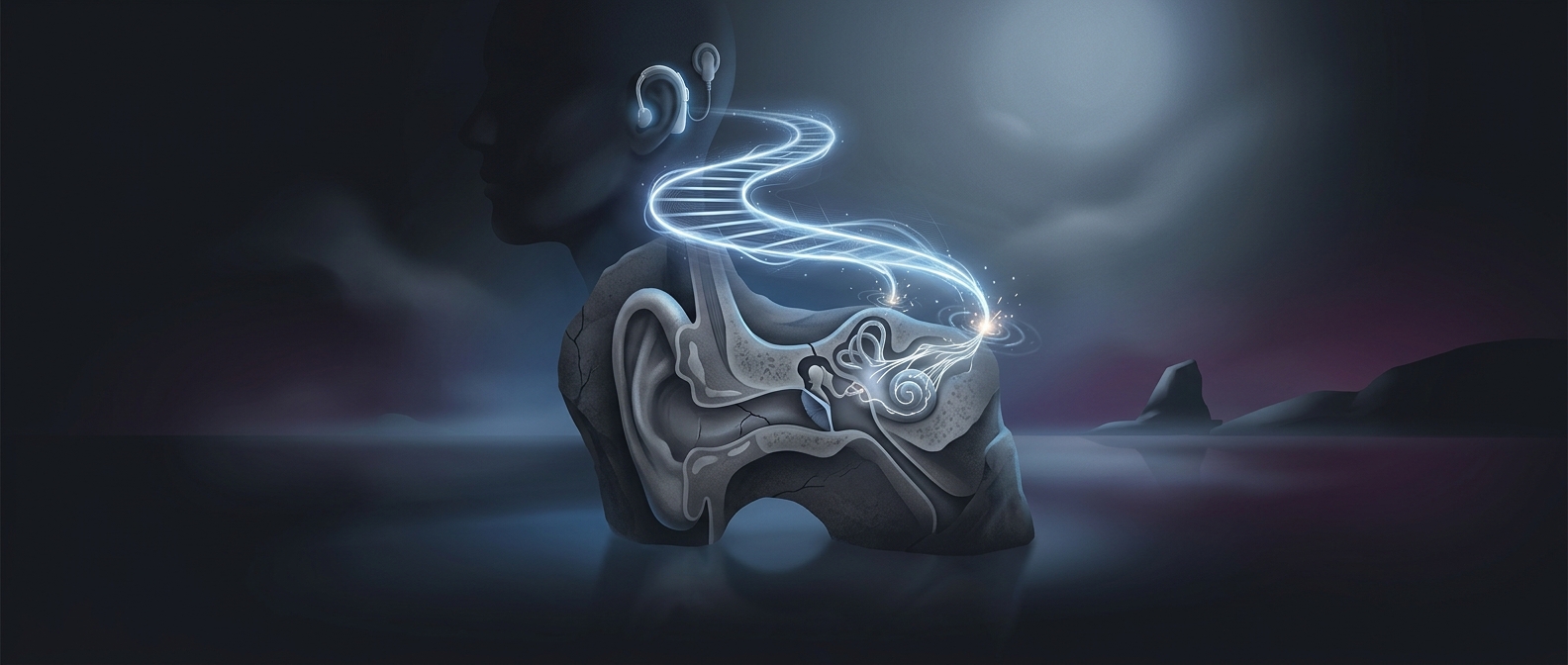
Turning sound into nerve signals
Inside a healthy cochlea, tiny sensory cells translate vibrations into electrical activity that travels along the auditory nerve to the brain. When those cells are badly damaged, making incoming sound louder may not help: the ear still cannot convert it into a useful nerve signal.
A cochlear implant takes over part of that conversion. Its external microphone picks up sound, and a speech processor breaks it into a coded pattern. A transmitter sends that pattern through the skin to an implanted receiver, which delivers pulses to a slim row of electrodes placed inside the cochlea.
Why electrode position matters
Different places along the cochlea normally respond best to different sound frequencies. The implant’s electrodes are arranged to stimulate corresponding regions, giving the auditory nerve a rough map of the sound’s pitch and changing intensity. The signal is not a miniature copy of ordinary hearing; it is a new, simplified code the brain must learn to interpret.
That is the key difference from a hearing aid. A hearing aid boosts sound so surviving sensory cells can do more of their usual work. An implant sends electrical stimulation past the damaged cells and directly activates the hearing pathway. The result depends on the condition of that pathway, and the brain often needs practice to make sense of the new signals—turning a device’s pulses into recognizable speech and sounds.