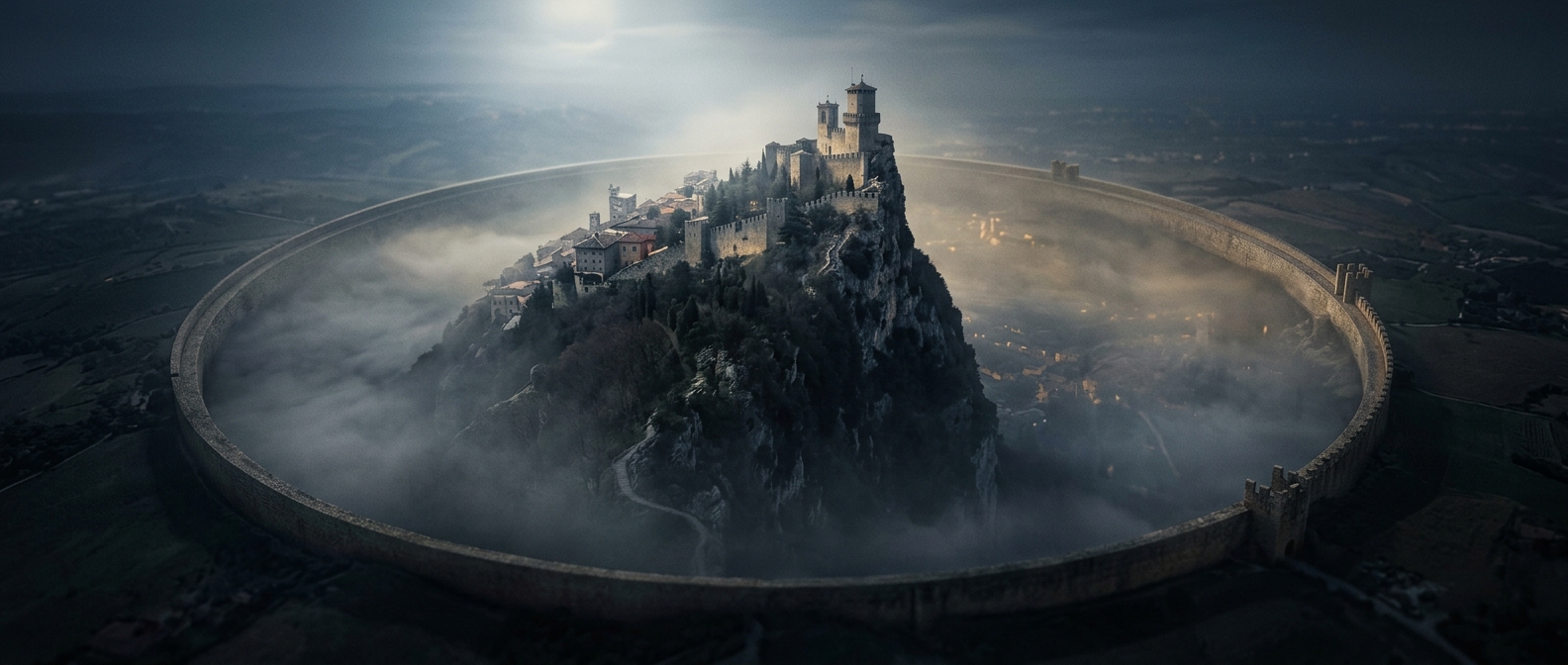
How San Marino remained outside Italy
San Marino’s independence is more than a border quirk. The tiny republic sits on the slopes of Mount Titano, entirely surrounded by Italy, but its political institutions endured while the Italian peninsula changed hands and eventually unified as a kingdom in the 19th century.
A key moment came during Italian unification. San Marino did not become part of the new Kingdom of Italy; instead, the two states established formal relations in a treaty signed in 1862. That agreement gave practical form to a political separation that had already lasted for centuries. Its location helped shape that history: a small community centered on defensible mountain terrain could maintain its own local government without controlling a large territory.
A border without a hard divide
Being surrounded by Italy does not mean San Marino is cut off from it. Roads connect the republic to nearby Italian towns, and everyday travel across the border is far less conspicuous than the map might suggest. The border marks a difference in sovereignty—not a natural barrier separating two distant worlds.
That arrangement makes San Marino a striking example of how geography and politics can diverge. Visitors can move from Italy into a separate country in the course of an ordinary journey, while the government, laws, and identity on the other side of the border remain distinct.