How a Shareware Game Reached the Office
Doom’s shareware release made it easy for the game to travel beyond its intended audience. Shareware is software people can try or copy before paying for the full version; Doom’s freely distributed opening episode could be installed without first buying the complete game. On an office computer, that turned a spare moment into an invitation to play.
The game also let players connect their computers for deathmatches—multiplayer contests in which players tried to eliminate one another. Coworkers on the same company network could therefore turn separate desks into a shared arena without needing a public gaming service.
When Play Competes With Work
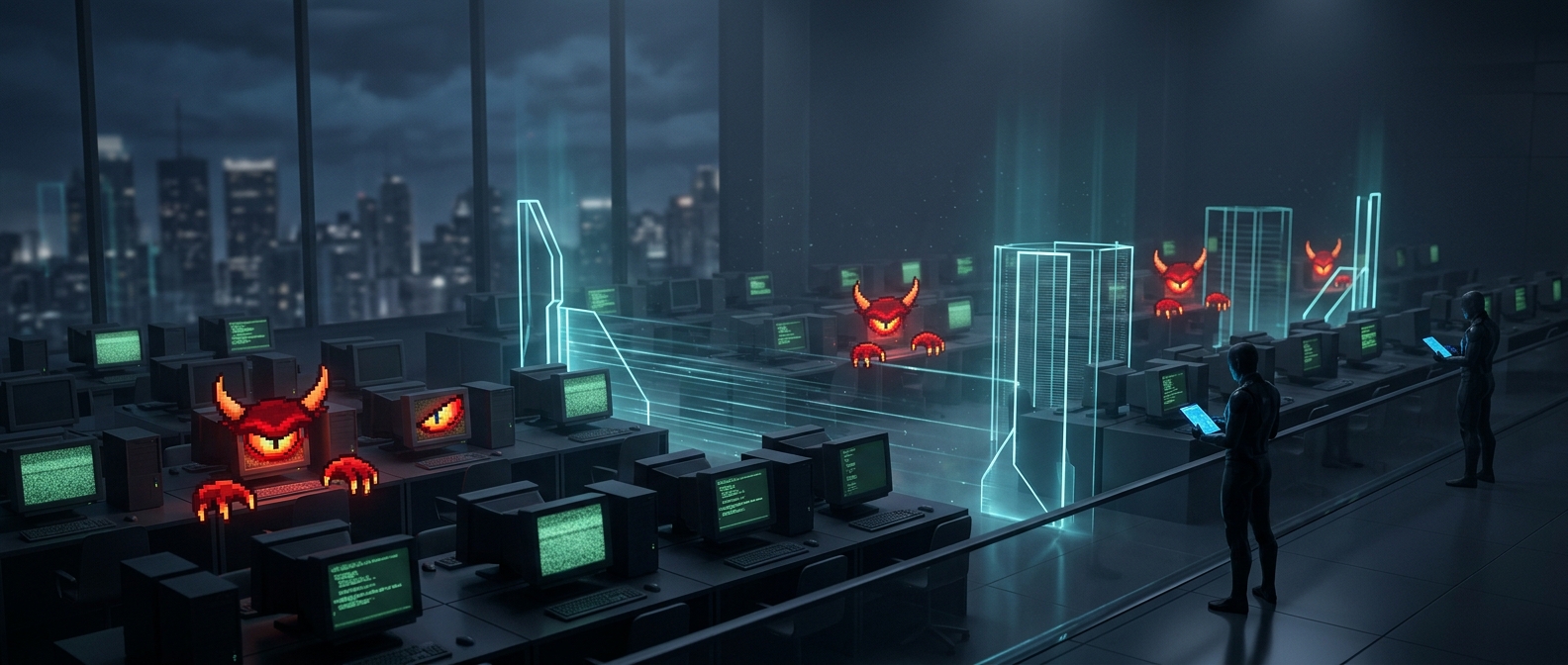
A corporate network is shared infrastructure: computers use it to exchange business data, and its capacity is not reserved for one application. Networked Doom sent game information between players’ machines so that each player could see the others’ actions. During a match, that traffic used resources the company network was also meant to carry for work.
The problem was not simply that one employee had installed a game. A match brought multiple computers into the same activity, while the game itself diverted attention and office machines from their intended tasks. As play spread, companies had reason to worry about both network performance and lost work time.
A Ban as Network Management
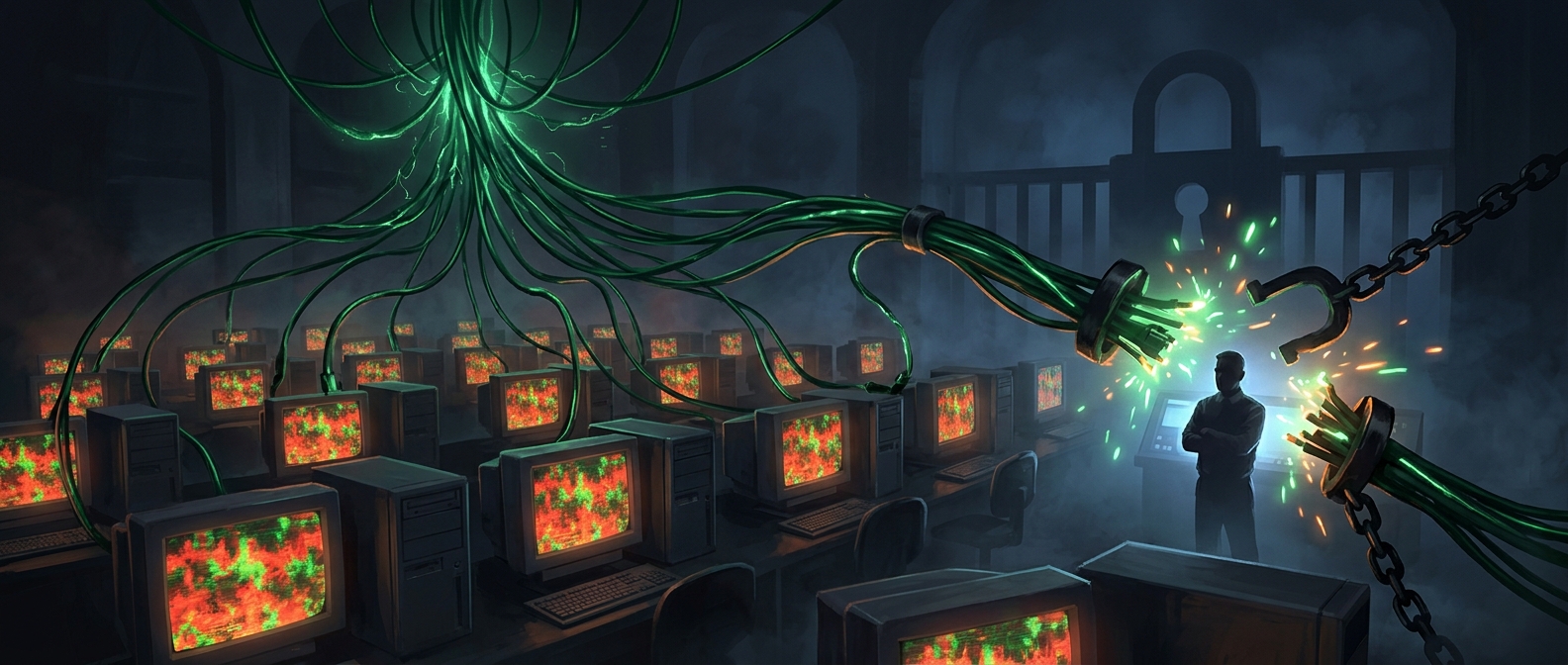
Intel and other companies responded by banning Doom on their networks. That decision made the game a workplace policy issue, not just a matter of taste: a popular, easily copied program could create demand on shared systems that administrators had built for business.
The episode captures a recurring tension in office technology. Once a network connects computers, it can connect people for purposes its owners never planned. Doom’s appeal made that possibility impossible to overlook: the same wiring meant to move work between desks could also organize a deathmatch.