A ring turns spiritual authority into a tool
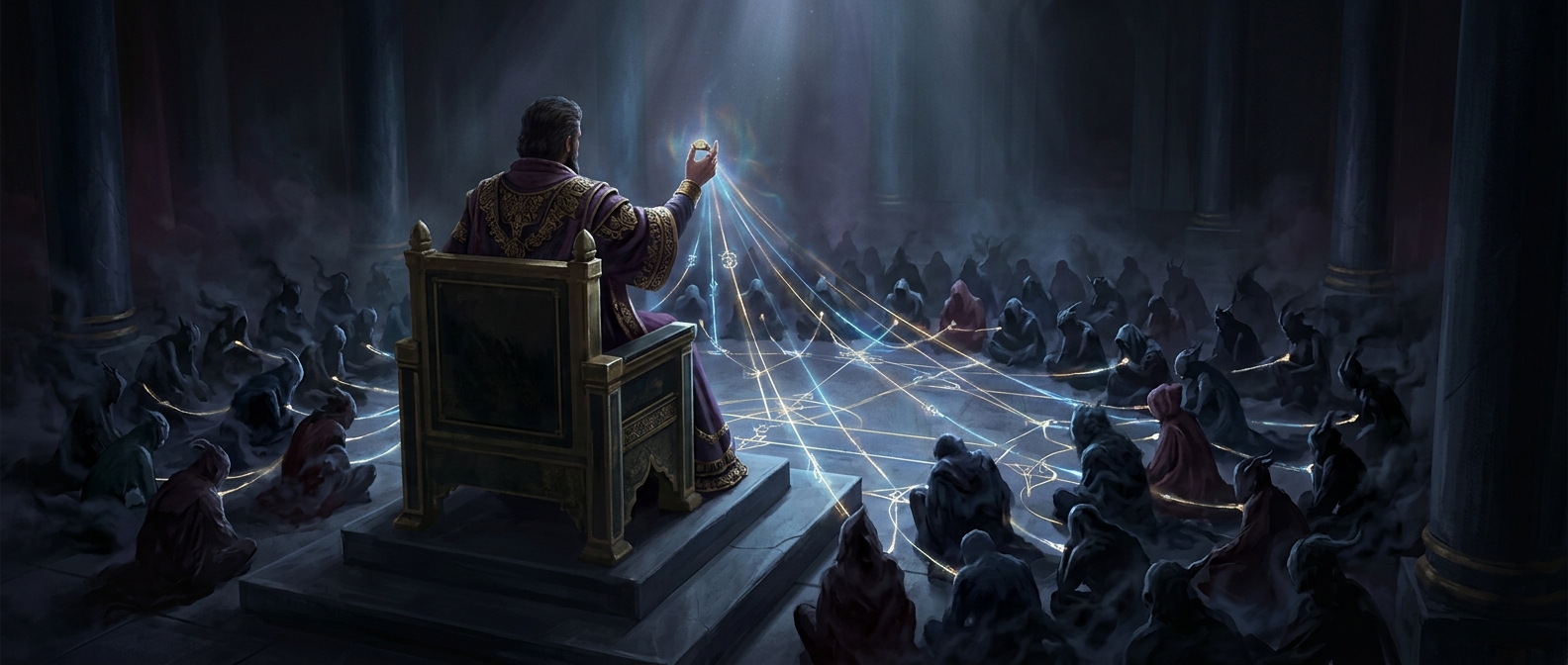
In Solomonic magic, the brass ring is more than a piece of enchanted jewelry: it represents authority that can compel spirits to obey. The story imagines Solomon using that authority to make powerful beings perform work humans could not—or would not—do, including helping build Jerusalem’s First Temple. The striking idea is not simply that demons are summoned, but that they are put to labor under a king’s command.
Why the spirits are counted and named
The figure of seventy-two belongs to a tradition that treats spirits as identifiable powers, each with a name, rank, and particular abilities. Naming a spirit makes it imaginable as something that can be addressed and controlled, rather than an undefined force. In the Lesser Key of Solomon, a grimoire—a manual of ritual magic—its first section catalogs seventy-two spirits and describes ways to summon and constrain them. The ring functions within that larger picture of ritual authority: a visible sign that the conjurer claims the right to give orders.
A legend assembled across texts
The Lesser Key is not a biblical account, and the familiar temple-building story sits within a wider body of Solomonic legend. An earlier work known as the Testament of Solomon also portrays the king questioning and controlling demons and connects them with the Temple’s construction. Across these traditions, Solomon becomes a figure who can turn hidden knowledge into practical power.
That makes the legend’s building project more than a supernatural shortcut. It imagines the Temple—the great human achievement at the center of the story—as the result of a king bringing even unruly forces into an ordered system.