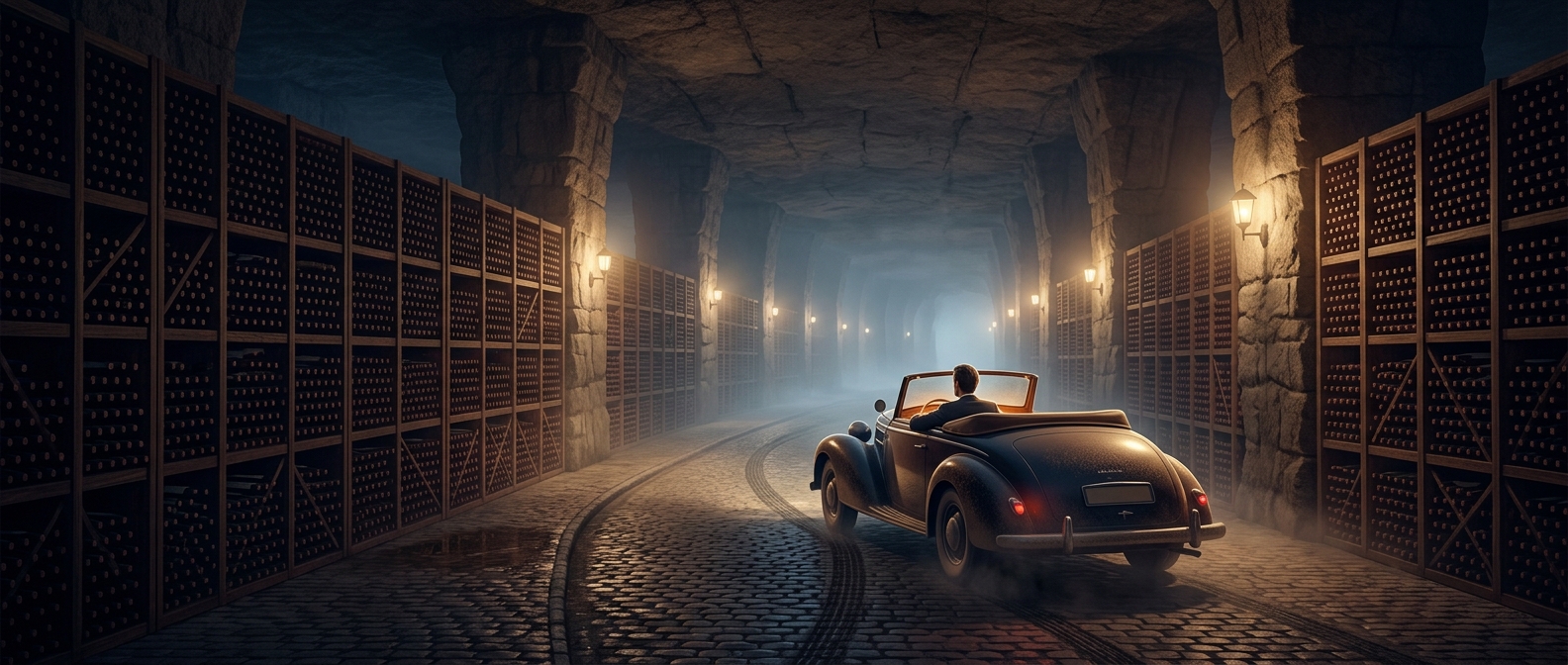
Why a Limestone Mine Makes a Good Wine Cellar
The tunnels began as a source of building stone, not as a wine-storage plan. Once mining left a sprawling underground network, its sheltered passages offered a practical second use: storing wine away from the sharp temperature swings and sunlight found above ground. Limestone also helps buffer changes in the surrounding environment, giving wine a relatively steady place to mature.
That stability matters because heat can speed up chemical changes in wine, while repeated temperature shifts can disturb its development. Underground storage does not make every bottle better, but it gives producers a more controlled setting than an exposed warehouse.
A Cellar Built on the Scale of a City
At roughly 120 miles of passages, the network is too large to navigate like a single room full of racks. Its routes function more like underground streets, linking storage areas across the former mine. Vehicles make it possible to move people and wine through distances that would be impractical to cover on foot.
The result is an unusual overlap of industrial history and winemaking: the mine’s scale, created by extracting stone, now serves the needs of a major cellar. A visit can feel less like entering a conventional winery than traveling through a hidden district—one where the old mining roads lead past wine instead of toward the quarry.