Why this Antarctic pond stays liquid
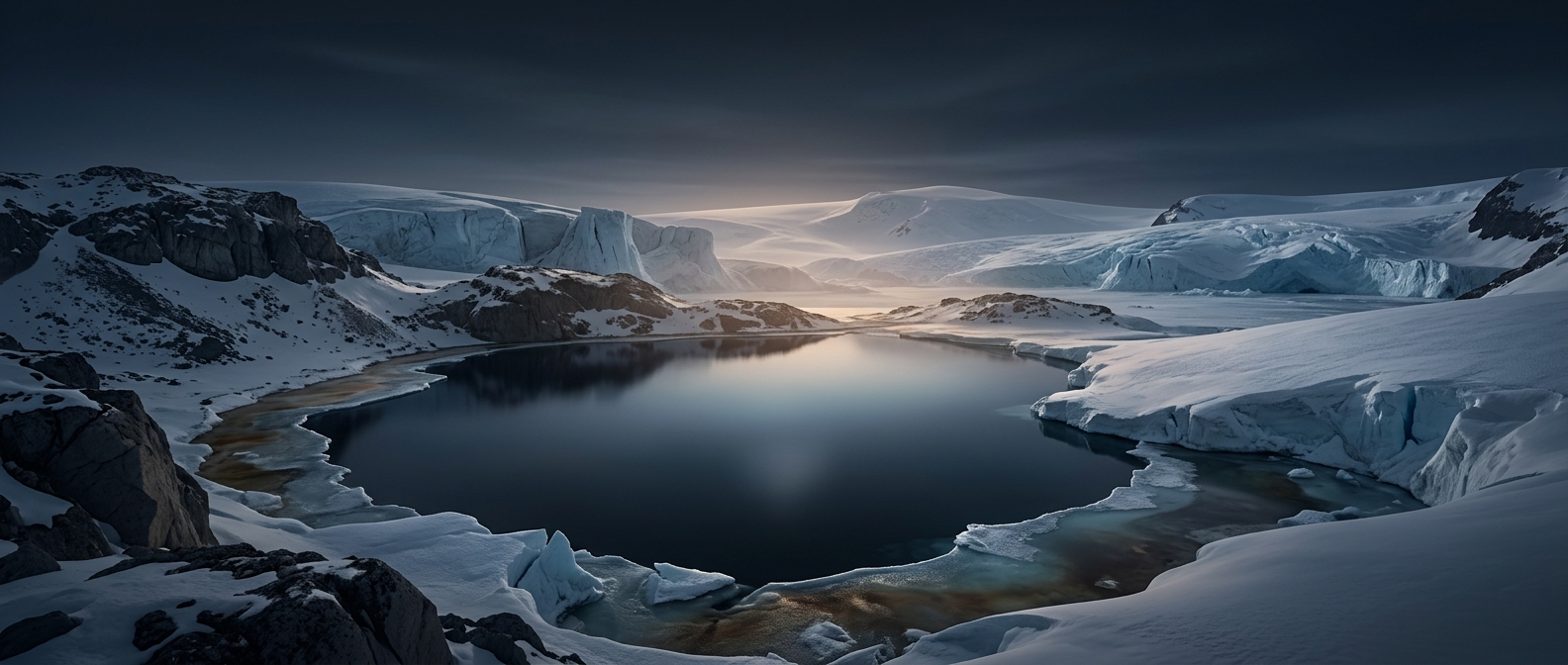
In the McMurdo Dry Valleys, a shallow pond can remain liquid in air cold enough to freeze ordinary freshwater. The key is not warmth but dissolved salt: the water is an exceptionally concentrated calcium-chloride brine.
When water freezes, its molecules arrange themselves into an orderly ice crystal. Dissolved ions—electrically charged particles from the salt—interfere with that arrangement. The more salt packed into the water, the colder it must get before ice can form. Calcium chloride is especially effective at lowering water’s freezing point, so this brine can remain liquid far below the temperature at which a familiar pond would freeze.
A liquid landmark in a dry landscape
The surrounding valleys are among the driest places on Earth. Their stark, exposed terrain makes the pond’s dark liquid surface seem almost out of place, but the brine’s chemistry supplies the explanation: cold alone does not determine whether water freezes; its composition matters too.
The pond is not a warm oasis, and its unusual chemistry does not make it a normal freshwater habitat. It is a striking example of how a concentrated solution can stay fluid under conditions that turn ordinary water to ice—a small, visible exception to what the Antarctic landscape seems to promise.