A shoreline carved from marble
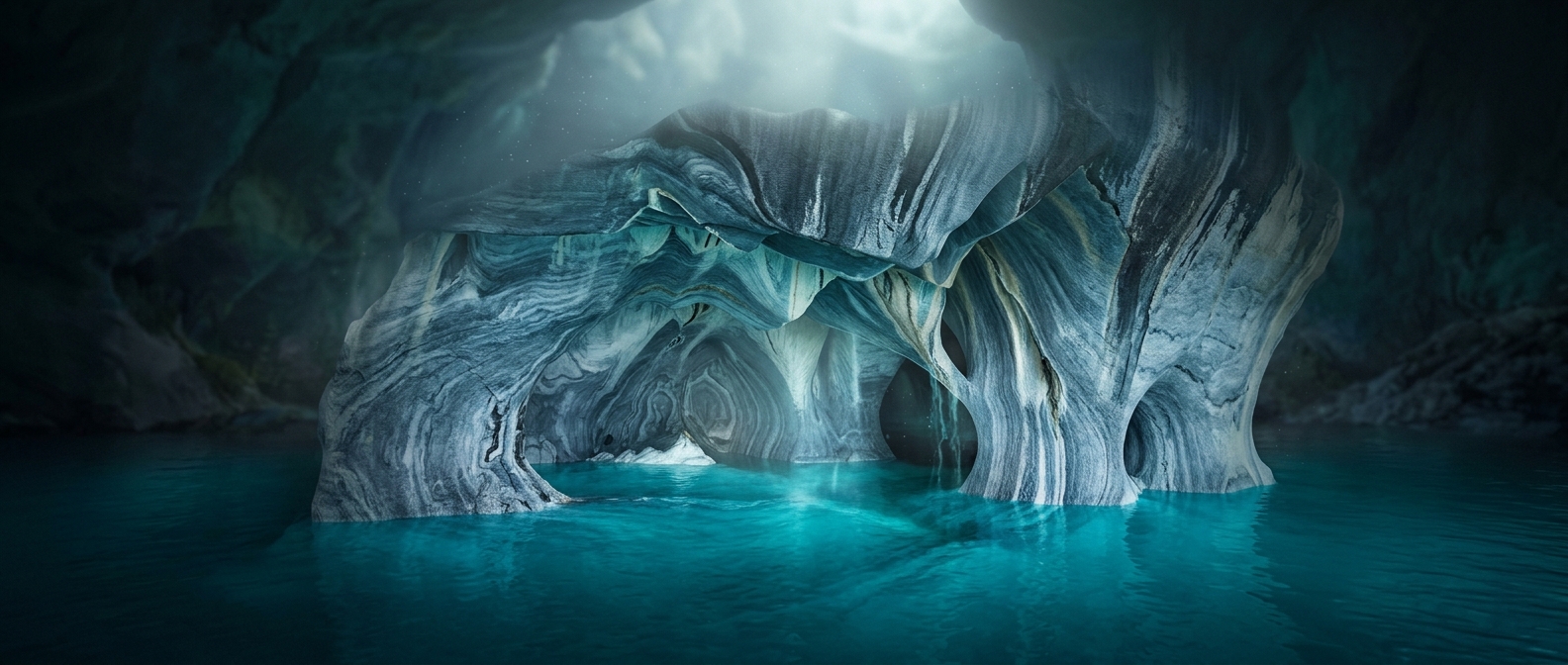
On the Chilean side of Patagonia’s vast General Carrera Lake, the Marble Caves are not separate caves hidden inland: they are hollows in a pale marble shoreline, reached by boat. Marble is limestone changed by heat and pressure, but its main ingredient—calcite—can still be slowly dissolved by slightly acidic water.
Over time, water worked into cracks in the rock. Waves then widened and smoothed those openings, leaving curved chambers and narrow columns between them. Because the lake’s level rises and falls, different bands of the rock are exposed to wave action, helping give the shoreline its layered, sculpted appearance.
Why the water looks so bright
The vivid color is not a property of the marble alone. General Carrera receives glacial meltwater carrying extremely fine rock particles, often called glacial flour. Suspended in the lake, these particles scatter sunlight and help produce its milky turquoise tone. The pale cave walls reflect that light, making the blue-green water seem to glow inside the hollows.
The effect changes with the conditions: light, water clarity, and lake level all influence what a visitor sees. The caves are therefore both a record of slow erosion and a kind of natural light chamber, where the lake’s color is reflected onto rock that water has been shaping for ages.