How Zhangjiajie’s sandstone became a forest of pillars
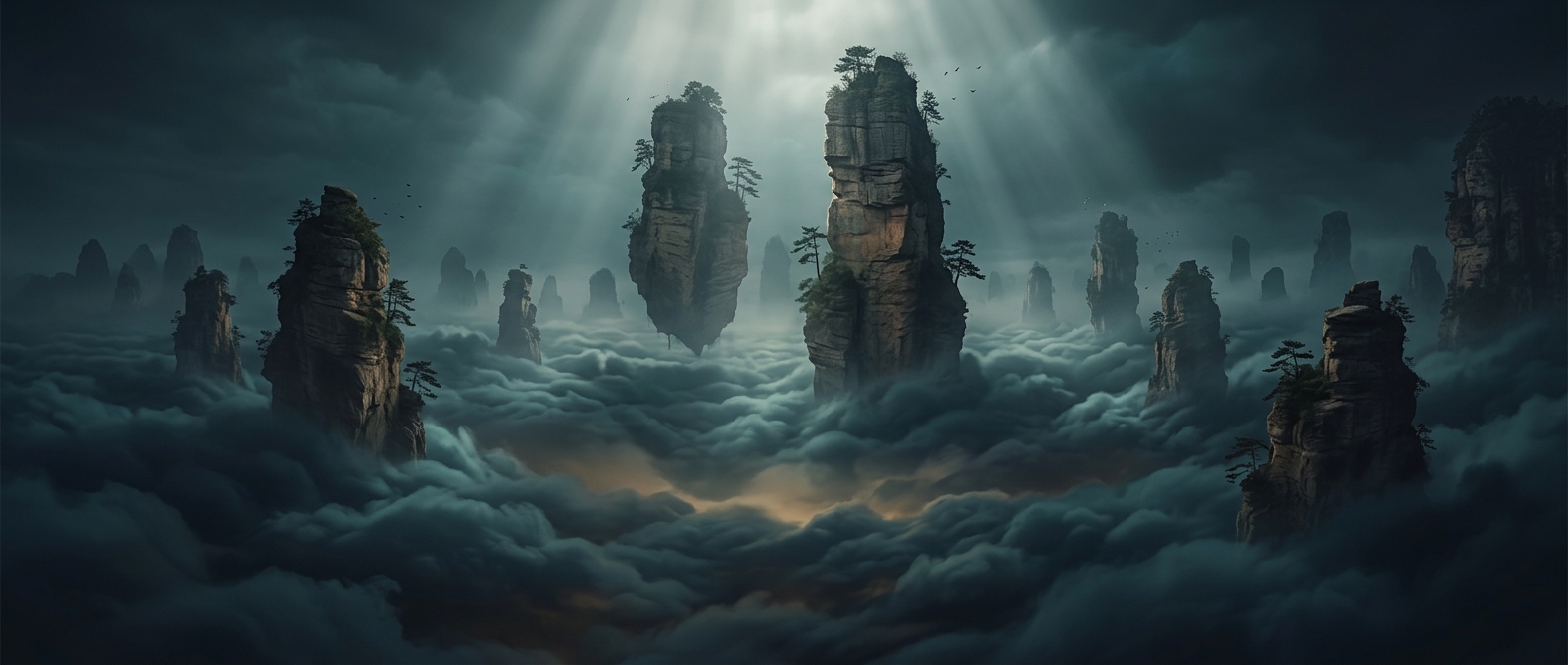
The columns at Zhangjiajie are remnants of a much larger sandstone landscape. Over long periods, water seeped into cracks and weakened the rock; flowing water and other forms of weathering gradually widened those gaps. The more resistant sections remained standing as narrow towers, while surrounding material was worn away. The result is a landscape shaped less like a single cliff than a crowded field of stone spires.
Why the summits vanish into cloud
The pillars rise into humid mountain air. When moist air cools, water vapor condenses into tiny droplets, forming cloud or mist that can drift across the slopes and wrap around the upper rock. Because the cloud hides the columns’ lower reaches, a viewpoint above it can seem suspended over a blank white expanse. The stone has not disappeared; the cloud has erased the visual clues that normally show how far down the landscape continues.
The vertigo of a missing reference point
At a summit, the eye usually uses visible ground, trees, or nearby structures to judge distance and height. Cloud can conceal those references, while the abrupt drop beside a narrow pillar makes the remaining view feel especially exposed. That mismatch—solid rock underfoot, but no clear view of the terrain below—helps explain why the scene can feel dizzying. A small change in cloud level can transform the same overlook from a view of deep valleys into what looks like a stone peak rising above the sky.