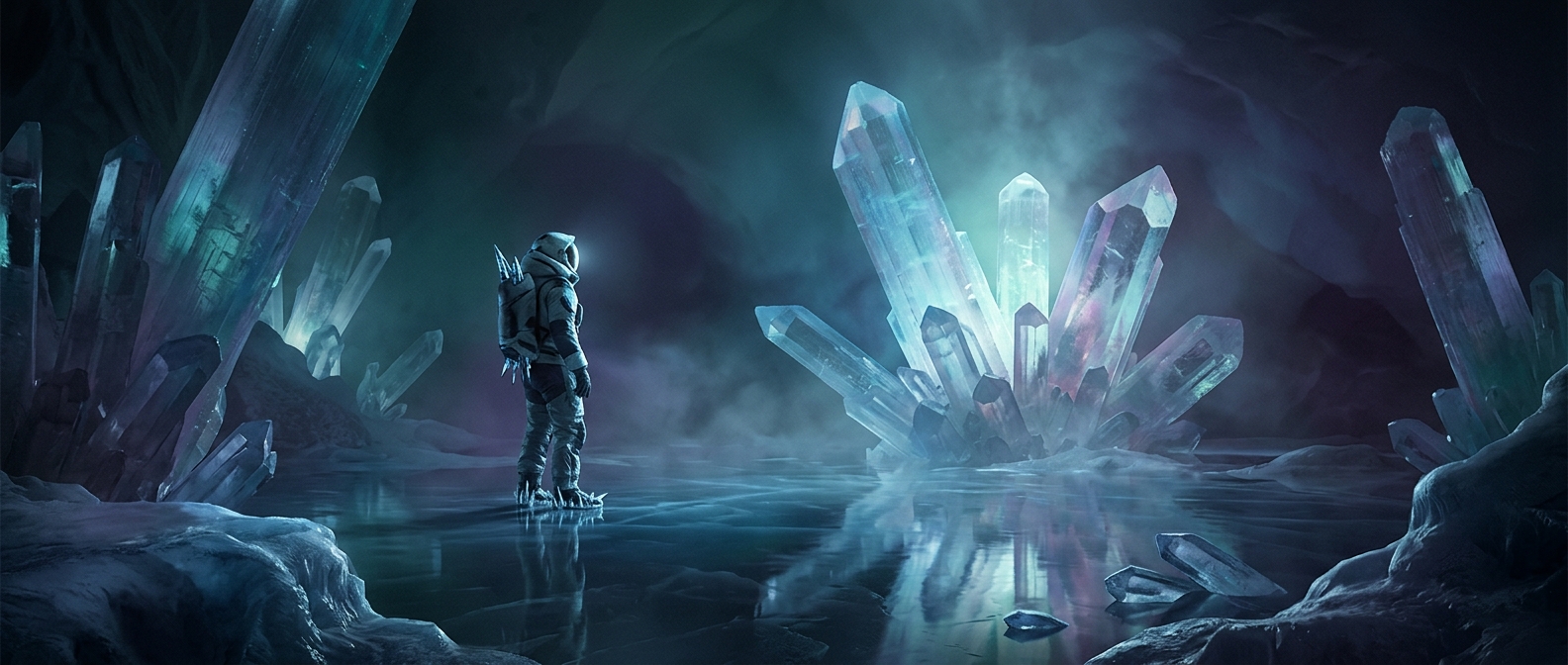
Why the Cave’s Heat Is So Dangerous
Deep beneath Naica, in northern Mexico, the Cave of the Crystals is hot and nearly saturated with moisture. That combination is more dangerous than heat alone: sweat cools the body only when it evaporates, and in air already loaded with water vapor, evaporation slows sharply. The body keeps producing heat while losing one of its main ways to shed it, so core temperature can rise quickly.
A cooling suit addresses that immediate problem by carrying heat away from the wearer. It is not ordinary protective clothing: insulation alone would trap the body’s own heat, and a mask by itself would not make the surrounding air safe for a long visit. Access requires equipment and careful limits on exposure.
A Cave Made by Warm, Mineral-Rich Water
The crystals formed while the cavern was filled with groundwater warmed by heat from deep underground. That water contained dissolved minerals; over a very long time, conditions allowed gypsum—also called selenite—to grow into enormous, clear beams. The cavern’s unusual combination of warmth and water helped the crystals continue growing rather than being exposed to the changing conditions of the surface.
Mining activity later drained water from the area, making the cavern accessible to people. But opening a route into the cave did not make its climate hospitable. The same enclosed environment that preserved the crystal formation is also what makes a human visit hazardous: there is no cool, dry air to provide relief between steps among the beams.