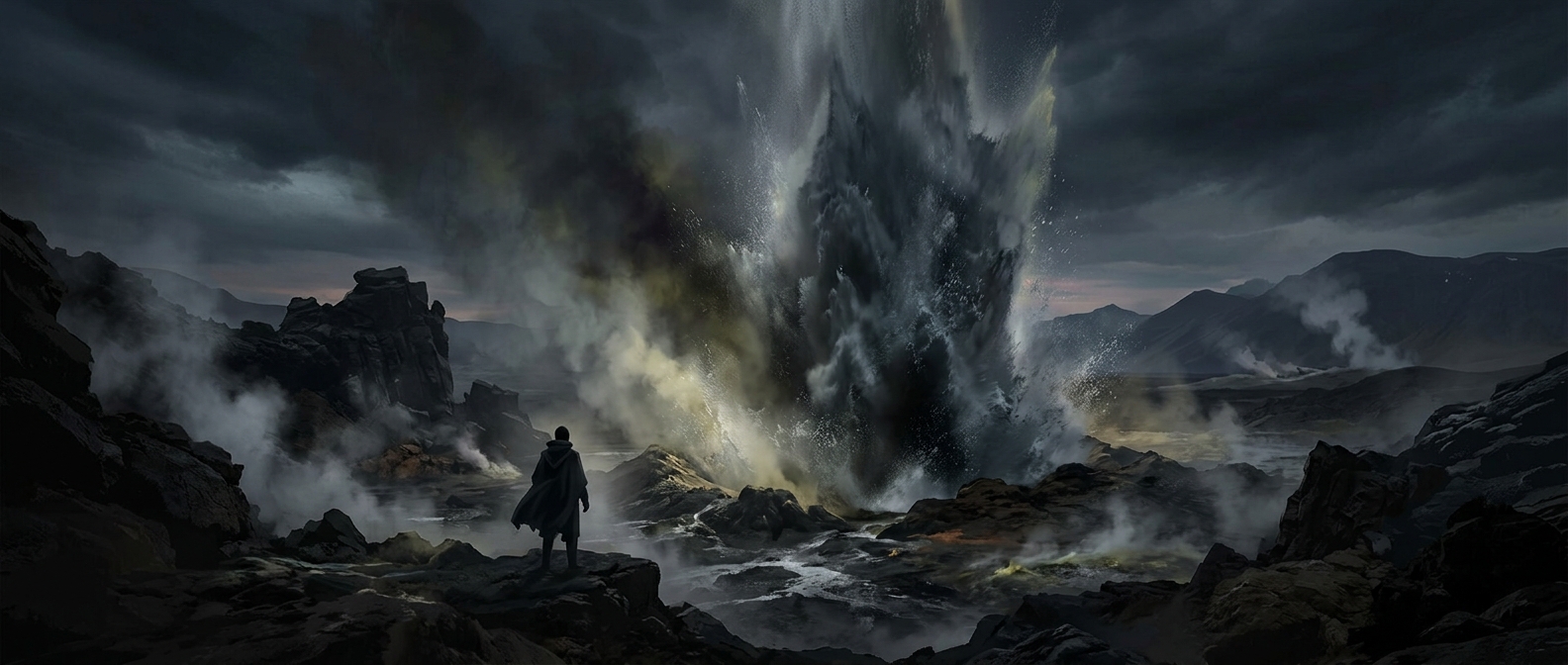
Why a Geyser Erupts in Bursts
A geyser is not simply a hot spring that happens to splash. It needs underground channels and chambers that can trap heated water. Deep below the surface, geothermal heat warms the water; pressure from the water above keeps some of it from boiling freely.
As water near the top escapes, pressure drops in the underground system. Some of the hotter water then flashes into steam. That steam expands rapidly, pushing water up the channel and out of the vent. The rush of escaping water and steam lowers pressure further, helping sustain the eruption until the chamber has drained and cooled enough for the cycle to begin again.
The plumbing matters: broad, open passages tend to let heat and water escape steadily, while a more confined, irregular system can build pressure and release it in dramatic bursts. That is why geysers are rare, even in regions with abundant underground heat.
Where the Rotten-Egg Smell Comes From
The odor around some eruptions comes from hydrogen sulfide, a sulfur-containing gas that can occur in geothermal water and vents. It dissolves in water underground and escapes into the air as the water rises, pressure changes, and the eruption churns the system. Not every geyser smells this way; the odor depends on the local chemistry.
The smell is therefore a clue to what is moving through the geothermal system, not a measure of how powerful the eruption will be. A geyser’s force comes from its heated, pressurized plumbing; its scent comes from the gases carried through it.