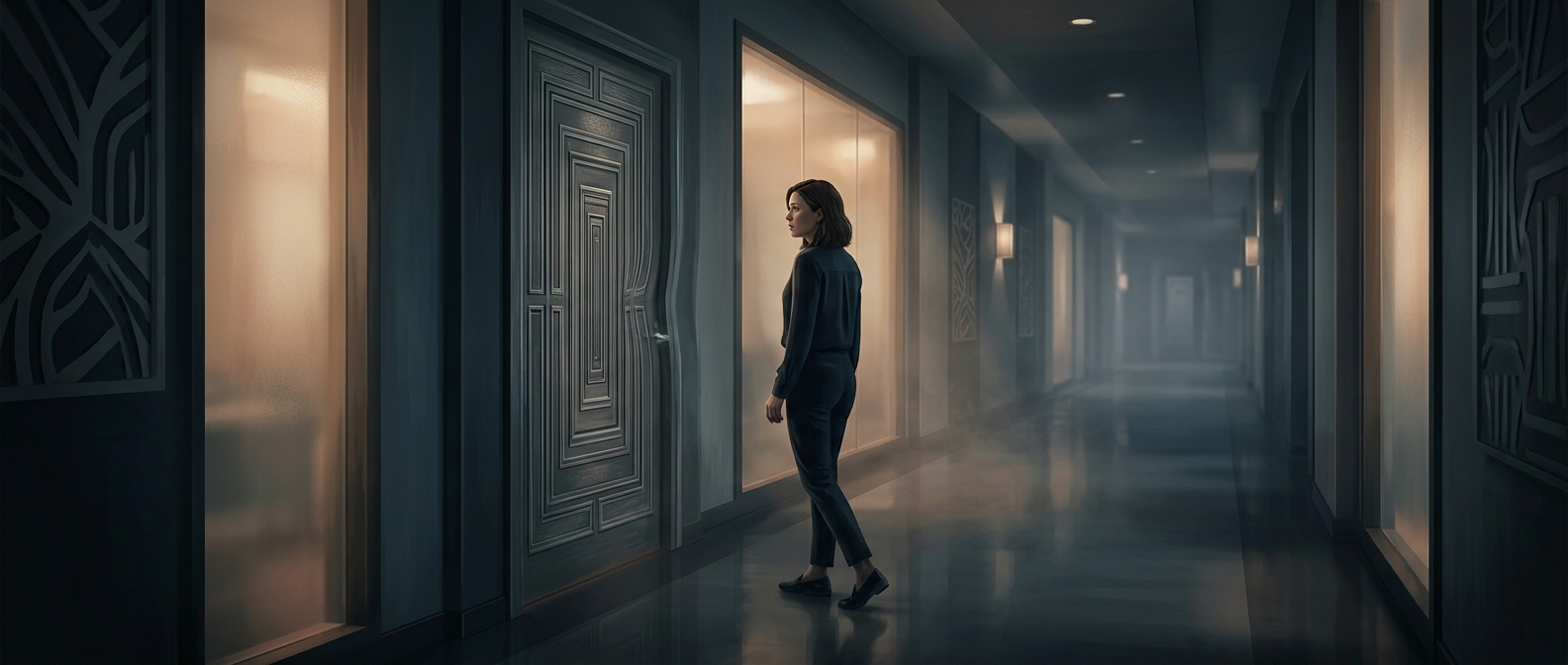
When a familiar room briefly feels new
You usually don’t inspect your kitchen as a collection of separate objects. Your attention goes to the task—making coffee, finding a mug—while your mind uses its accumulated knowledge of the room to guide you. The counter and doorway are recognized quickly, with little conscious effort. That smooth, low-effort processing helps make the place feel familiar.
Recognition and familiarity are not the same feeling
A sudden jolt can occur when you recognize the room but lose that effortless sense of knowing it. You may still know that you are at home and identify the counter correctly, yet experience the scene as oddly vivid or unfamiliar. In other words, the facts of recognition remain available while the feeling that normally accompanies them briefly falters.
Fatigue can make attention less steady. So can deliberately scrutinizing a place you normally take for granted. Either shift may interrupt the automatic way you process the room, making details that usually pass unnoticed seem newly noticeable. The kitchen has not changed; the way your mind is handling it has.
Why the mismatch feels so startling
Familiarity is usually quiet, so its absence stands out. The mismatch—“I know exactly where I am, but this looks strange”—can itself draw more attention to the room and intensify the moment. That helps explain why an ordinary doorway can suddenly seem like a set piece: recognition is still there, but the mental ease that makes home feel unmistakably like home has briefly dropped away.