Why oil and water separate again
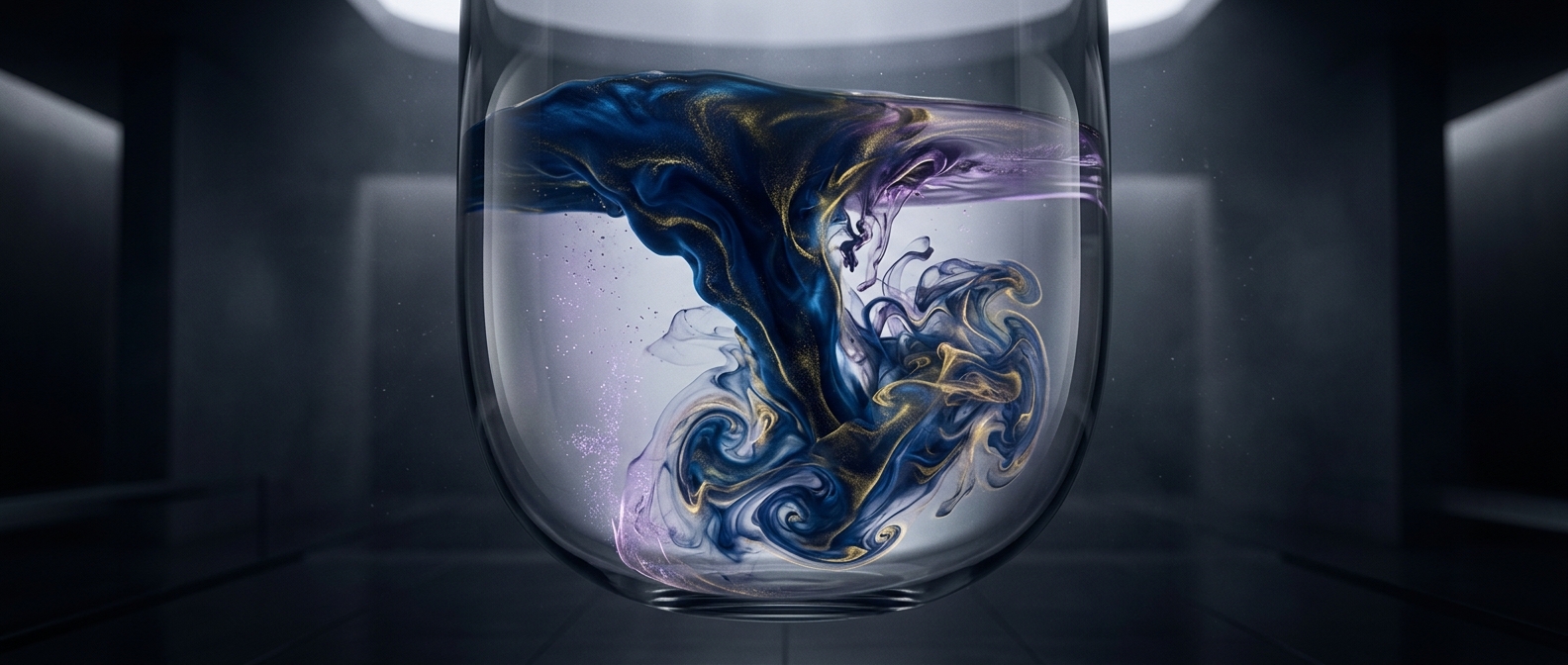
The key is not that the two liquids never touch. They do: when shaken, oil forms countless small droplets surrounded by water. The problem is that contact between oil and water is less favorable than contact among water molecules themselves, so the droplets tend to join back together.
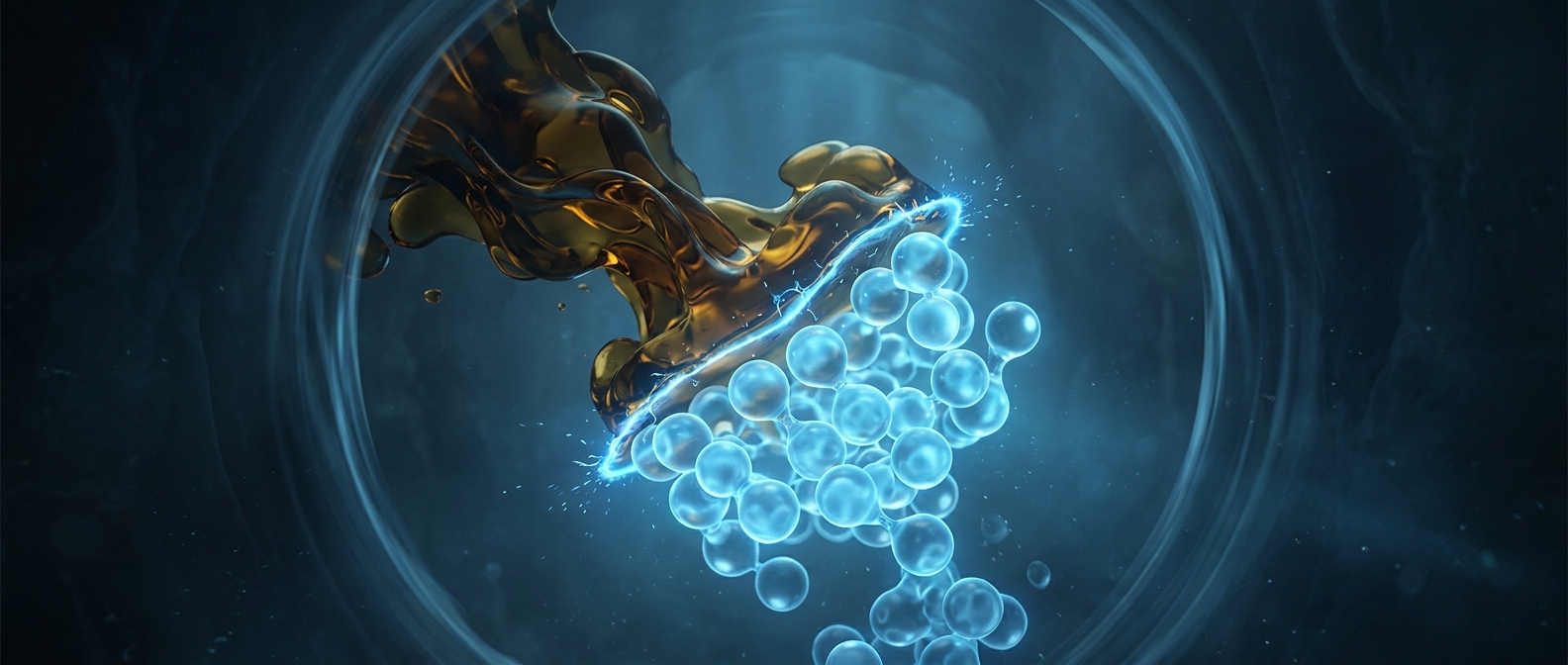
Water molecules are polar: their electrical charge is unevenly distributed, giving each molecule slightly positive and negative ends. Those ends attract neighboring water molecules. Most oil molecules are nonpolar, without the same charged ends, so they cannot form comparable attractions with water. Mixing would disrupt some of water’s preferred interactions without replacing them with equally favorable ones.
Why shaking creates only a temporary mix
Shaking supplies energy that tears the oil into droplets and spreads them through the water. Smaller droplets make the mixture look uniform, but they do not make the liquids compatible at the molecular level. Once the motion stops, droplets collide and merge. As they combine, less oil surface remains in contact with water, and the mixture moves toward two layers again.
Oil generally ends up on top because it is less dense than water. The separation is therefore driven by both liquids’ preference for their own molecular company and, after droplets merge, by density.
How a stable mixture can be made
A surfactant—a substance whose molecules can interact with both water and oil—can coat droplets and make it harder for them to merge. Soap and mustard contain surfactant-like ingredients; in a salad dressing, vigorous shaking can temporarily disperse oil, while mustard helps the droplets stay dispersed longer. The result is an emulsion, a mixture of droplets suspended in another liquid, not a permanent molecular blending.
That is why a bottle of plain oil and water separates again, while a dressing with an emulsifier can remain cloudy: the droplets have not vanished, but they have been given a barrier against gathering back into one pool.