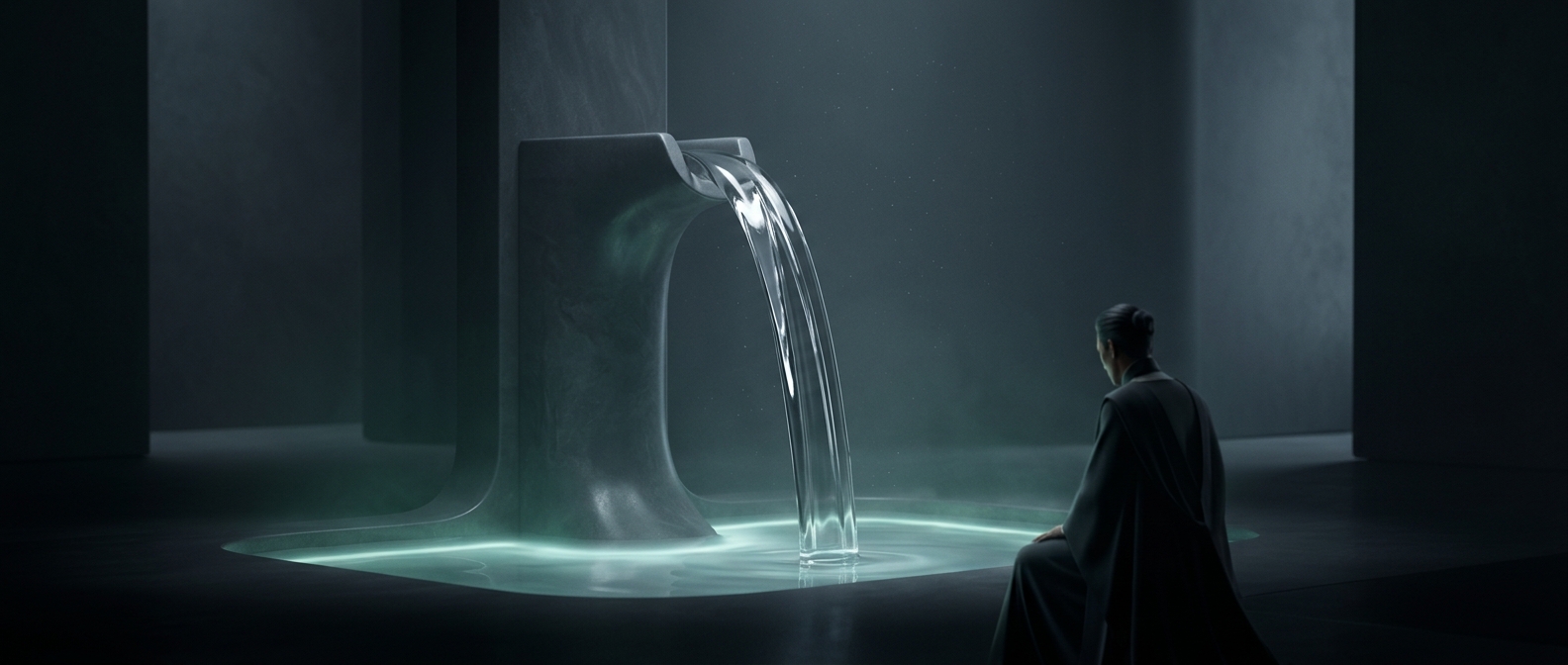
A moving surface can keep the same shape
What makes water look still is not whether it is moving, but whether its surface is changing. A steady flow can carry liquid along while keeping the surface nearly level and smooth. In laminar flow—motion in orderly layers rather than churning swirls—neighboring parts of the liquid slide past one another with little disturbance at the surface.
That matters because reflections respond mainly to a surface’s angle and shape. A rough patch tilts in many directions, scattering a reflection into a shimmer. A smooth patch sends light in a consistent direction, like a mirror. If its shape stays nearly constant, the reflected scene barely shifts, so the eye reads the image as still even as the liquid beneath it is replaced by moving water.
The edges reveal the motion
The illusion breaks where the flow meets a rock, a bank, a drop, or another obstacle. Those interruptions can create ripples and swirls, changing the surface angles and making reflections flicker. A leaf or foam fleck also gives the motion away by traveling downstream.
So a glassy reflection is evidence of a calm, stable surface—not proof that the water itself has stopped. The most telling clue may be the border of the smooth patch, where the flow finally has something to disturb.