Why a Tiny Line Could Take So Long
A short line is not necessarily an easy shot. In a comedy, a few words have to land at the right moment, with the right emphasis, while fitting the surrounding action. A take can be unusable even if the words are correct: delivery, timing, or a small mismatch with the rest of the scene may require another try.
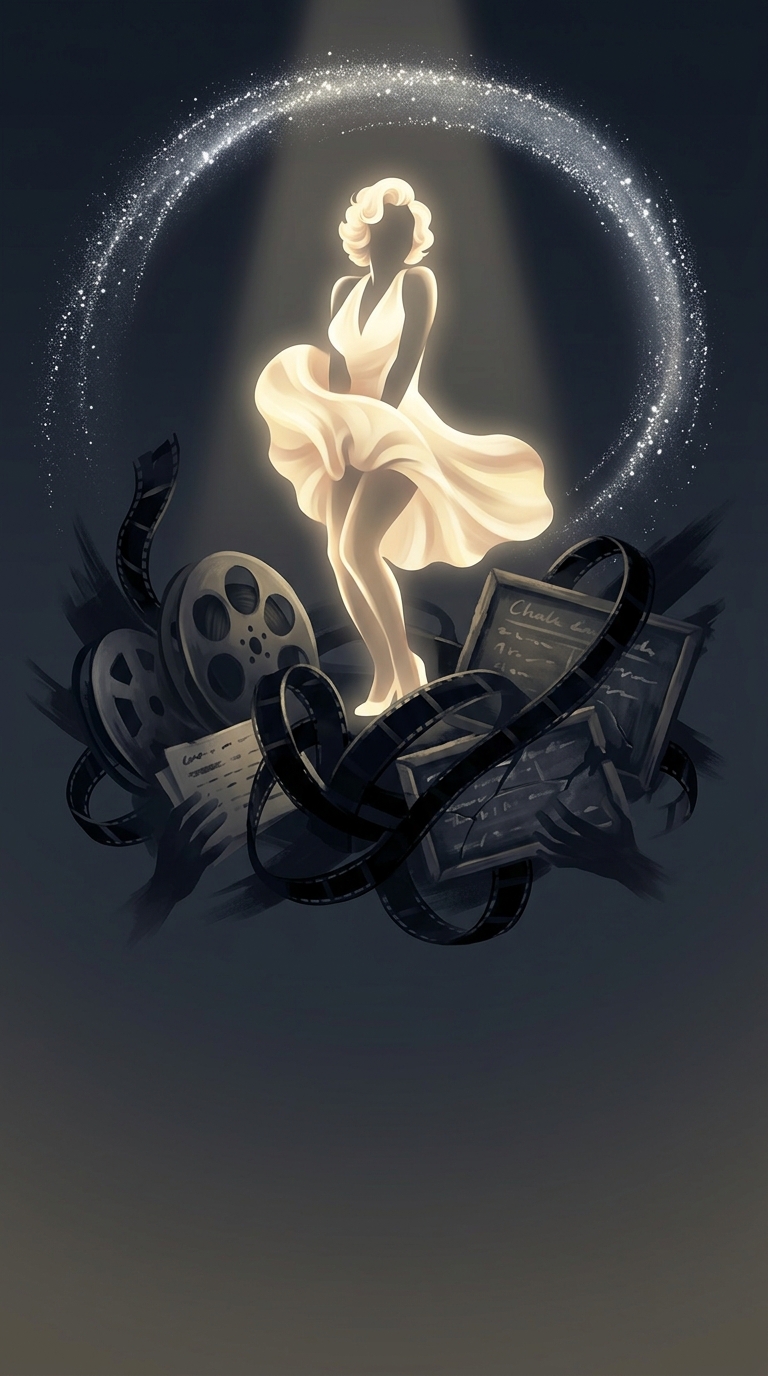
The reported forty-seven attempts to say “It’s me, Sugar” show how film performance is built through repetition. The finished movie preserves one take, but getting that take can mean restarting the same brief moment again and again. The number of words says little about the work required to make them play naturally.
A Chalkboard as an On-Set Workaround
Wilder’s chalkboard solution brought Monroe’s lines into view just beyond the camera’s frame. That is a practical adjustment: the words could be checked without stopping to consult a script, while the camera kept recording the scene. It also reflects a basic constraint of filmmaking—any reminder has to help the performer without appearing in the shot.
The detail is memorable because it makes the labor behind movie comedy visible. A line that lasts only a moment on screen may depend on a very unglamorous tool, positioned just outside the audience’s view.