How a Hidden Pipe Leak Can Make a Statue Seem to Weep
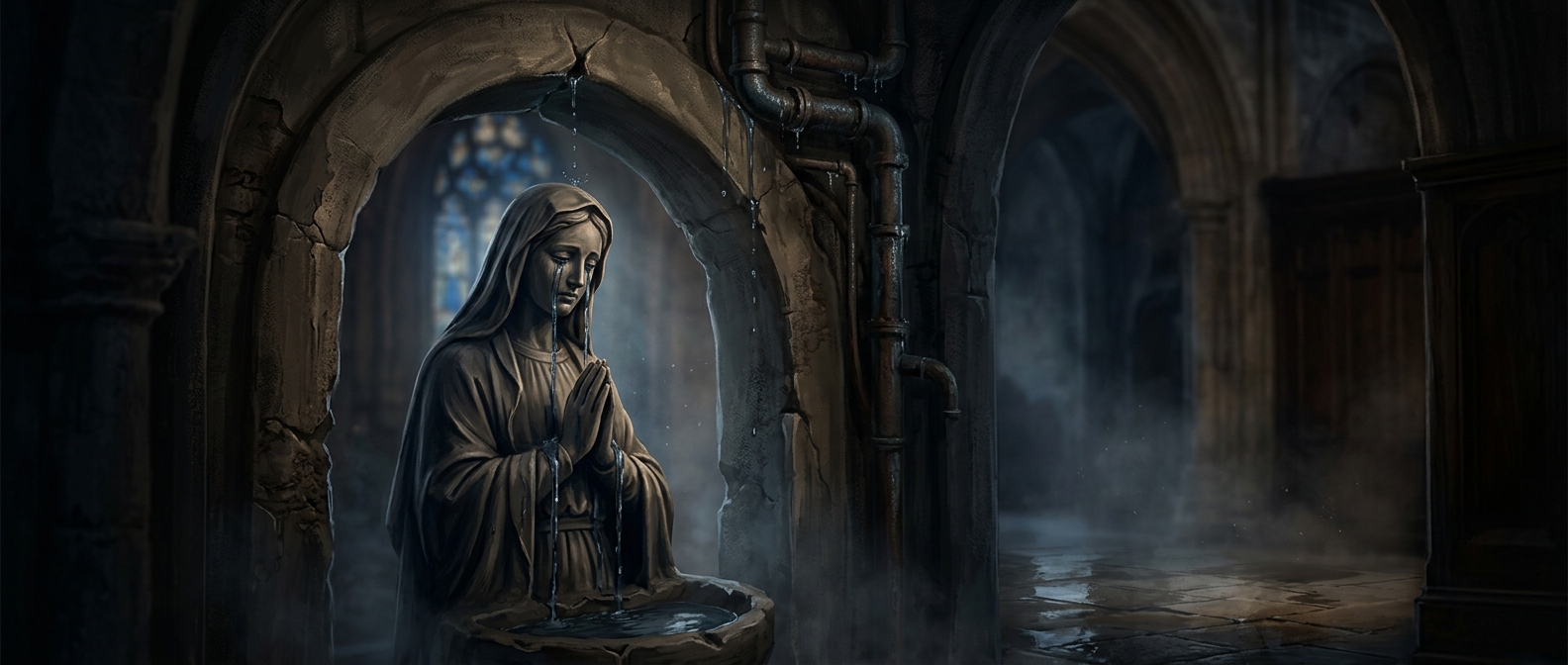
A statue does not need a visible stream of water running over its face to develop droplets around its eyes. If water escapes from a pipe behind or beneath it, the moisture can travel through nearby porous plaster and emerge somewhere else on the surface.
The movement is called capillary action: water is drawn through very narrow spaces by its attraction to the surfaces around it. Plaster contains tiny pores, and when those pores connect, they can act like a network of minute channels. Water entering one part of the material may spread until it finds an opening at the statue’s surface.
Why the Water Appears in One Place
The leak’s starting point and its visible exit need not line up. A damp patch may spread through the plaster, while the statue’s contours and the material’s internal pathways guide moisture toward a particular spot. When water reaches the surface, it can collect into droplets that look like tears.
That makes the effect easy to misread: the statue appears to be producing water, while the actual source may be an unseen plumbing failure. Finding the source means tracing moisture through the building and the statue’s porous material—not assuming the water began where it appeared. A leak behind a figure can therefore leave its most striking evidence on the face.