Why a folded poster can become fragile
A vintage movie poster is often printed on paper that has grown brittle with age. Acid in the paper can weaken its fibers, while decades of folding concentrate stress along a few creases. Those folds are not just cosmetic: if the paper cracks there, a small tear can spread and remove part of the image.
Washing and backing the paper
In archival linen backing, a conservator first washes the poster in carefully controlled chemical baths. The treatment reduces harmful acidity and loosens embedded grime, helping stabilize the sheet. Because old paper can be fragile, the process must be managed to avoid damaging its inks or making the fibers distort.
The poster is then supported with linen, a strong fabric that helps the weakened paper lie flat. That backing does not erase the original folds; it gives the sheet support so they are less likely to split again. The goal is preservation, not making an old poster look newly printed.
Repairing the image one fiber at a time
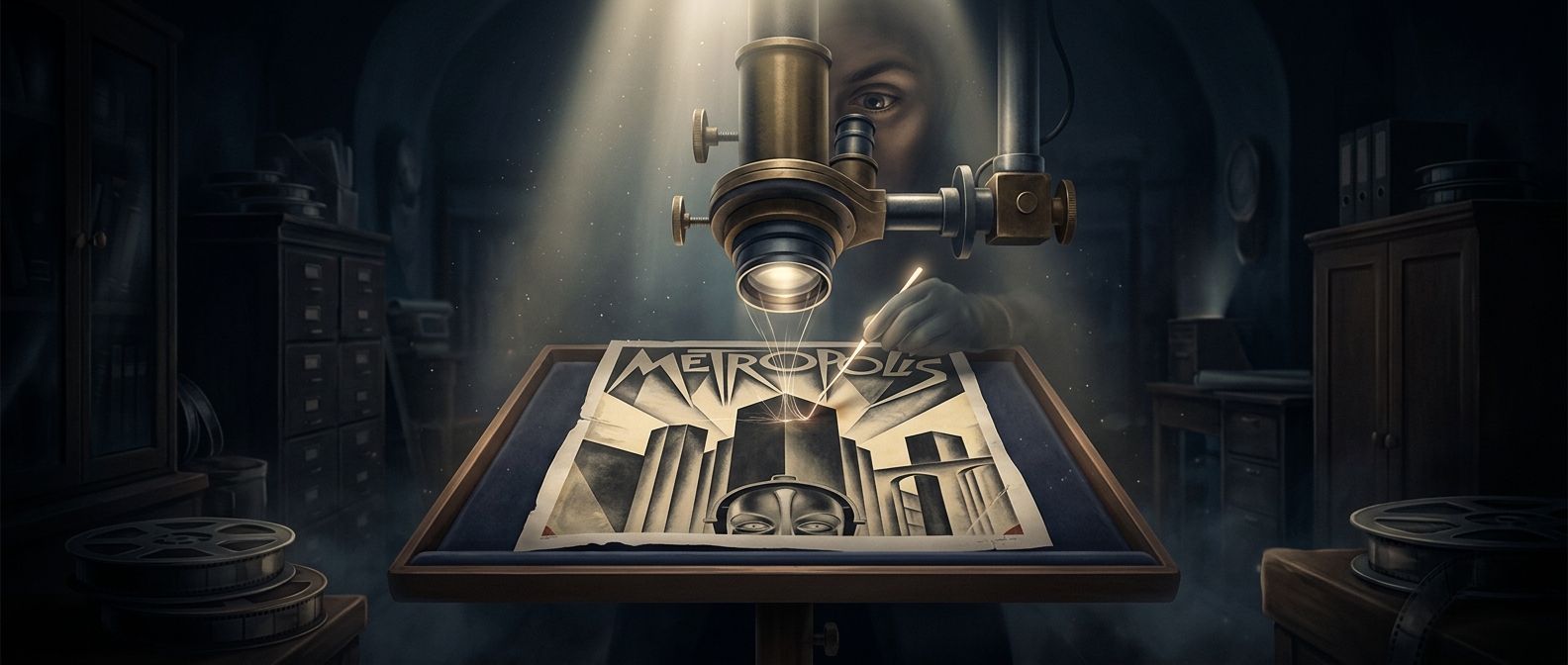
Where a fold has broken or separated, the conservator uses a microscope and tweezers to guide tiny paper fibers back into alignment. Matching the fibers along the crease helps fill gaps without introducing an obvious patch or changing the printed design. It is painstaking work: a misaligned fiber can remain visible once the poster is viewed at full size.
The value of this approach is that it treats the poster as both an image and a fragile object. Linen provides lasting support, while careful fiber work preserves the details collectors and viewers actually see—the lettering, color, and artwork that made the original sheet worth saving.