The Save File Turns a Choice Into a Test Run
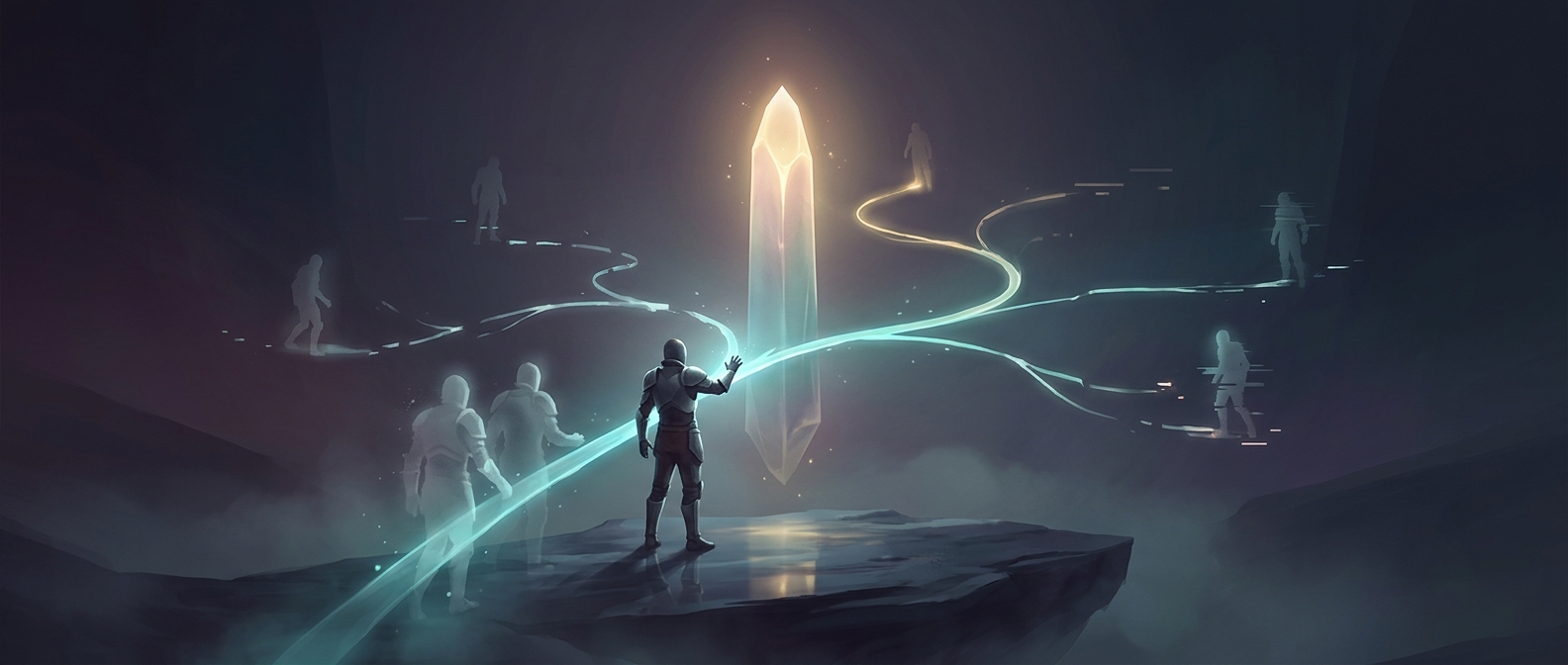
A reload does more than rewind the story. It separates choosing from living with the choice. Once a player knows the game can be restored to an earlier point, a tense conversation can become an experiment: pick an answer, watch the character react, then decide whether that reaction is worth keeping.
That changes how dialogue works. Without an easy reset, a choice is a commitment made under uncertainty. With one, the player can probe the game’s boundaries—learning which response earns trust, ends a conversation, or closes off a later option. The first attempt supplies information; the next can use it.
Why Players Keep Testing
Games often make consequences difficult to predict. A seemingly harmless line may anger a character, while a blunt response may open an unexpected path. Reloading reduces that uncertainty without requiring the player to accept a result they dislike. It can also help when the cost is practical rather than emotional: a missed clue, a wasted resource, or a lost opportunity.
This habit is sometimes called “save-scumming,” a player-made term for repeatedly saving and reloading to control an outcome. The label can sound judgmental, but the behavior follows from the tools the game provides. If progress can be preserved just before a risky moment, players may treat that moment as reversible—even when the story presents it as important.
A Tradeoff for Designers
Developers decide how much certainty and control to give players. Frequent checkpoints and multiple save slots make experimentation easy; limited saves make decisions feel weightier, but can also make mistakes costly or frustrating. Some games let players replay scenes, while others make the consequences persist across a run.
Neither approach guarantees a particular kind of play. A player may reload to protect a carefully planned story, or keep an unexpected outcome because it makes the tale more interesting. The design choice is really about what a decision asks of the player: commit with incomplete information, or treat the scene as a puzzle that can be solved through retries.