How Onigiri Became “Jelly Donuts” on TV
Onigiri are Japanese rice balls, often shaped by hand into triangles and wrapped partly in dark seaweed. In a Japanese cartoon, a character holding one needs no explanation. For a child watching a dubbed version elsewhere, though, the food might be unfamiliar—and the picture could not be swapped out as easily as the dialogue.
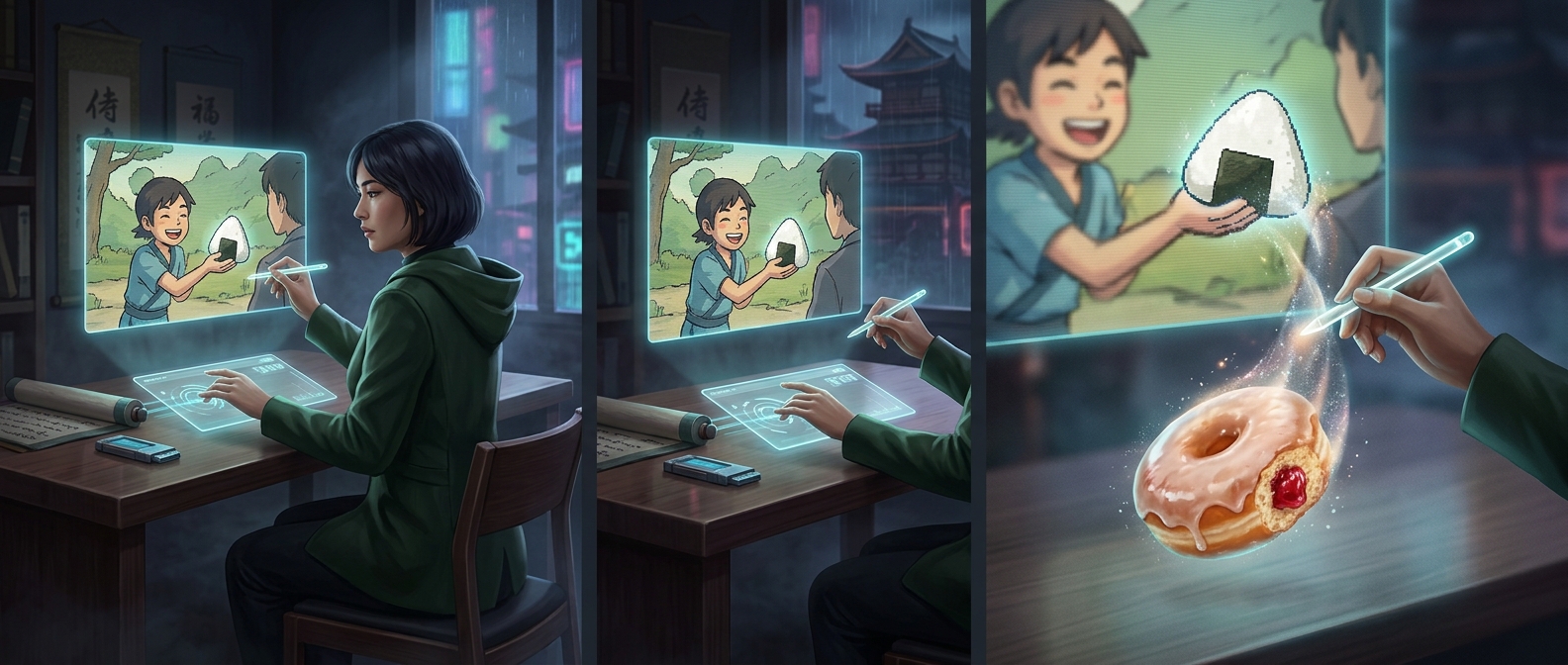
That mismatch produced the famously odd “jelly donuts” line in an English-language Pokémon broadcast. The animation still showed the triangular, seaweed-wrapped rice snack; the dubbed dialogue gave it a name that sounded more recognizable to the intended audience. The result was a small but memorable clash between what viewers heard and what they saw.
Why change the words instead of the picture?
Dubbing replaces spoken dialogue while working within an existing sequence of images. A new line has to fit the character’s mouth movements, timing, and the scene’s available space. Redrawing food throughout a finished episode would take more work than changing a few words—and could create new visual inconsistencies.
A localization team also has to decide how much unfamiliar cultural detail to explain. Keeping “onigiri” preserves the specific name but may leave a young viewer puzzled; briefly describing it helps, but may not fit the timing. Calling it a familiar snack is a quick shortcut, even when the image makes that shortcut conspicuously inaccurate.
The joke that outlasted the edit
The line became a lasting example of how localization can reshape a scene without changing a single frame. It also shows the tradeoff: a translation meant to make a cartoon immediately legible can distract viewers when the picture contradicts it. For many fans, the triangular “donut” is now more recognizable than the snack it was meant to disguise.