The hinge that outlived the folding roof
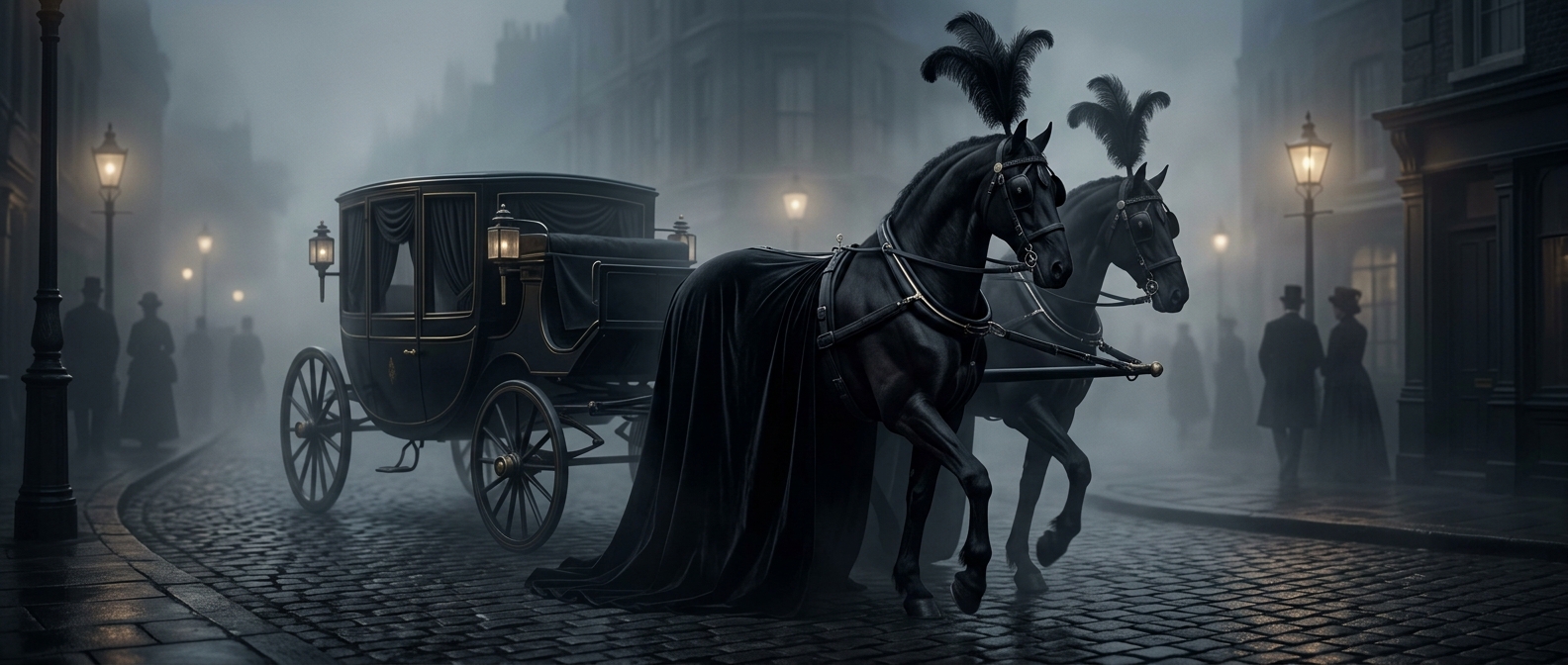
On a traditional landau carriage, the roof could be lowered rather than remaining a rigid, enclosed canopy. Its folding sections needed joints and supporting hardware; the visible bars along the roof’s sides echoed that working structure. “Landau bars” became a recognizable feature of the carriage’s silhouette.
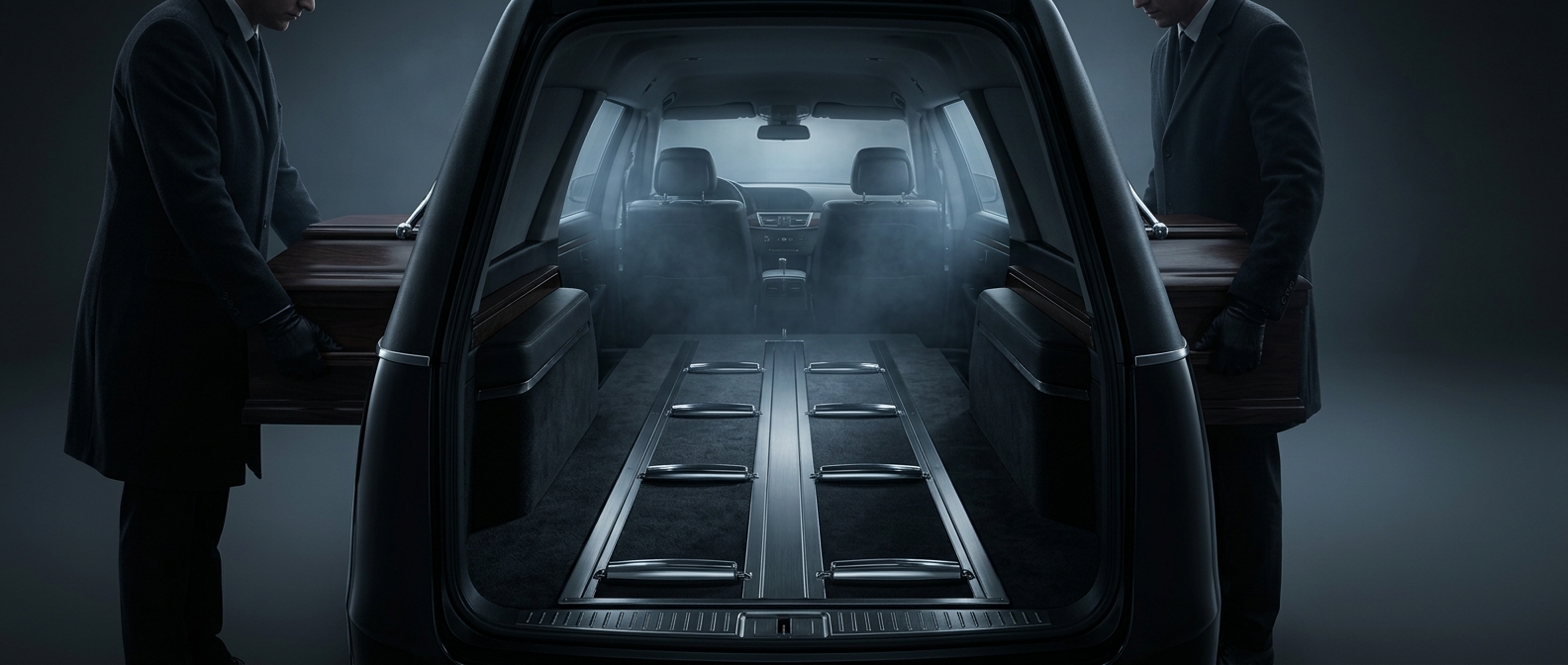
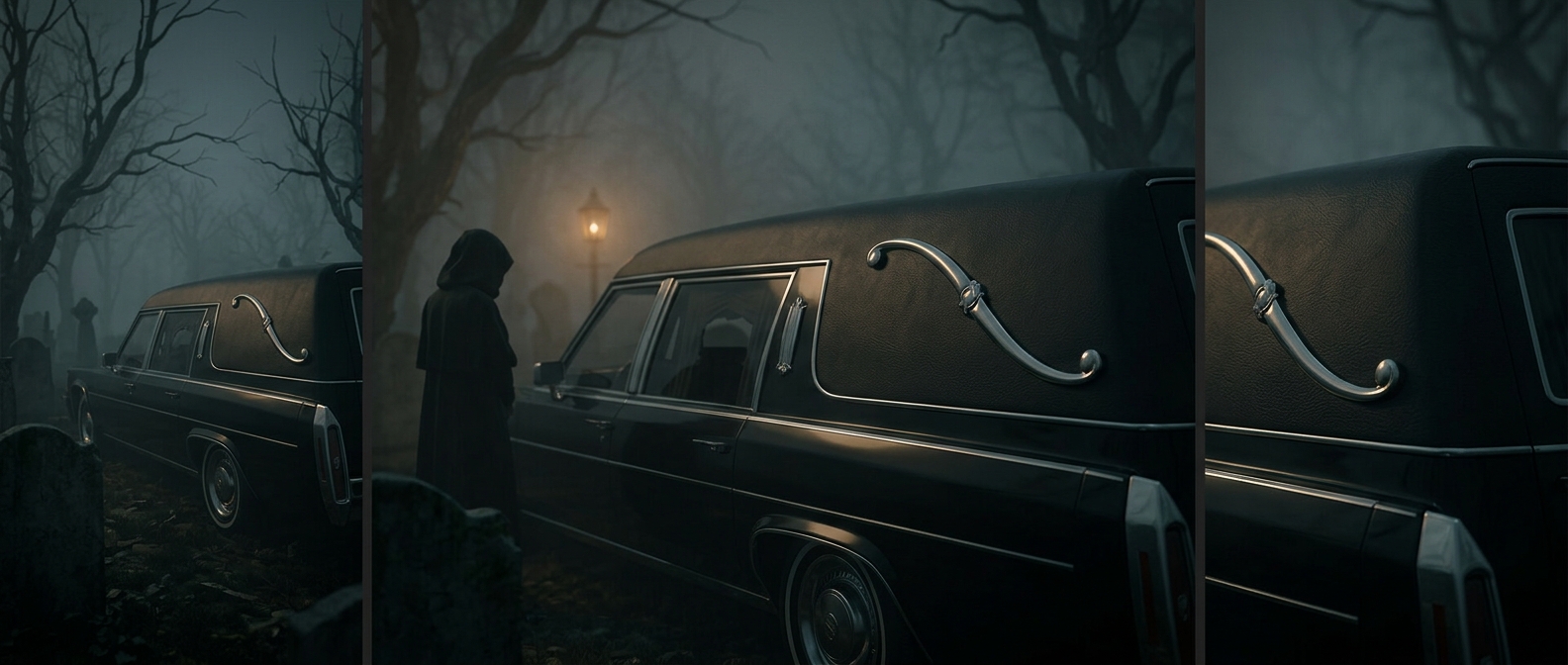
When motor vehicles replaced horse-drawn hearses, the bodywork changed. Modern hearse roofs are fixed, so they do not need those exterior bars to fold or support a canopy. The shape persisted as a styling cue instead.
A practical part becomes a visual signal
Funeral vehicles inherited more than a name from the landau carriage. Keeping the bars helped preserve a familiar, formal profile even as the underlying construction became simpler. On a contemporary hearse, the bars suggest the older carriage form; they are not evidence of a roof mechanism hidden beneath them.
That is why the detail can look functional while doing no work: its original job disappeared, but its association with the traditional hearse remained. The roof stays in place; the bars keep the older silhouette alive.