A procession designed to be seen
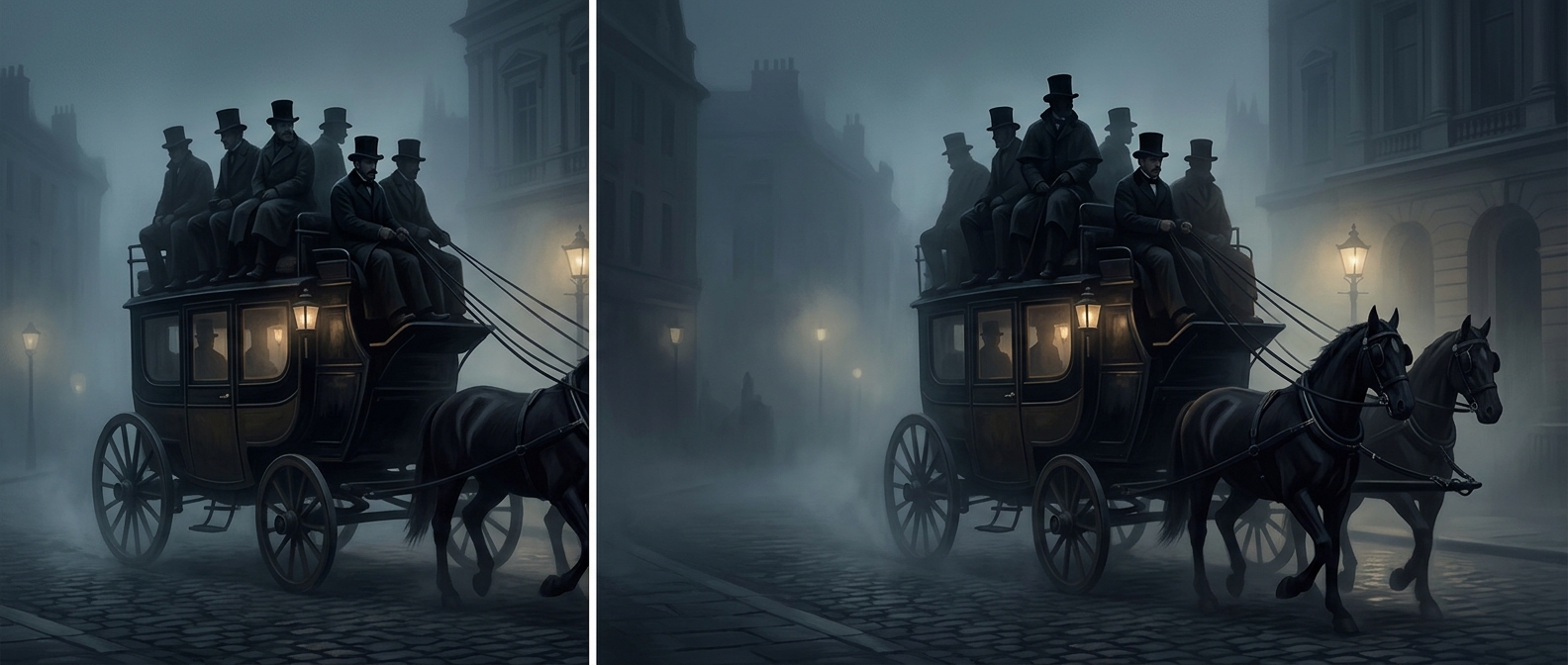
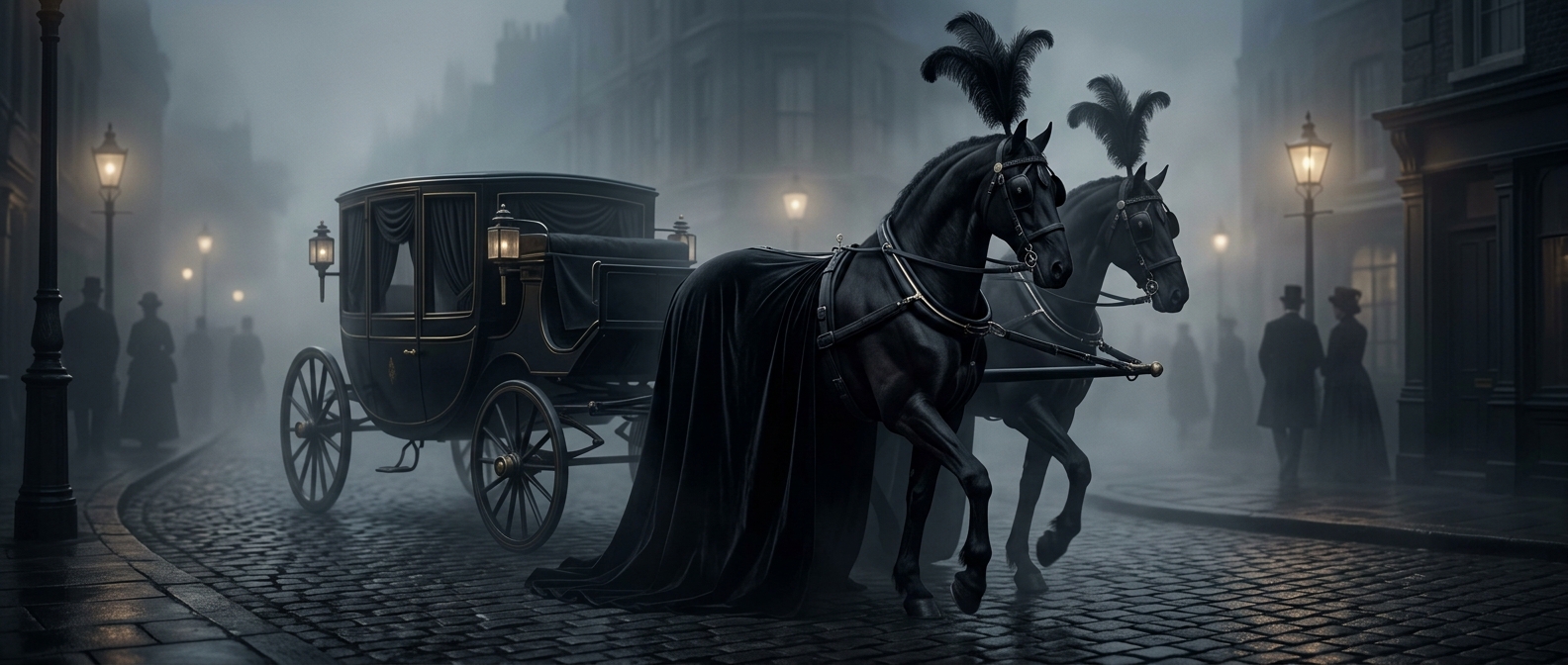
A Victorian funeral moved through ordinary streets, where mourners and neighbors could watch it pass. The hearse and its team therefore did more than carry a coffin: together, they made a public display of mourning. Dark cloth and matching harnesses turned the horses into part of a coordinated funeral outfit, while tall plumes gave the team a distinctive silhouette above the carriage.
That visibility mattered. A funeral procession needed to be recognizable as it moved among other traffic and pedestrians, and its formal appearance signaled that the event called for respect. The decoration made the horses—not just the hearse—part of the ceremony.
Ceremony, service, and status
Funerals were arranged through commercial providers, and elaborate horse-drawn equipment helped make the service feel appropriately solemn. The number of horses and the richness of a procession could vary, so the spectacle also offered families a way to express the importance they placed on the occasion. This did not mean every Victorian funeral looked alike; the display depended on the service being arranged.
The striking hats were thus not random ornament. They helped transform working animals and a street journey into a moving ritual. For a few minutes, the decorated team made grief visible to everyone along the route.