A Market Made in the Street
Before a purpose-built exchange gave traders a common indoor floor, brokers met where business and foot traffic already converged: outdoors, near coffeehouses and along busy streets. They called out prices and offers, then struck deals face to face. A trader needed to hear the right offer, recognize a counterparty, and settle the terms amid the noise and interruptions of city life.
This was not a market without structure. Brokers relied on reputation and repeated dealings to make agreements credible. But without a central trading room or a single public record of every offer, information traveled through people: a broker who missed a call might miss a price, while one who knew the active traders could move quickly.
From a Buttonwood Tree to Shared Rules
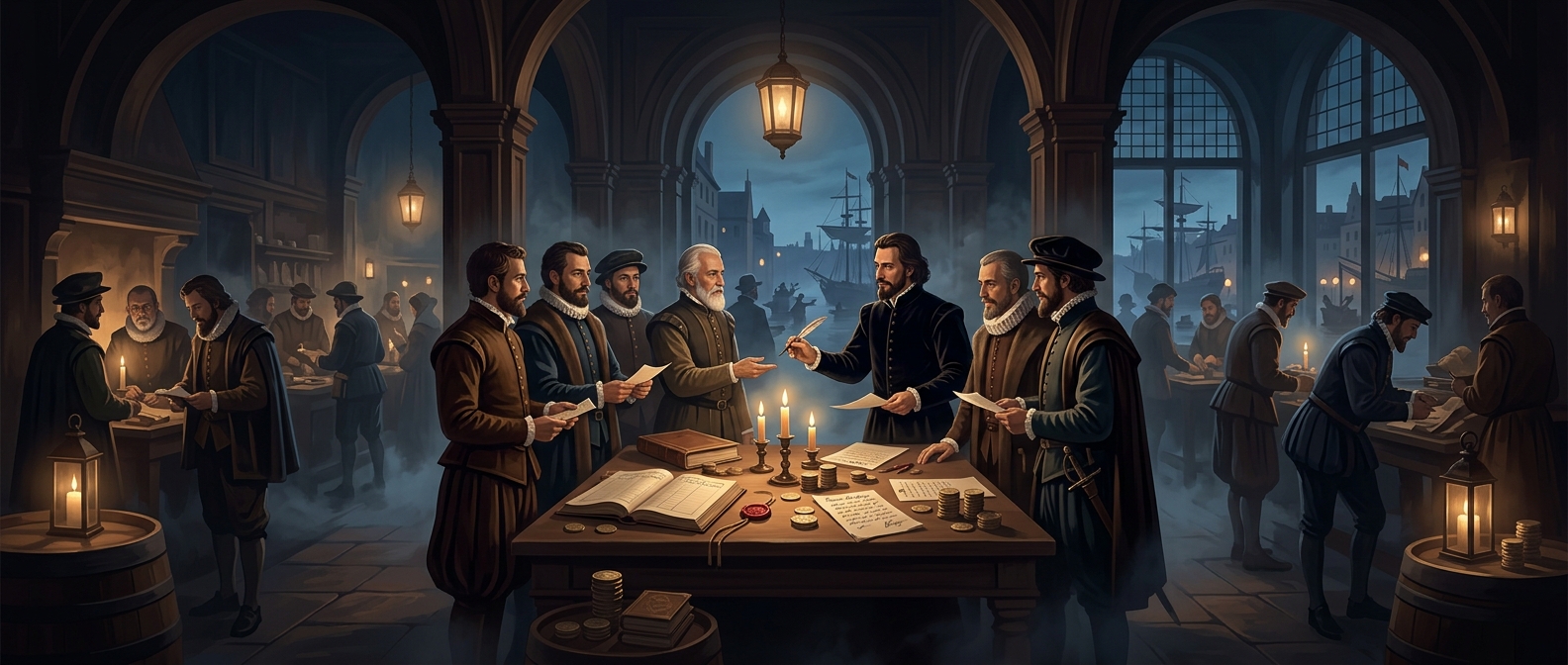
In New York, an agreement made by brokers in 1792 became known as the Buttonwood Agreement, after the tree associated with their gathering place on Wall Street. Its importance lay less in the tree than in the rules: the participating brokers agreed to trade with one another and set a standard commission. Those commitments helped turn a loose street market into a more dependable professional network.
The shift did not happen all at once. Outdoor bargaining supplied a practical meeting point; agreed procedures made dealings more predictable; and, as trading expanded, dedicated facilities could bring participants together under one roof. The familiar image of brokers shouting beneath a tree captures an early stage of that change: a financial market was first a network of people who could hear one another and trust that a spoken bargain would hold.