From banquet amusement to civic finance
At an imperial dinner, a lottery could turn entertainment into spectacle: guests drew chances for wildly different rewards, from a slave or a ship to an animal that was already dead. The point was not that every prize was practical. The surprise—and the contrast between a grand prize and an awkward one—made the drawing part of the evening’s show.
Chance as a way to raise money
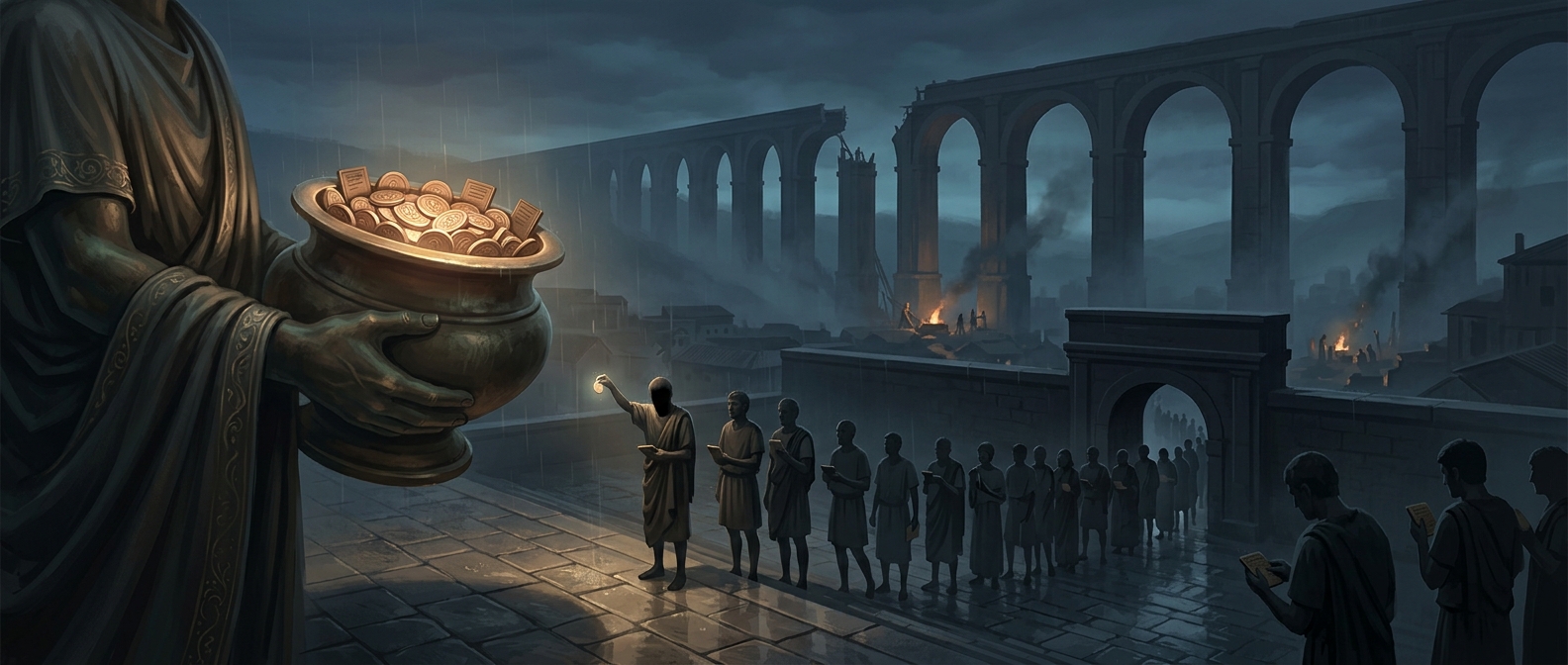
Later, emperors put the same basic device to a public purpose. A lottery could bring in money from many participants, while leaving the selection of winners to chance. That offered a way to help cover costly work such as repairing aqueducts, the channels that carried water into Roman cities. Instead of relying only on a single payment, officials could raise funds through a popular draw and direct the proceeds toward infrastructure.
The shift was from distributing prizes for a ruler’s entertainment to using a prize draw as a funding tool. The underlying appeal remained similar: people were willing to take part because a small stake might bring a much larger reward. For the city, the proceeds could support repairs that benefited residents far beyond the winners.
The prize was not always the point
A lottery prize might be valuable in theory but inconvenient in practice. Winning a ship—or an animal that could not be taken home alive—made the draw memorable, but also showed how a prize’s spectacle could matter as much as its usefulness. Roman lotteries could turn chance into both a dinner-table joke and a means of keeping public works running.