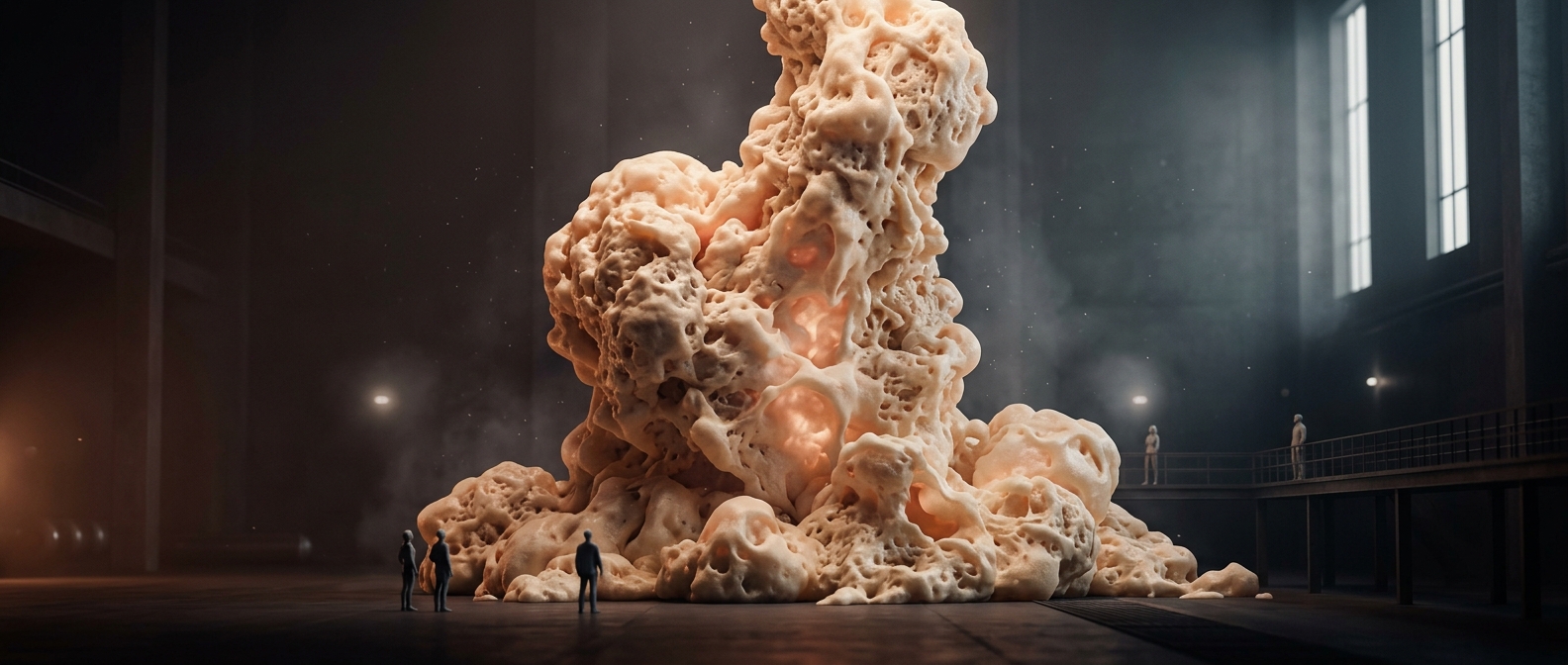
The chemistry that makes polyurethane foam swell
Polyurethane begins as a liquid mixture of reactive ingredients, commonly including a polyol and an isocyanate. As these chemicals react to form the plastic polymer, a second reaction can generate carbon dioxide gas. In many formulations, water helps produce that gas: it reacts with isocyanate, releasing carbon dioxide while also contributing to the polymer-forming chemistry.
The timing matters. Gas must form while the mixture is still fluid enough for bubbles to grow, but the polymer must stiffen soon enough to keep those bubbles from escaping. As the reaction proceeds, the mixture warms and thickens; the polymer builds a framework around the gas-filled cells. The result is a solid with far less material than a solid block of plastic would require.
Why one recipe makes a different foam from another
Foam is not simply a matter of adding more gas. The balance of ingredients and the speed of the reactions affect how many bubbles form, how large they become, and whether their walls remain intact. Some foams have mostly closed cells, sealed pockets that hold gas; others have more open cells connected to one another. Those structures behave differently—for example, closed-cell foam tends to resist water and heat flow, while open-cell foam is more breathable and compressible.
Manufacturers tune the formulation and processing conditions to match the job, whether the goal is a soft cushion, a rigid insulating panel, or foam that expands into gaps. The same internal growth that makes the material lightweight also makes it useful for filling irregular spaces: the mixture can spread before it sets, then hold the shape of the cavity around it.