Why a Tiny Void Can Matter
A die does not need a visibly lopsided shape to favor certain results. What matters is where its mass sits. If a small air pocket forms inside a molded die, the die’s center of mass—the point around which its weight is balanced—can shift slightly. During a roll, that imbalance can make some resting orientations a little more likely than others.
The effect is subtle: an uneven die still tumbles, and a single roll tells you almost nothing about whether it is biased. But in a game decided by many rolls, even a small tilt in the odds can accumulate.
Starting With Solid Stock
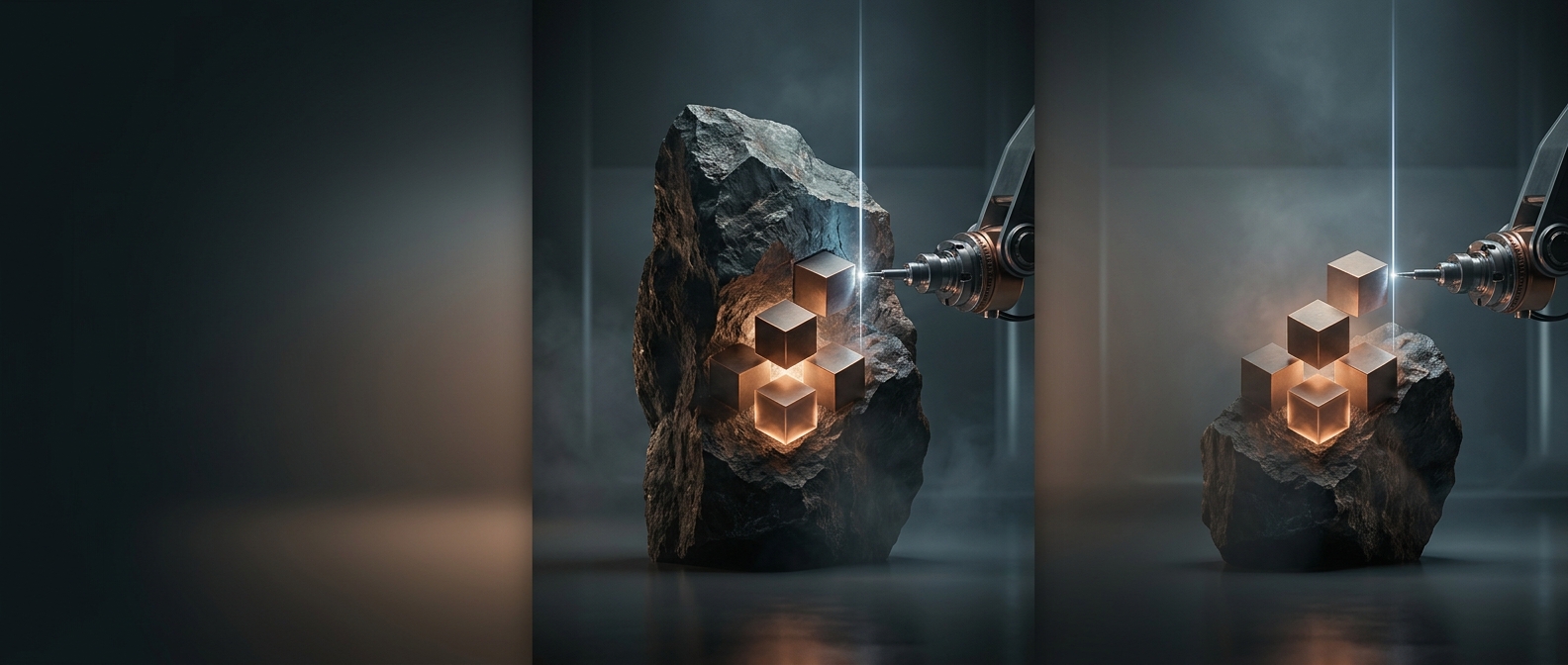
Precision dice avoid the molding step that can trap bubbles. Instead, each die is cut and shaped from a solid piece of material. Machining removes material to create the faces and edges, rather than filling a mold and hoping the material settles evenly throughout. That reduces one source of hidden weight imbalance.
The rest of the work matters too. Faces must be square to one another, and opposite faces must have consistent geometry. Pip cuts—the small indentations that form the numbers—also remove material, so their size and placement need to be controlled. Fairness depends on the finished die’s shape and mass distribution together, not simply on whether it began as a solid block.
That is why precision dice are useful where random results need to be especially dependable: a barely noticeable flaw can be hard to spot on the table, yet still give repeated rolls a small, persistent lean.