Why a chinchilla’s coat changes the rules of bathing
A chinchilla’s fur is extraordinarily dense: many fine hairs grow from each follicle. That makes the coat effective insulation, but it also makes washing with water a poor fit. Water can soak into the layers and remain trapped close to the skin, where the thick coat takes a long time to dry.
How a dust bath works
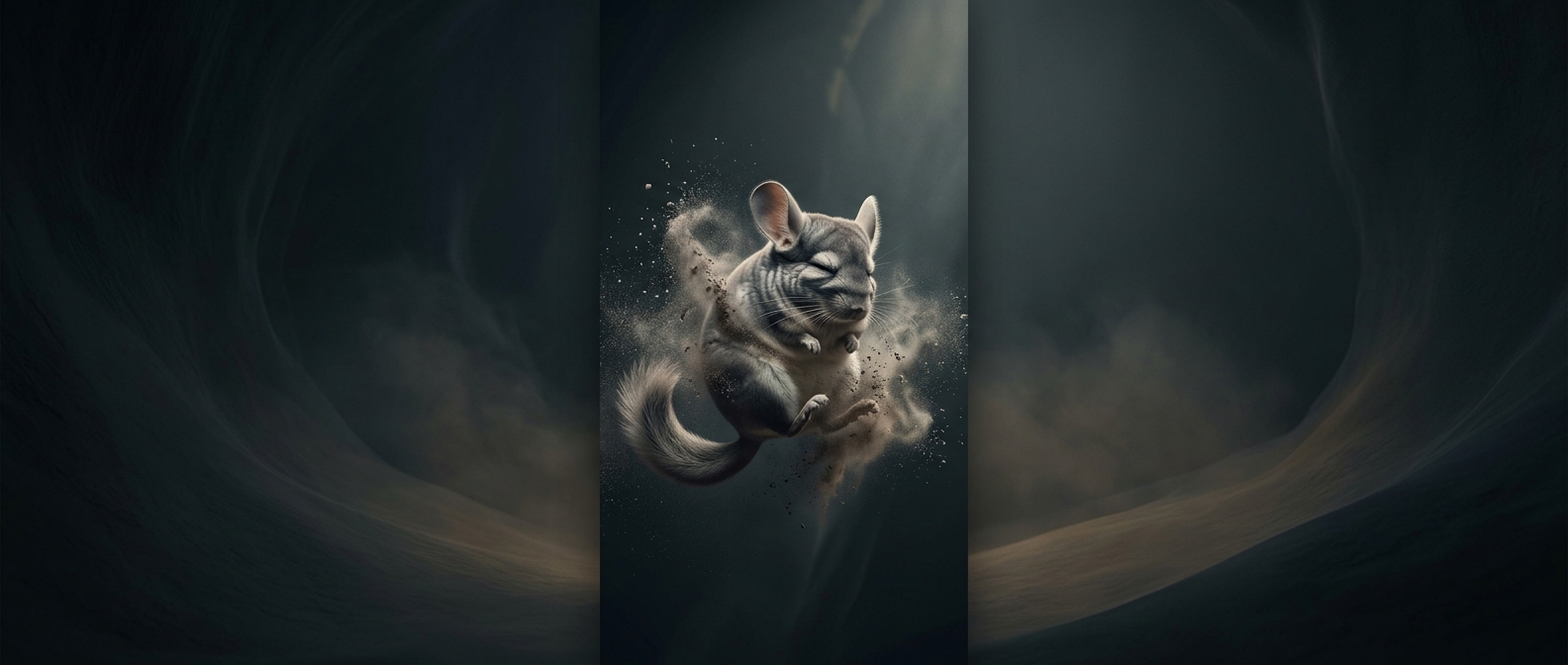
In a dust bath, a chinchilla rolls and twists through fine, specialized bathing dust. The particles work between the hairs, picking up excess oil and loose debris. The animal then shakes vigorously, helping the dust—and what it has collected—fall away.
This is not the same as ordinary household dust or sand. Chinchillas need a suitable, fine bathing material that can move through their coat and shake out rather than cling to it. The routine is brief, but the rolling matters: it helps the dust reach parts of the coat that a surface sprinkle would miss.
Cleanliness without a long, damp coat
The contrast is practical. Water leaves a dense coat wet and slow to dry; dust absorbs oil while remaining dry enough to be shaken free. For a chinchilla, a cloud of dust is not a sign of getting dirty—it is the way its coat is kept in condition.