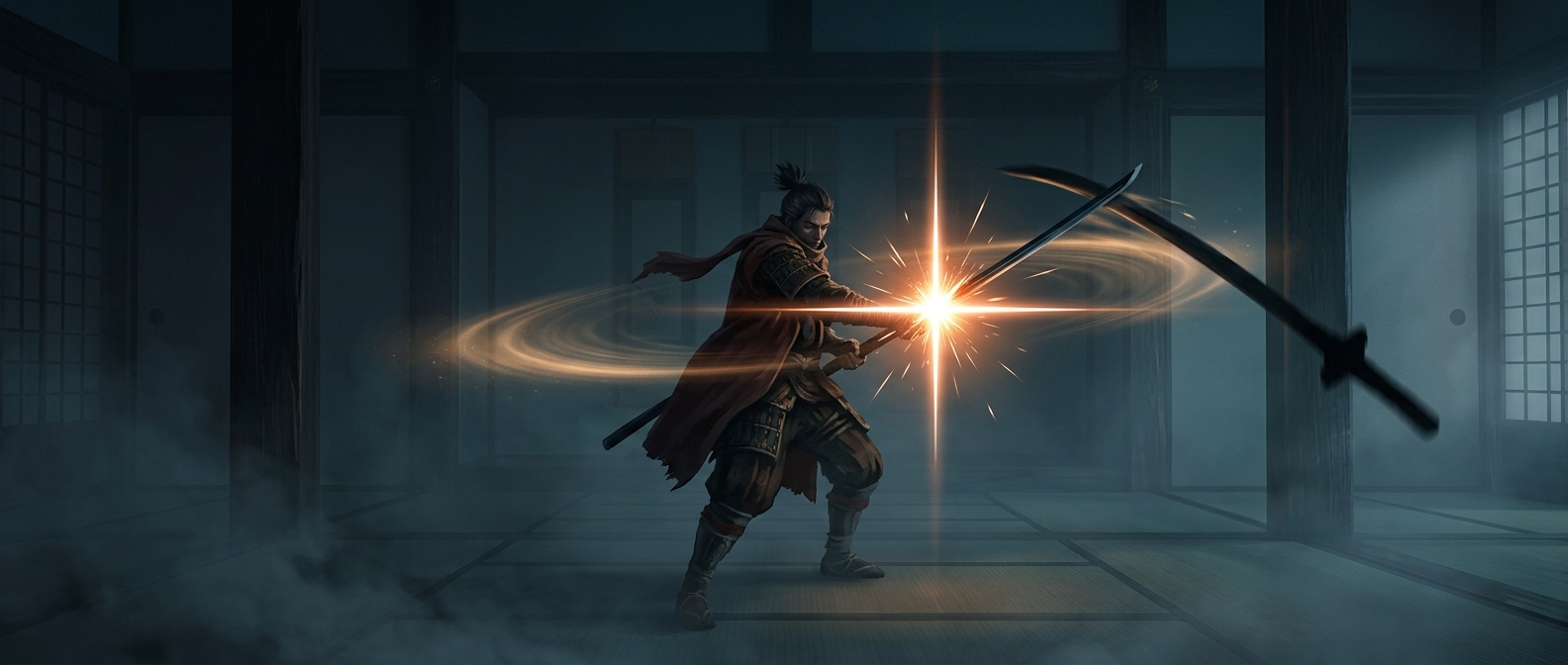
Why a Deflection Is More Than a Block
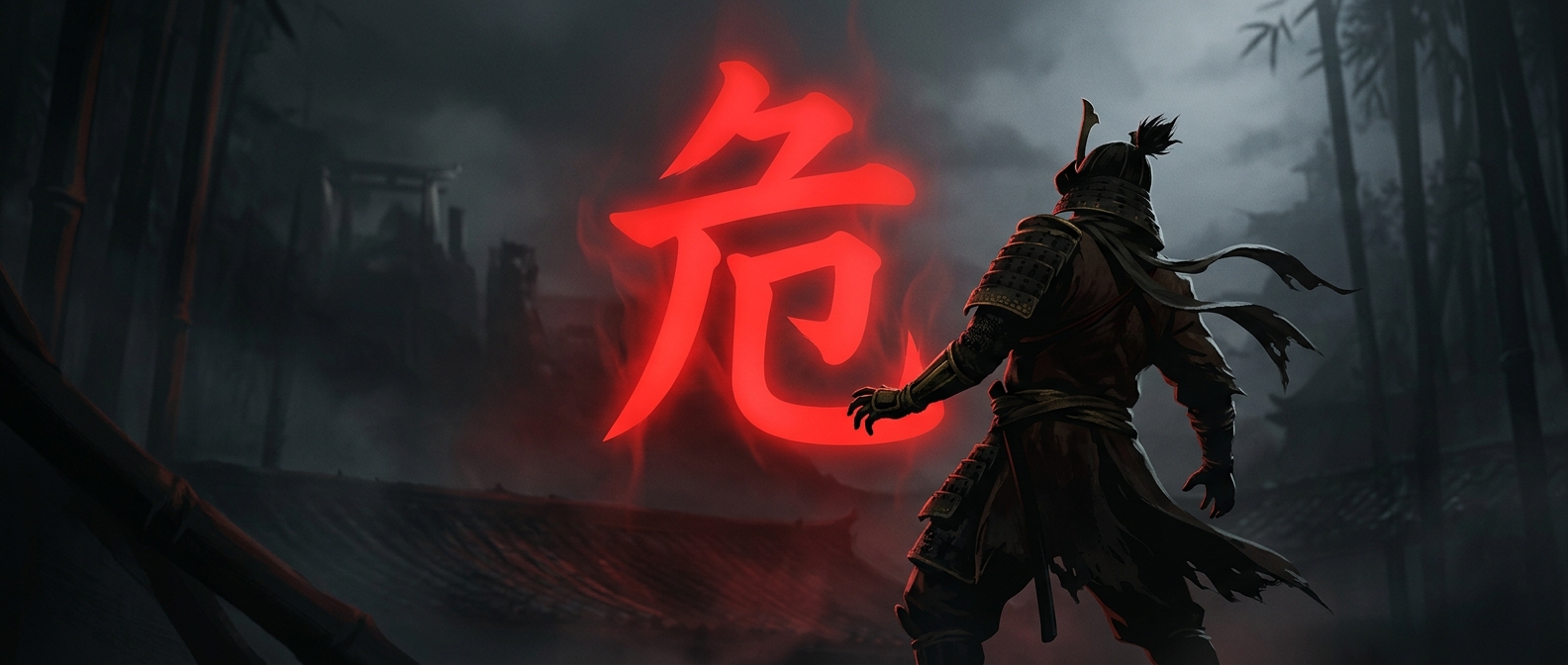
In Sekiro: Shadows Die Twice, a deflection is a guard timed to meet an incoming blow, not simply a way to avoid damage. Land it cleanly and the enemy’s posture—a measure of balance and ability to keep fighting—takes a hit. Build enough pressure and the opponent staggers, opening the way for a lethal deathblow.
That changes what a sword fight rewards. Dodging can keep Wolf safe, but it also gives an opponent room to recover. Meeting attacks head-on keeps pressure on them, so the player is trying to control the rhythm of the fight rather than wait for a safe opening.
Reading the Rhythm
The timing is demanding because enemies vary their attacks: a quick strike, a delayed swing, or a chain of blows each calls for a different response. A deflection that comes too early becomes an ordinary block; one that comes too late leaves Wolf vulnerable. The player has to watch the weapon and learn the cadence, often adjusting after each attempt.
Posture also makes the exchange a contest of momentum. An enemy with substantial vitality can recover posture more readily, so simply defending may not be enough; damaging them helps keep the pressure from fading. The system therefore links two kinds of offense: cutting into an opponent’s health and disrupting their balance with precise defense.
A Fight Won by Staying In
The design makes hesitation costly. Backing away can feel safer, but it can surrender the advantage and let posture recover. Conversely, a well-timed deflection can turn an enemy’s attack into progress toward a finish. When the posture bar finally breaks, the reward is not just a brief opening—it is the chance to end the exchange with a deathblow.