One warning, several possible responses
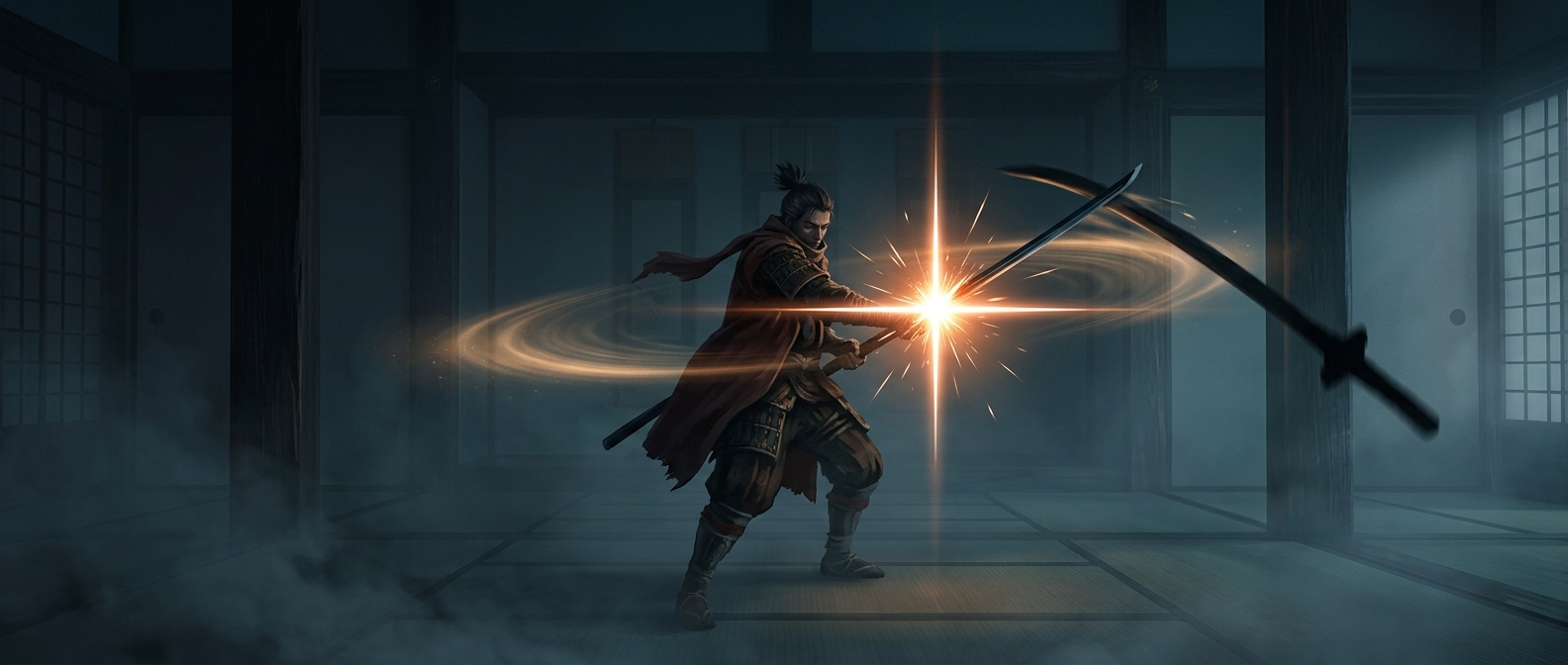
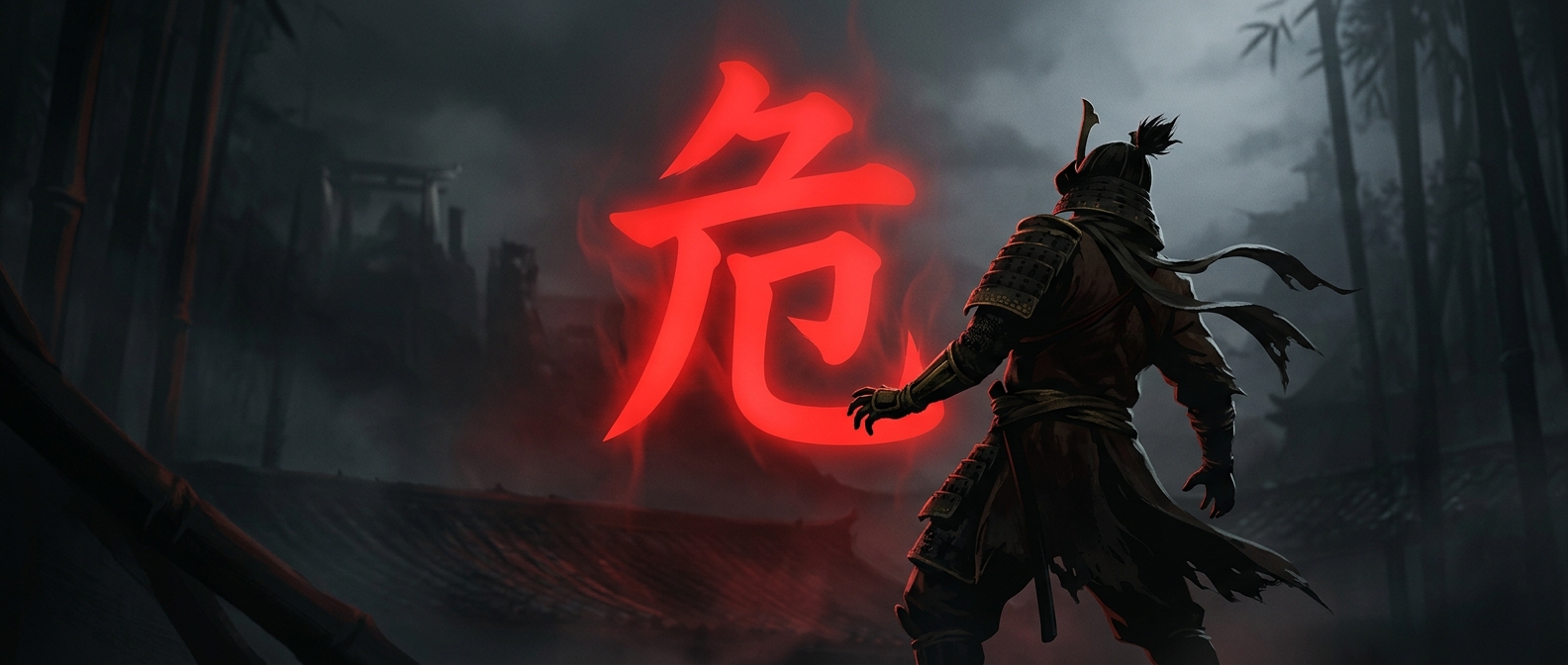
Sekiro’s red kanji, 危 (き, “danger”), marks a perilous attack: a move that cannot be handled with the ordinary guard-and-deflect response. It is a clear signal that the rules of the exchange are changing, not a button prompt telling you exactly what to do.
The right answer depends on the attack. A sweeping strike can be jumped over; a thrust can be met with a well-timed counter; a grab may call for getting out of reach. The warning gives you a moment to read the enemy’s movement and choose among those responses.
A cue that preserves the challenge
That separation is a deliberate kind of clarity. Sekiro can show the same red symbol for different perilous attacks because the danger itself is what they share. Their animations—the enemy’s posture, weapon, and direction of movement—still carry the information needed to distinguish them.
Without the warning, a player might mistake a perilous strike for an ordinary attack and try to deflect it. If the game instead displayed a separate instruction for every move, it would make the response more automatic. The red flash marks the decision point while leaving the recognition and timing to the player.
The flash is the start of a test
In a fast sword fight, the kanji cuts through visual noise and tells you to pay attention now. But it does not pause the action or remove the need to learn an opponent’s patterns. A familiar warning can still demand different reactions from one moment to the next—which is why seeing red is less an answer than a prompt to read the fight.