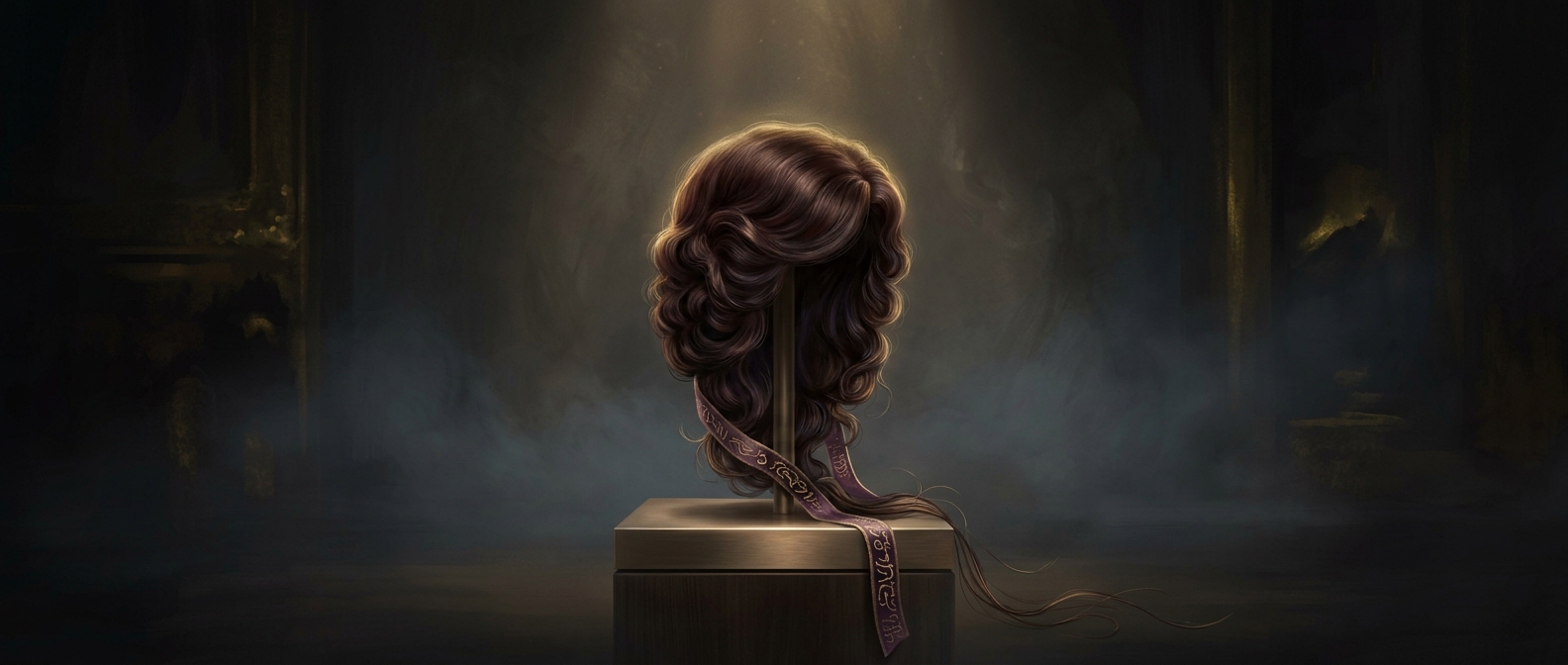
The hairline is built one knot at a time
A realistic film wig has to survive close-ups, bright lights and movement without announcing where the actor’s hair ends and the wig begins. The delicate edge is often made from fine mesh called lace. A wigmaker uses a small hook to tie individual hairs through it, a process known as ventilating. The tiny knots secure each strand while allowing the lace to sit against the skin.
The work is slow because the hair cannot simply be packed in. Its direction, spacing and density must look plausible, especially around the temples and forehead, where viewers are quick to notice an unnatural line. Too much hair can make the edge look heavy; too little can leave the mesh visible.
A wig has to belong to a particular character
The maker also has to match the design to the actor and the role. Hair color, texture, length and shape all affect whether the result fits the character, and the wig must sit securely enough for performance while still looking natural on camera. Styling and adjustments can be part of the job, too: a wig intended for a period drama, for example, may need a shape that reads correctly under the production’s lighting and costume.
That is why the price reflects specialized time as much as raw material. A costly wig is not just a quantity of human hair; it is a carefully constructed hairline and a custom piece designed to disappear when the camera comes close.