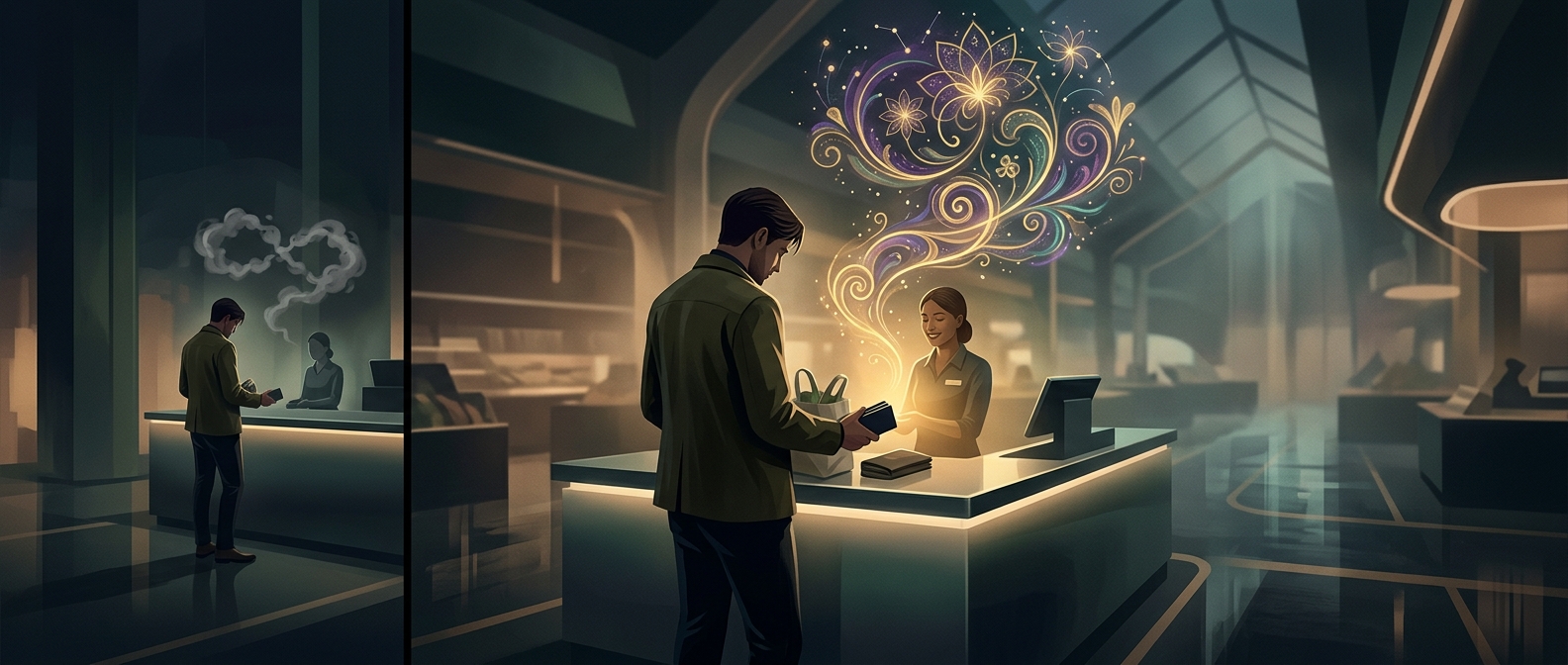
Conversation runs on prediction
Ordinary talk is not a sequence of perfectly separate turns. While listening, people anticipate when a pause is coming and begin shaping what they might say next. That keeps conversation moving, but it also means attention is divided: some is tracking the speaker’s meaning, and some is preparing a reply.
When a familiar social phrase appears, it can activate a practiced response before the listener has fully checked what the phrase means in this particular moment. The response is quick because it has been used many times; the slower work is noticing that the context calls for something different.
Why the wrong reply can escape
A phrase such as “Happy birthday” normally invites a predictable kind of answer. If someone is already poised to respond, that familiar pattern can steer speech toward a stock reply. But the listener still has to register the occasion: the greeting is directed at them, and the usual response is not the one that fits.
That final check competes with the urge to keep the exchange flowing. A reply can be spoken before the context-monitoring process catches the mismatch. The mistake is more likely when attention is split, the exchange is moving quickly, or the listener is focused on saying something polite rather than carefully processing every word.
A small error, not a failure to understand
These slips reveal a tradeoff built into fluent conversation. Automatic replies save effort in routine interactions, but they are less flexible than a response assembled from scratch. Usually, the surrounding context helps people catch and correct a mismatch; sometimes the words are already out.
That is why an awkward answer can come from a momentary timing error rather than confusion about the occasion: the social response was ready before the situation had been fully checked.