Why speed became an engineering problem
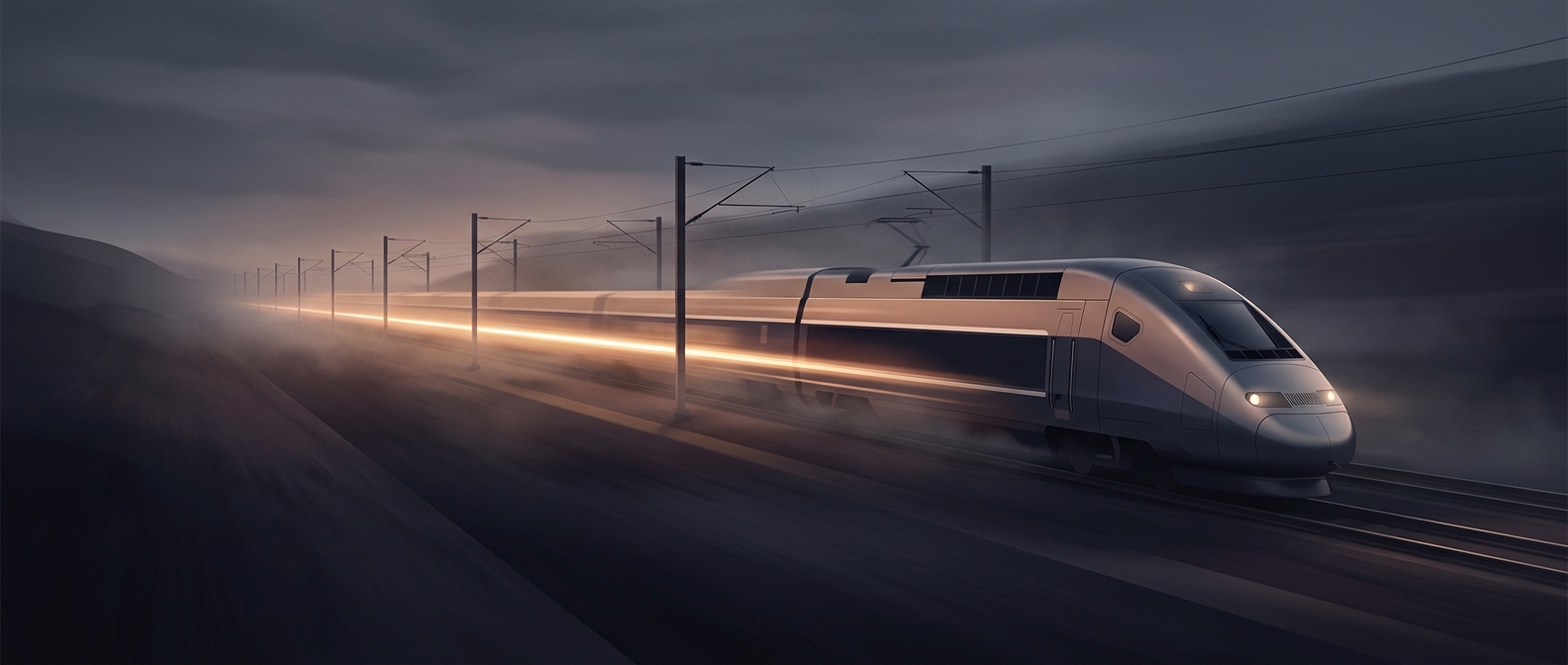
At very high speed, air stops being a minor nuisance and becomes one of the main forces the train must overcome. Drag rises sharply as speed increases, so each additional burst of acceleration demands disproportionately more power. A smoother nose and streamlined body help by letting air flow around the train with less resistance; added power helps it keep accelerating despite that resistance.
The wheels matter, too. To travel faster without spinning at an impractical rate, the train used larger wheels. But changing wheel size affects the rest of the vehicle’s behavior, so the record attempt depended on a package of modifications—not simply turning up the power.
A record run is not a timetable
The train still relied on steel wheels gripping steel rails. That contact makes high-speed rail efficient, but it also means the vehicle and track must remain precisely aligned as the wheels roll at extraordinary speed. The attempt therefore demonstrated what a specially prepared train could do under test conditions, not what an ordinary passenger service should be expected to sustain.
That distinction is the lasting engineering lesson: a record speed proves that a system can reach a limit, while everyday rail design must balance speed with reliability, safety, and the demands of repeated operation. The remarkable part was not escaping the rails, but pushing their familiar wheel-and-track system to a speed normally associated with aircraft.