Building Fire Where the Camera Needs It
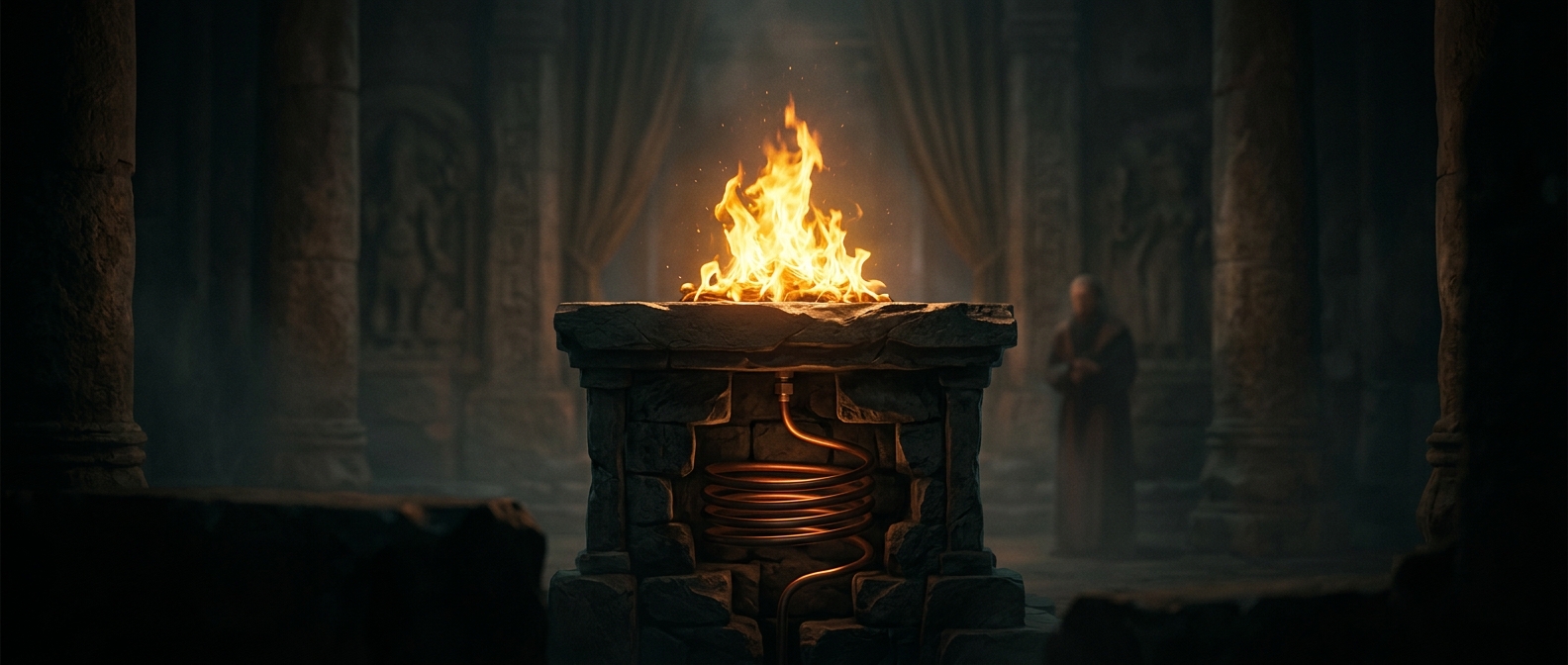
A controlled on-set flame begins with its fuel supply, not with a pile of burning material. Technicians run metal pipes beneath or behind the part of the set meant to catch fire, placing outlets where the camera should see tongues of flame. Gas flowing through those outlets creates a fire that can be started and stopped on cue.
That arrangement turns fire into a practical effect the crew can shape. A line hidden along a wall, for example, can produce flame at the wall rather than forcing filmmakers to ignite the entire room. The visible fire is real, but its location and duration are planned.
Why Control Matters During a Take
A film scene may need several attempts: an actor misses a mark, a camera move is adjusted, or the director wants another version. A gas-fed effect can be shut off between takes instead of being allowed to consume scenery. It also gives the crew a way to coordinate the flame with the action—when it appears, how long it stays lit, and when it goes dark.
The flame still behaves like fire. Air movement can make it bend or flicker, and its light can change how the set looks on camera. Technicians therefore have to consider the flame’s position in relation to performers, scenery, and the shot, rather than treating it as a decorative prop.
A Visible Effect With an Invisible Control Plan
The pipes are only one part of the setup: the fuel has to be managed so the effect can be operated and shut down quickly. That control is what makes a real flame usable in a scene. The camera sees a burst of fire; the crew sees a mapped, timed effect with a way to stop it.